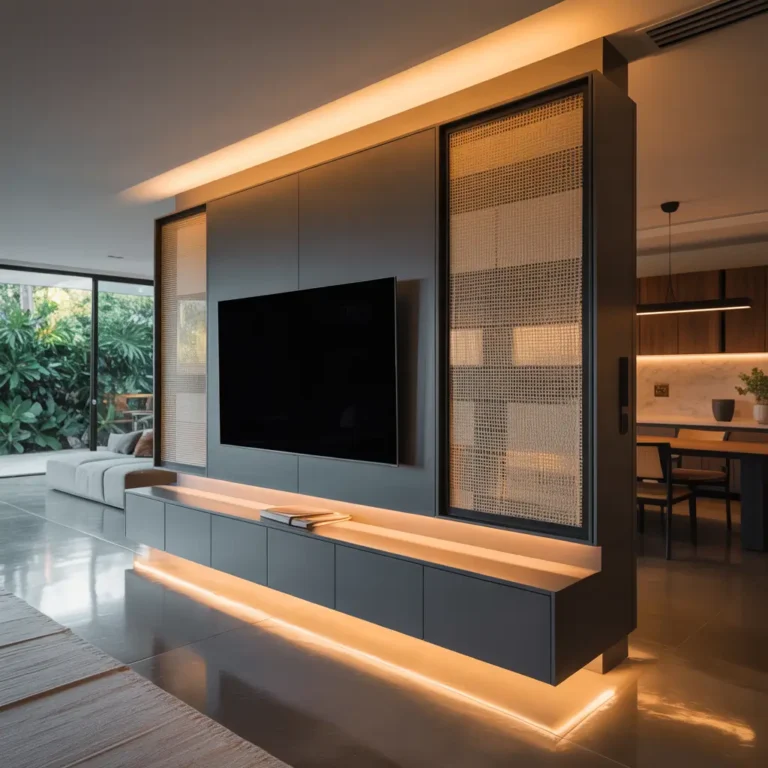
10 Smart Wooden Partition Design Ideas for Small Homes

Listen, I get it – you’re staring at your open-plan living space wondering how to create some privacy without building actual walls.
Been there, done that, and let me tell you, wooden partitions are absolute game-changers. They’re like the Swiss Army knife of interior design – functional, gorgeous, and way more affordable than you’d think.
I’ve been obsessing over room dividers for years (my partner jokes that I have a “partition problem”), and wooden ones? They’re the crown jewel of space division.
Whether you want to hide your work-from-home mess or create a cozy reading nook, these designs will make your space look like it belongs in a fancy design magazine.
1. Vertical Wooden Slat Open Partition
The Modern Classic That Never Gets Old
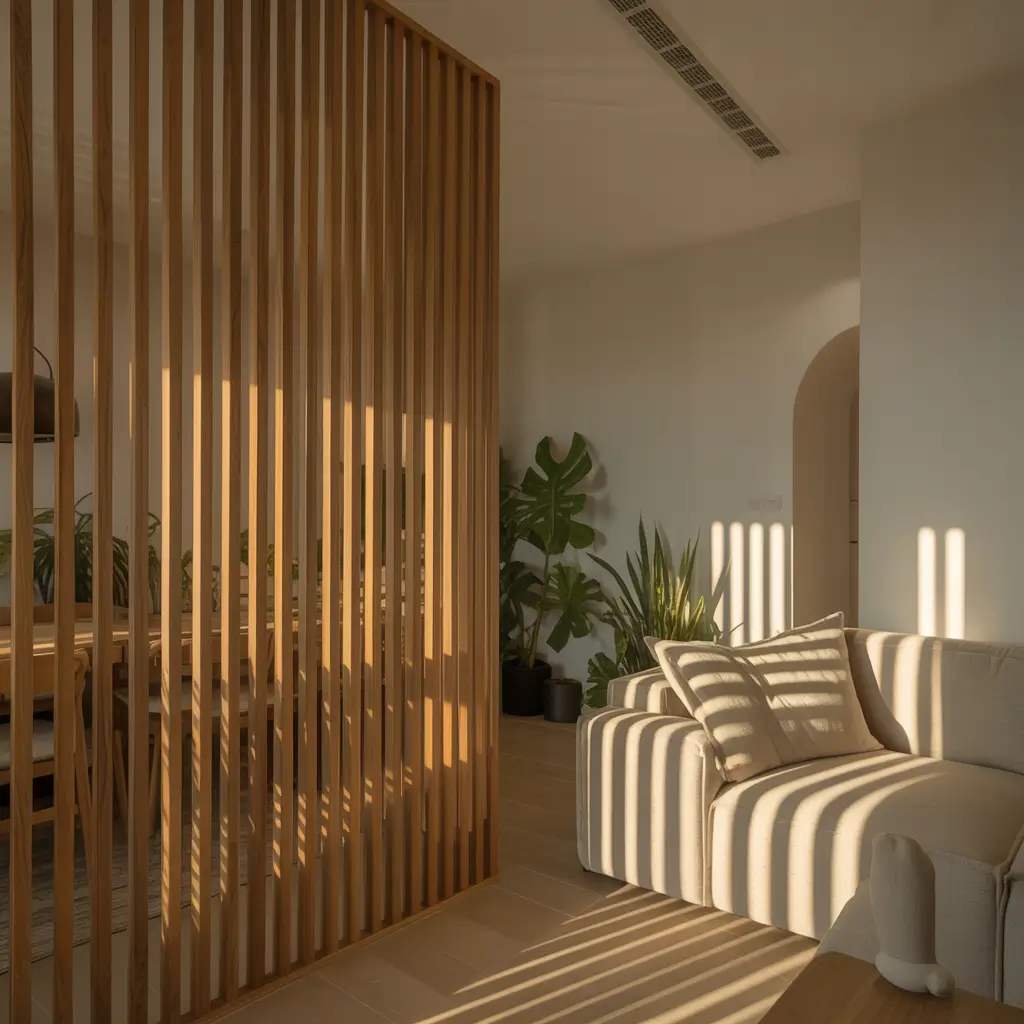
You know that clean, minimalist look you see all over Pinterest? Vertical wooden slat partitions are probably responsible for half of those pins. These bad boys consist of evenly spaced vertical wooden strips that create division while maintaining visual flow.
What makes them brilliant is their flexibility. You can adjust the spacing between slats based on how much privacy you want. Wider gaps? More light and airiness. Narrower gaps? Better privacy and sound dampening.
I installed one between my kitchen and dining area last year, and honestly? Best decision ever. It hides the cooking chaos while keeping the space feeling open. The key is getting the proportions right – slats that are too thin look flimsy, too thick and they become overwhelming.
Pro tip: Use different wood tones to create visual interest. Mix walnut with oak, or go bold with a dark stain against lighter wood.
Installation Made Simple
The beauty of vertical slat partitions lies in their straightforward construction. You’ll need:
- Top and bottom rails for stability
- Evenly spaced vertical slats (usually 2-4 inches apart)
- Proper mounting hardware for your ceiling type
Most DIY enthusiasts can tackle this project over a weekend, though I’d recommend getting professional help for ceiling mounting – trust me on this one 🙂
2. Floor-to-Ceiling Wooden Grid Divider
When You Want Drama (The Good Kind)
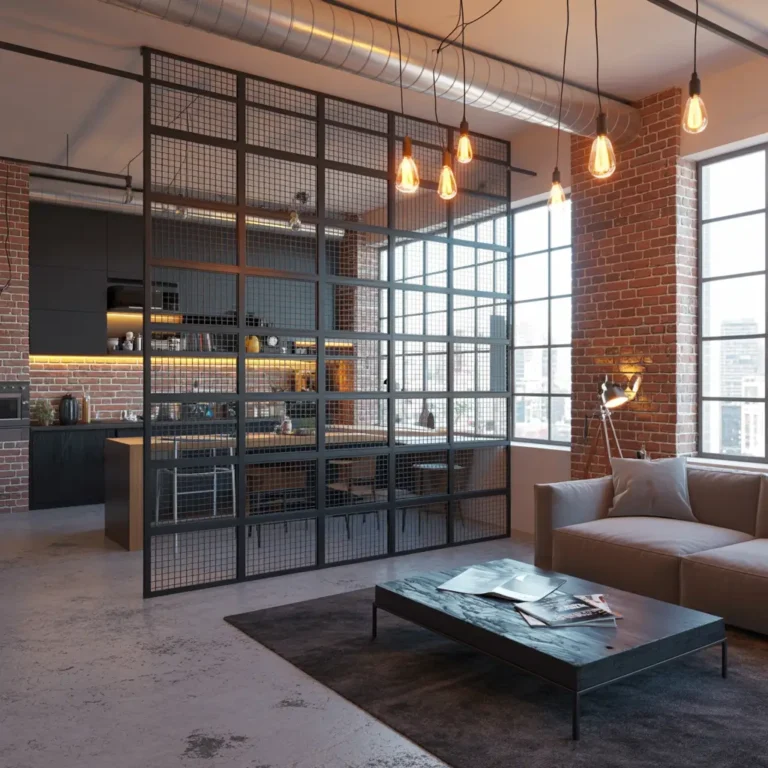
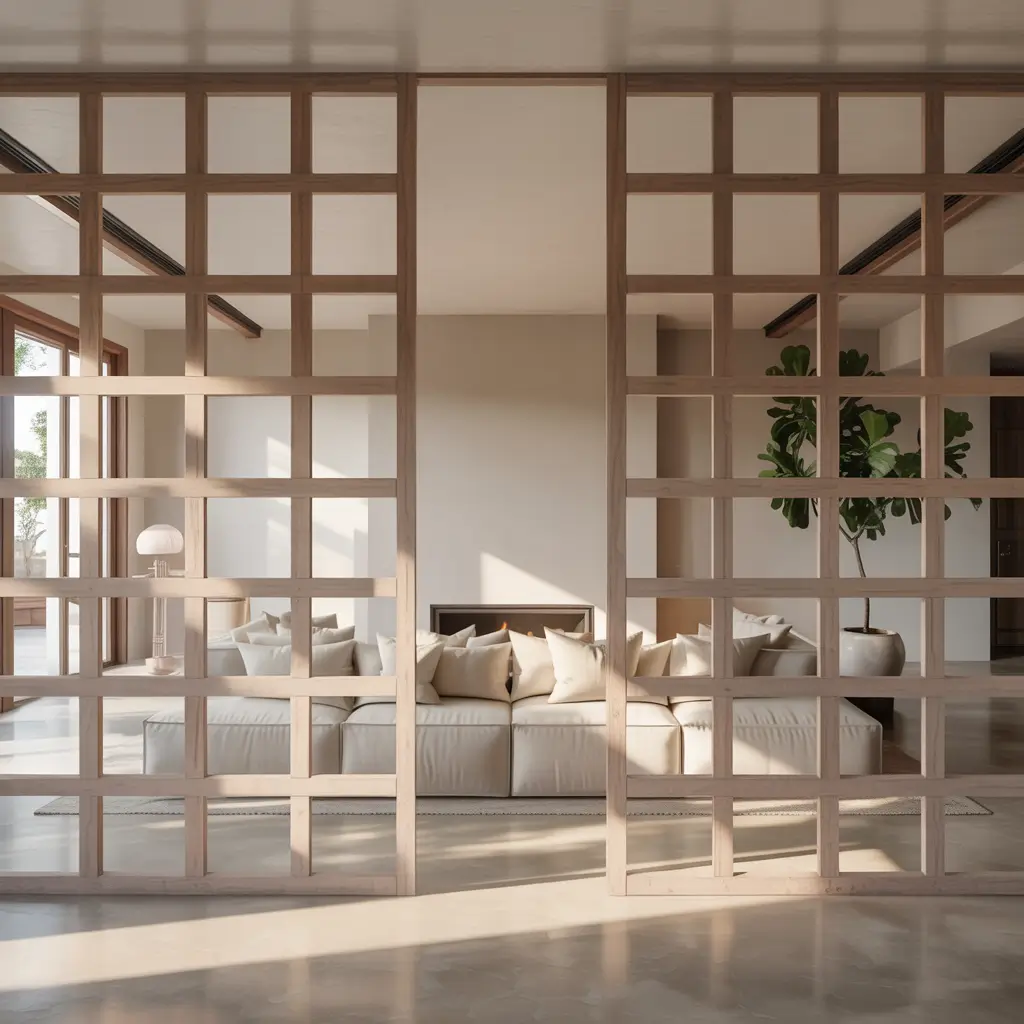
Grid patterns are having a serious moment, and floor-to-ceiling versions are the ultimate statement piece. Think of them as architectural jewelry for your space – they’re functional art that happens to divide rooms.
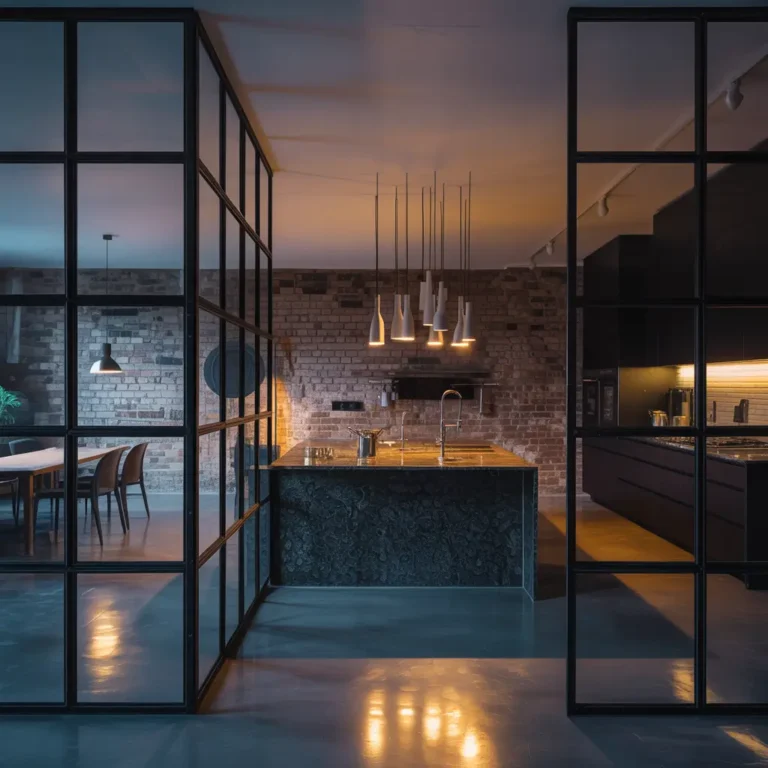
These dividers create a geometric focal point while maintaining sight lines throughout your space. The intersecting horizontal and vertical elements add visual weight without the bulk of solid walls. I’ve seen these work beautifully in everything from industrial lofts to cozy apartments.
The grid system is incredibly versatile for storage too. You can weave in decorative elements, hang plants, or use the squares as display spaces for art pieces. One client turned theirs into a living gallery wall – genius move, IMO.
Design Variations That Work
Grid dividers aren’t one-size-fits-all. Consider these options:
- Square grids for classic symmetry
- Rectangular patterns to emphasize height or width
- Mixed proportions for contemporary flair
- Diagonal elements for added visual interest
The spacing between grid elements matters hugely. Larger squares (12+ inches) feel more open and modern, while smaller grids (4-6 inches) provide better privacy and a more traditional feel.
3. Floating Wooden Panel Partition Wall
The Illusion of Weightlessness
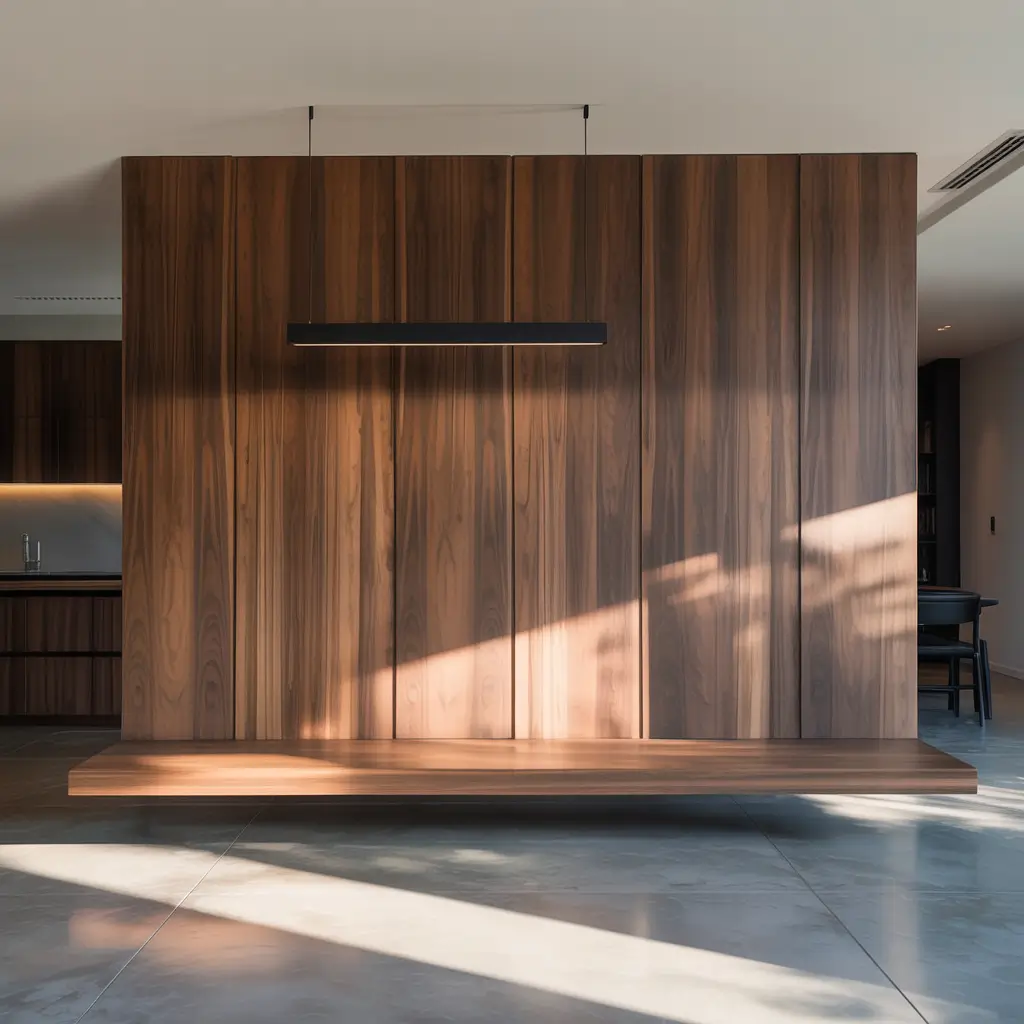
Floating panels are pure magic in interior design. These partitions appear to hover between floor and ceiling, creating division without the visual heaviness of floor-to-ceiling installations. They’re perfect for spaces where you want to maintain an airy feel while adding functional separation.
The secret sauce is in the mounting system. Properly installed floating partitions use hidden brackets that create the illusion that the wood panels are defying gravity. I’ve used these in smaller apartments where every inch of visual space counts – the floating effect makes rooms feel significantly larger.
What I love most about floating panels is their adaptability. You can position them at different heights depending on your needs. Lower positioning creates subtle room definition while maintaining openness, while higher placement focuses on privacy for seated areas.
Technical Considerations
Floating partitions require solid structural support – this isn’t a project for hollow drywall anchors. You’ll need:
- Proper wall studs or ceiling joists for mounting
- Heavy-duty hidden bracket systems
- Professional installation for safety and aesthetics
- Quality wood that won’t warp over time
The gap between floor and ceiling should be proportional to your room height. I typically recommend 8-12 inches on each end for standard 8-10 foot ceilings.
Also Read: 10 Elegant Partition Design Living Rooms Ideas For Stylish Spaces
4. Curved Wooden Strip Room Divider
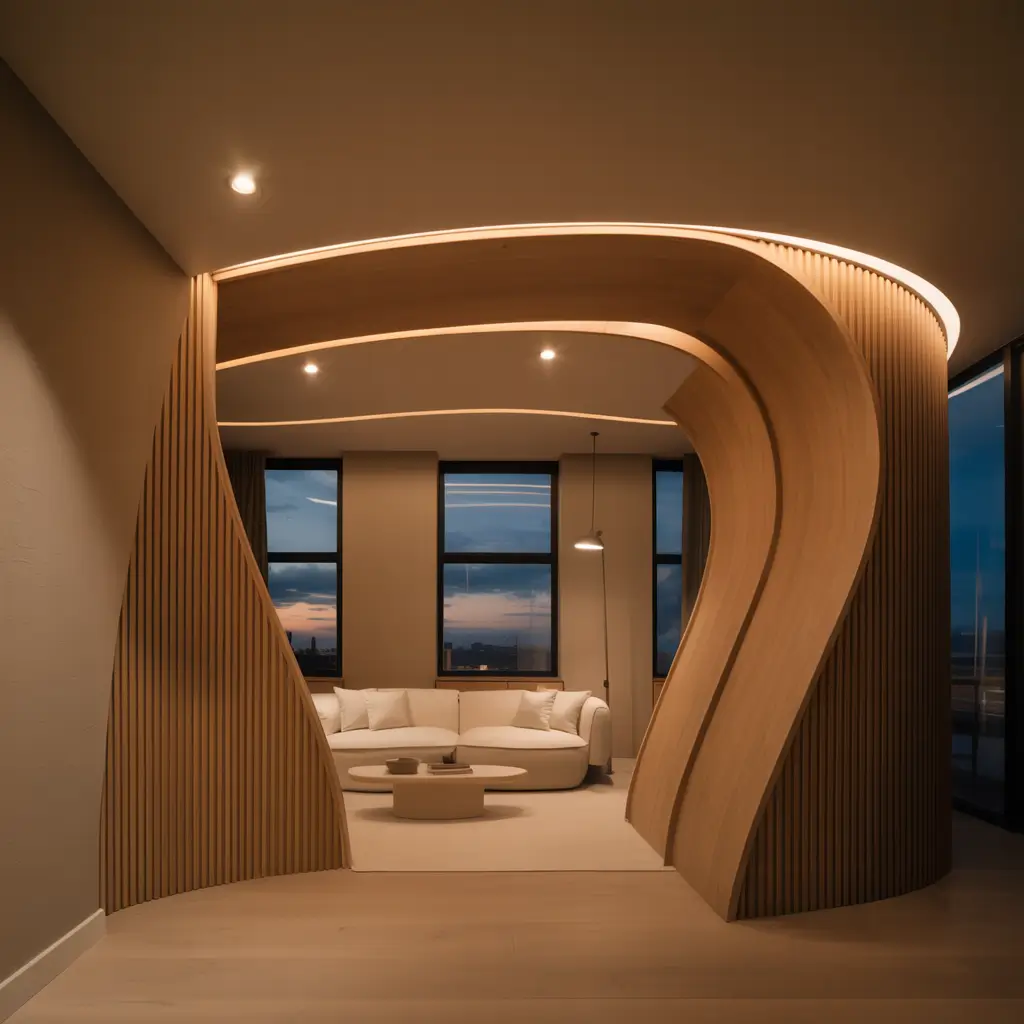
Because Straight Lines Are Overrated
Here’s where things get interesting – curved wooden partitions add organic flow to spaces dominated by hard angles. These aren’t your typical straight-line dividers; they introduce movement and softness that transforms the entire room’s energy.
I’ll be honest, curved partitions are more challenging to execute than their straight counterparts, but the payoff is incredible. They create dynamic sight lines that change as you move through the space, making even small areas feel more complex and interesting.
The key to successful curved partitions is understanding your space’s traffic flow. The curves should enhance natural movement patterns, not fight against them. I’ve seen too many curved dividers that look beautiful but create awkward navigation – function always comes first.
Design and Construction Tips
Creating curved wooden strips requires careful planning:
- Steam bending for smooth, consistent curves
- Laminated construction for tighter radius curves
- Flexible mounting systems that accommodate the curve
- Professional installation (seriously, don’t DIY this one)
The curve radius should complement your room’s proportions. Gentle curves work better in smaller spaces, while dramatic arcs can handle larger rooms with higher ceilings.
5. Wooden Partition with Built-in Shelves
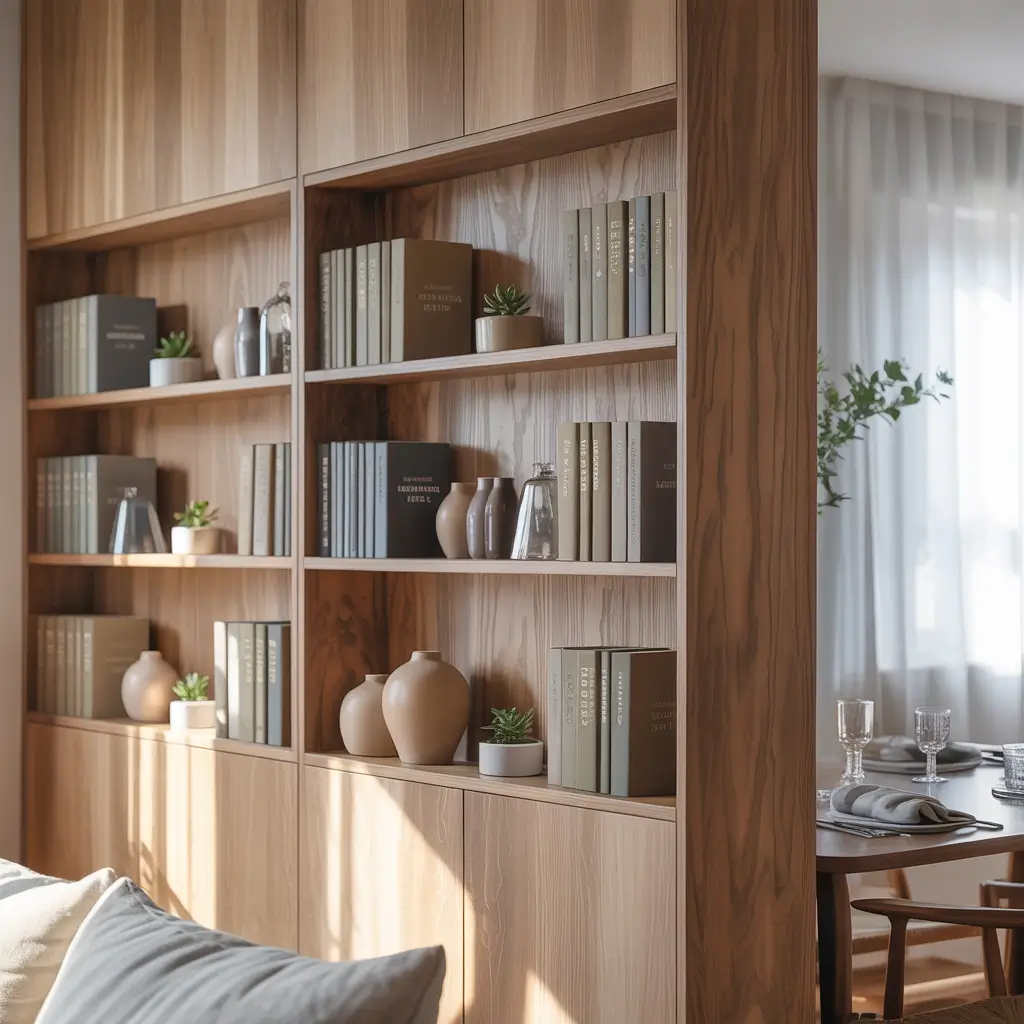
Storage Meets Style (Finally!)
Why settle for just room division when you can get storage too? Wooden partitions with integrated shelving are the multitaskers of interior design. They divide space, provide display areas, and add storage – it’s like getting three pieces of furniture for the price of one.
I’m particularly fond of these in small apartments where every square foot counts. You can use the shelves for books, plants, decorative objects, or even as a home office setup. The combination of open and closed storage options makes these partitions incredibly versatile.
The design possibilities are endless. Asymmetrical shelf arrangements create visual interest, while symmetrical layouts feel more formal and organized. Mixed shelf sizes accommodate different storage needs – larger spaces for books and baskets, smaller niches for decorative items.
Functional Design Elements
Successful storage partitions balance aesthetics with practicality:
- Varied shelf depths for different item types
- Cable management for electronics
- Integrated lighting for display purposes
- Closed storage options for hiding clutter
Consider the view from both sides of the partition. What looks good from the living room should also work from the dining area or bedroom.
6. Japandi Style Minimal Wooden Screen
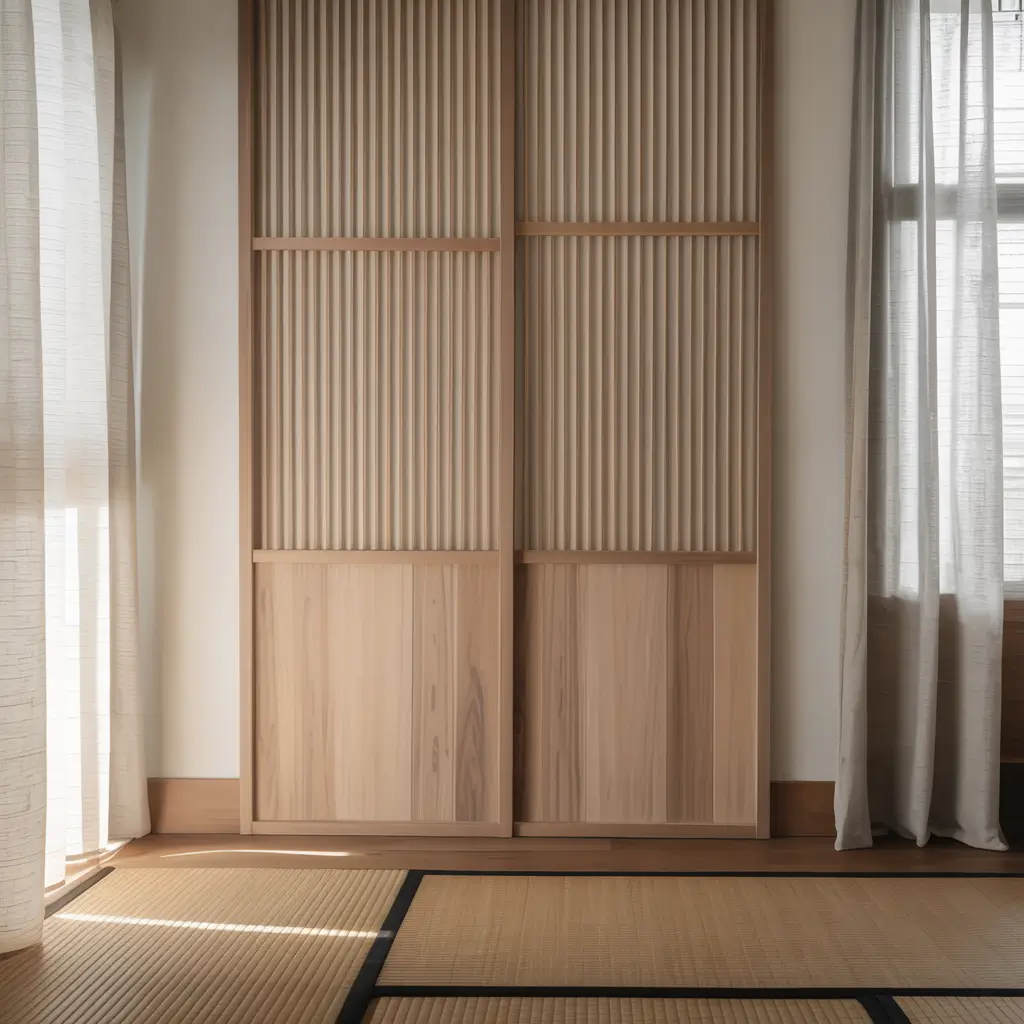
Less Really Is More
Japandi design combines Japanese minimalism with Scandinavian functionality, and wooden screens in this style are absolute perfection. Think clean lines, natural materials, and that effortless simplicity that somehow makes everything feel calm and organized.
These screens typically feature light-colored woods like oak, ash, or pine, with minimal finishing that showcases the natural grain. The construction is deliberately simple – no fancy joinery or decorative elements, just beautiful wood doing its thing.
What I love about Japandi screens is their flexibility. They work as permanent installations or moveable pieces, depending on your needs. The neutral aesthetic complements virtually any decor style, making them perfect for renters or anyone who likes to change things up occasionally.
Key Design Principles
Authentic Japandi wooden screens follow specific guidelines:
- Natural wood finishes with minimal processing
- Simple geometric patterns or solid panels
- Functional hardware that doesn’t compete with the wood
- Neutral color palettes that blend with surroundings
The goal is creating pieces that feel timeless and unobtrusive – they should enhance your space without demanding attention.
Also Read: 10 Beautiful Partition Design Ideas for Elegant Space Separation
7. Sliding Wooden Partition Door Design
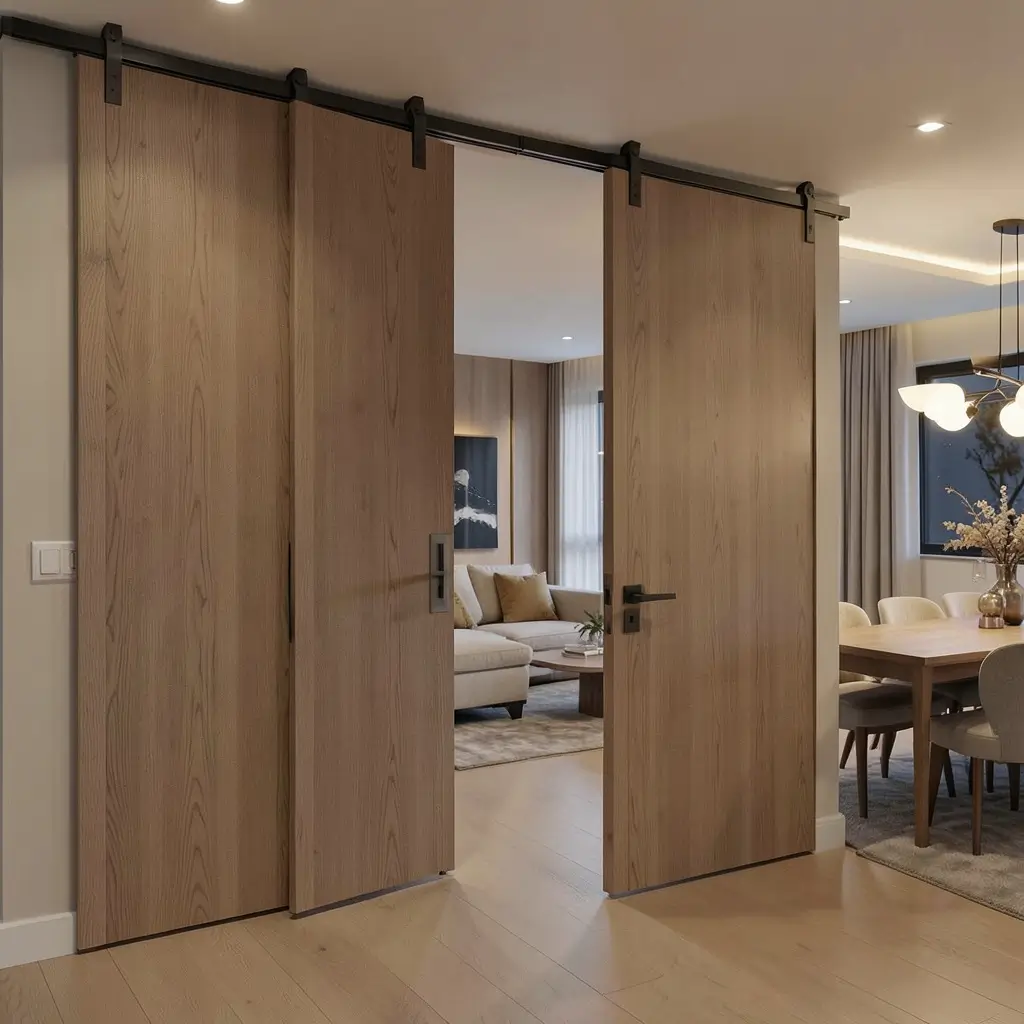
Space-Saving Genius in Action
Sliding partitions are brilliant for spaces where traditional swing doors won’t work. They operate on track systems that allow panels to slide smoothly out of the way, creating instant flexibility between open and closed configurations.
I’ve used sliding wooden partitions in everything from studio apartments to large homes, and they never fail to impress. The ability to completely open or close a space in seconds is incredibly powerful for modern living. Working from home? Close the partition. Hosting a party? Slide it open for maximum flow.
The track systems have come a long way in recent years. Modern hardware is virtually silent and incredibly smooth – no more fighting with sticky doors or dealing with loud rattling sounds.
Hardware and Installation
Quality sliding systems require specific components:
- Heavy-duty track systems rated for your panel weight
- Soft-close mechanisms for smooth operation
- Floor guides for stability (optional but recommended)
- Professional installation for proper alignment
Panel weight is crucial – heavier panels provide better sound dampening but require more robust hardware. Most residential installations work well with panels up to 200 pounds per door.
8. Geometric Cutout Wooden Divider Panel
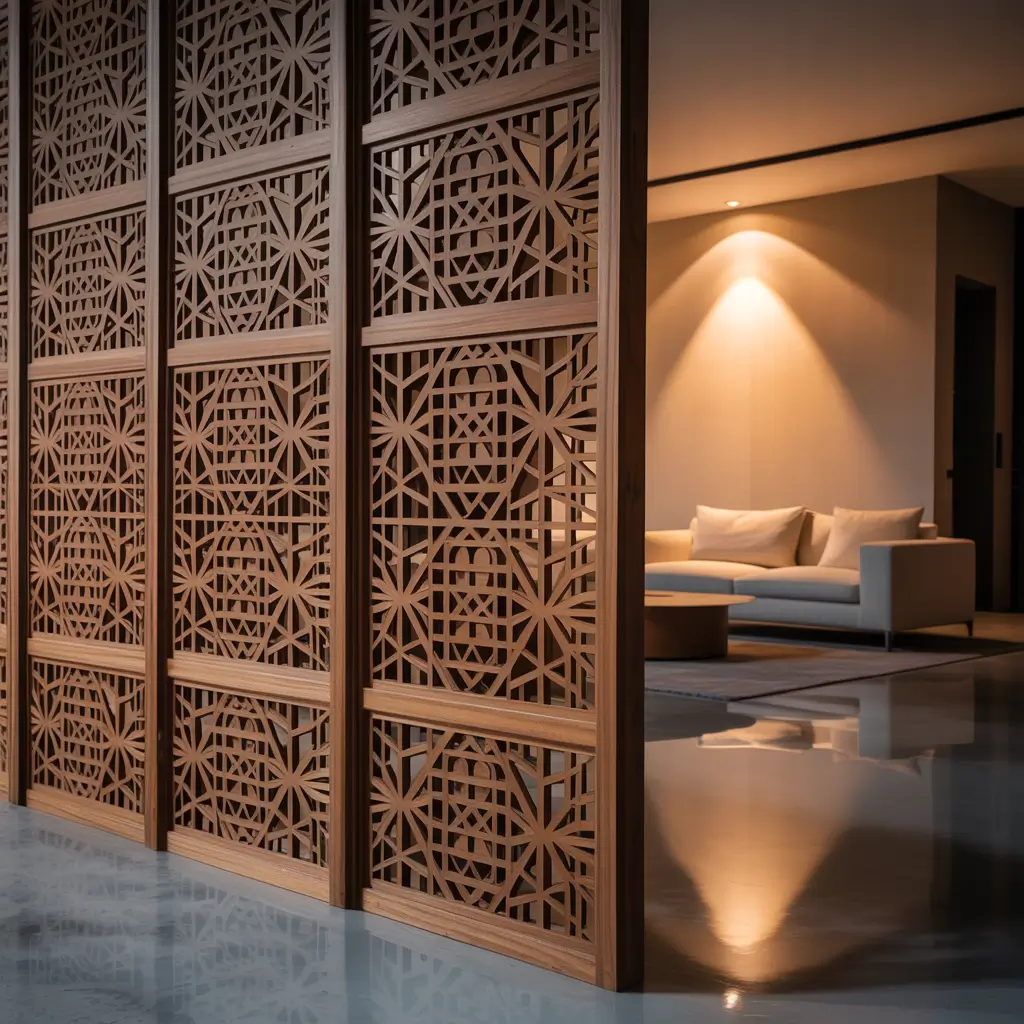
Art Meets Function
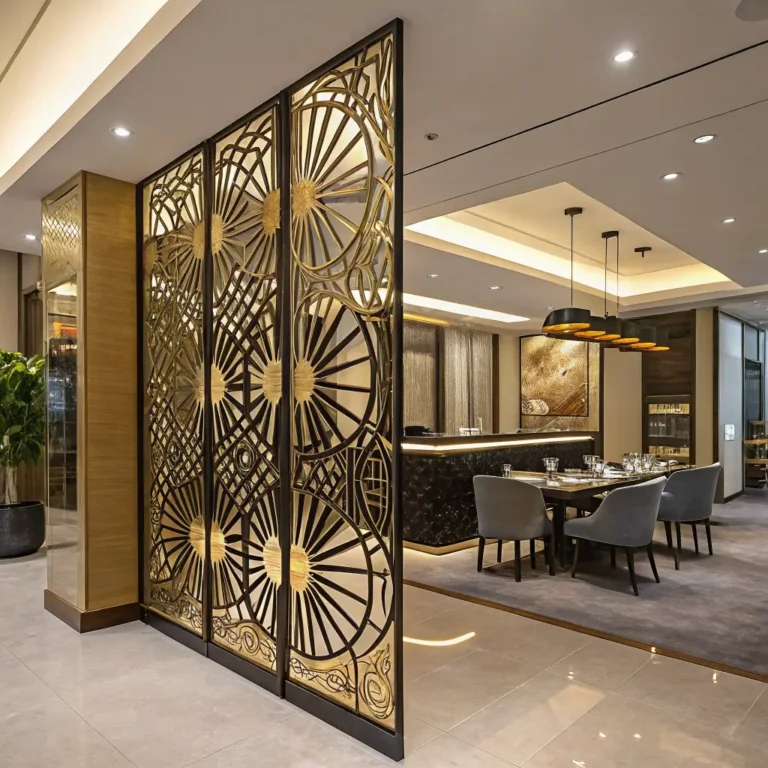
Geometric cutouts transform simple wooden panels into sculptural room dividers. These designs use negative space as a design element, creating dynamic shadow patterns and visual interest while maintaining some transparency between spaces.
The cutout patterns can range from simple circles and squares to complex geometric compositions. I particularly love designs that incorporate multiple shapes and sizes – they create ever-changing light patterns as the sun moves throughout the day.
These panels work beautifully as statement pieces in minimalist interiors or as bold contrasts in more traditional settings. The key is choosing cutout patterns that complement your existing decor without overwhelming the space.
Design Pattern Ideas
Popular geometric cutout options include:
- Hexagonal honeycomb patterns for modern appeal
- Circular arrangements in varying sizes
- Diamond and triangle combinations
- Abstract organic shapes for artistic flair
The size and spacing of cutouts affect both aesthetics and functionality. Larger openings provide more visual connection between spaces but less privacy, while smaller, more numerous cutouts create intricate shadow play with better sound dampening.
9. Half-Height Wooden Lattice Partition
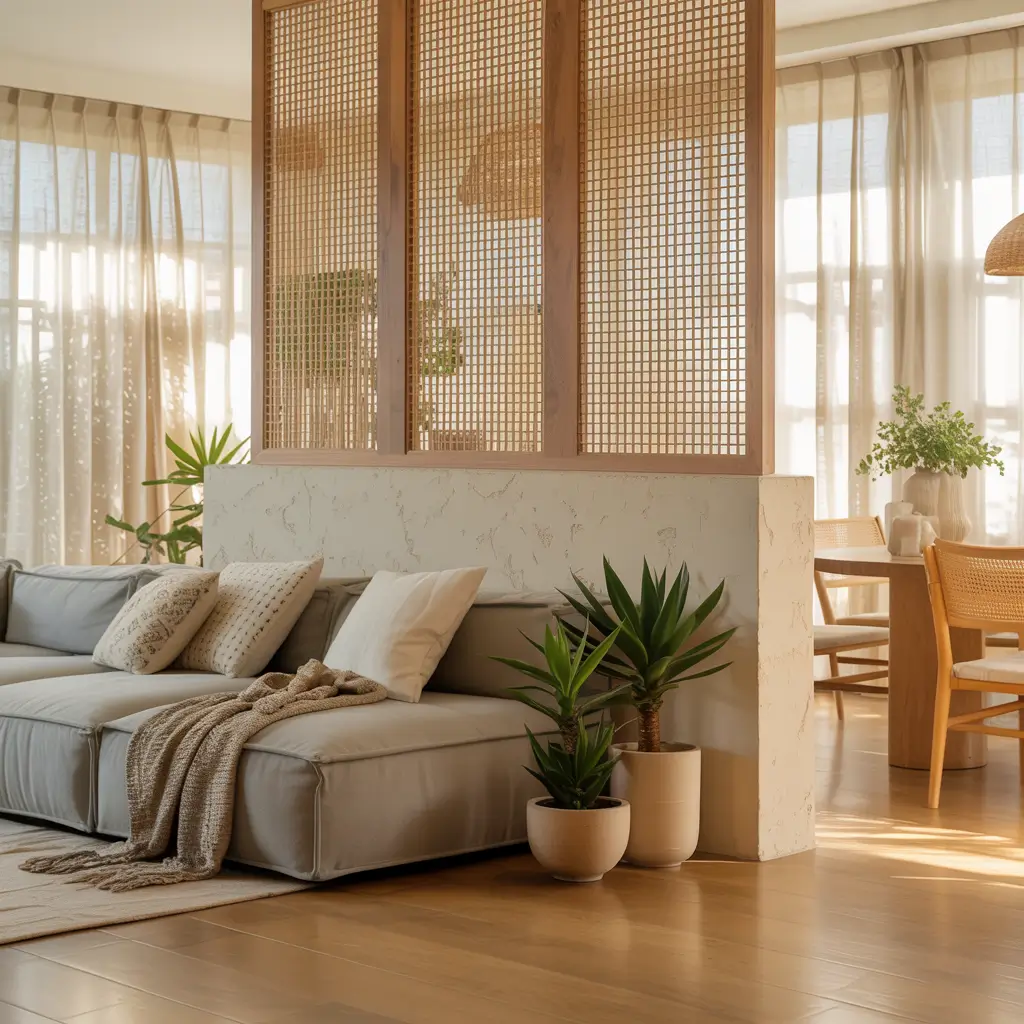
The Perfect Balance
Sometimes you don’t need floor-to-ceiling division – half-height partitions provide just enough separation while maintaining openness and light flow. Wooden lattice designs add texture and visual interest without the commitment of full walls.
These partitions work brilliantly for defining spaces without completely separating them. I’ve used them to separate dining areas from living rooms, create home office zones, and even as decorative elements that simply add architectural interest.
The lattice pattern provides excellent climbing support for plants, turning your partition into a living wall over time. Imagine trailing ivy or climbing jasmine transforming your wooden lattice into a natural green screen – it’s like getting two design elements for the price of one.
Height and Proportion Guidelines
Half-height partitions work best when they relate to human scale:
- Counter height (36 inches) for kitchen/dining separation
- Standing height (42-48 inches) for office privacy
- Seated privacy (54-60 inches) for living areas
The lattice spacing affects both aesthetics and plant support. Smaller openings (2-3 inches) provide better privacy and plant climbing support, while larger openings (4-6 inches) feel more open and modern.
Also Read: 10 Stunning sofa back wall design ideas for modern homes
10. Wooden Frame + Frosted Glass Combo Divider
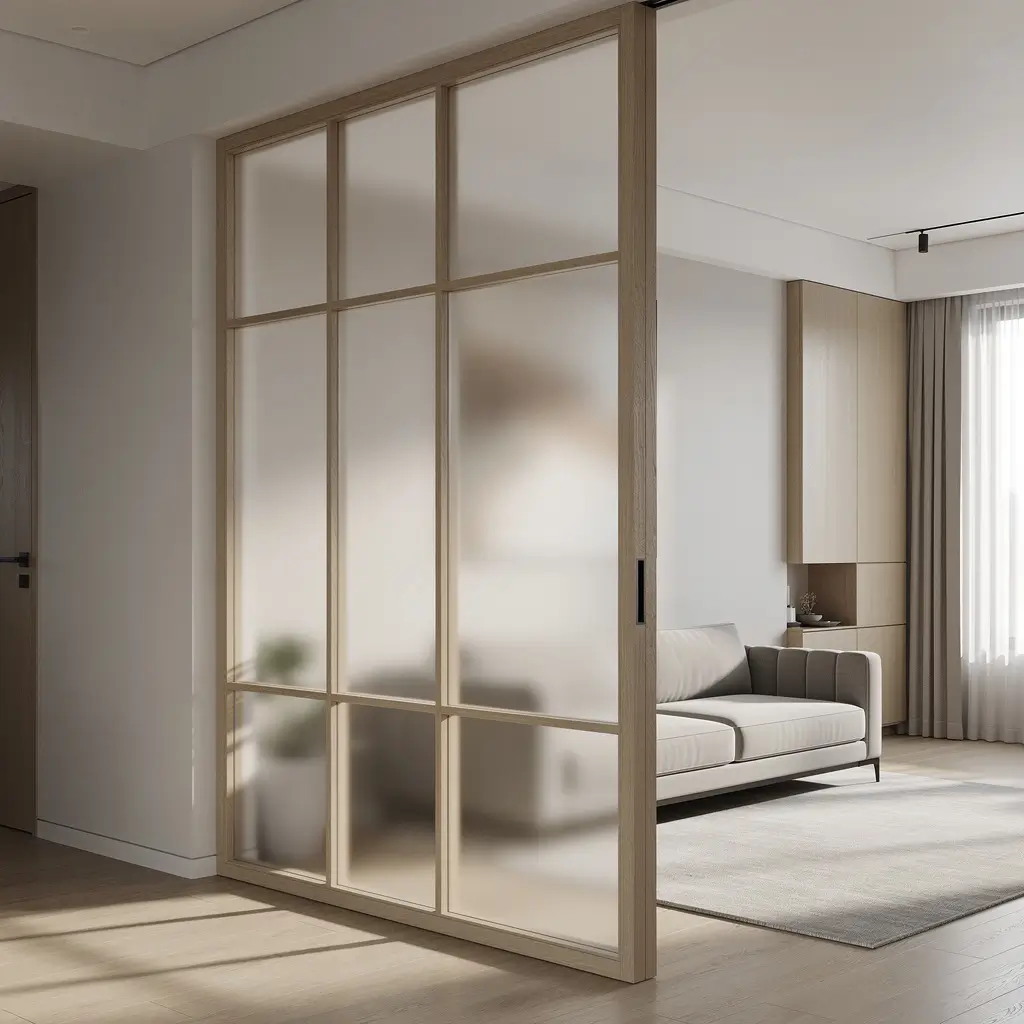
Best of Both Worlds
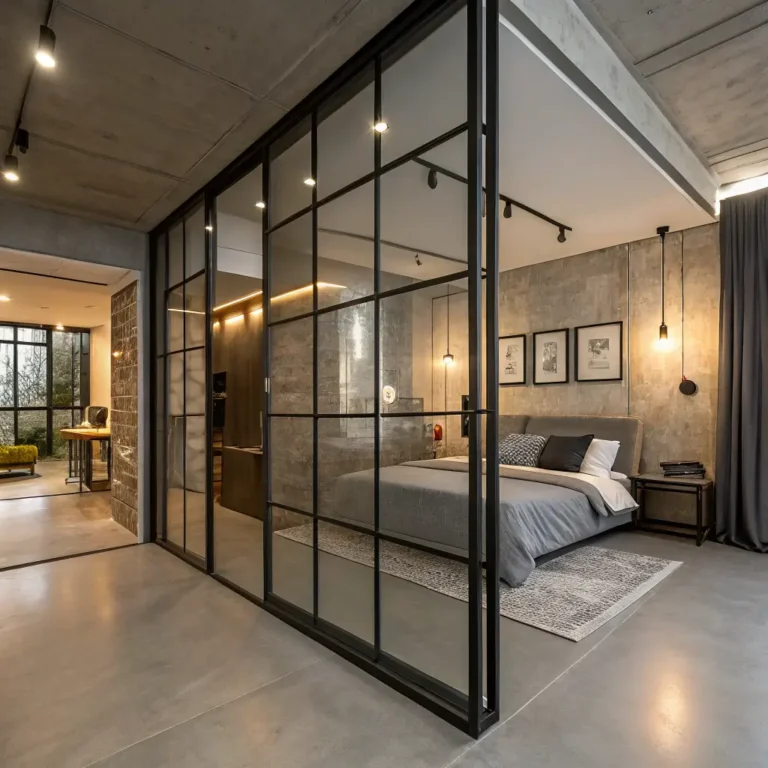
Wooden frames with frosted glass panels combine the warmth of wood with the light-transmitting properties of glass. These hybrid partitions provide excellent visual separation while maintaining brightness and spaciousness – perfect for darker interiors or spaces with limited natural light.
The frosted glass offers privacy without complete isolation, making these partitions ideal for home offices, bedrooms, or any space where you want separation but not complete enclosure. The wooden frame adds warmth and natural texture that purely glass partitions can’t match.
I’ve found these particularly effective in open-plan homes where natural light is precious. The glass panels allow light to flow through while the wooden frames provide visual weight and warmth that keeps spaces feeling cozy rather than sterile.
Material and Safety Considerations
Combining wood and glass requires attention to specific details:
- Tempered safety glass for impact resistance
- Proper glazing compounds for secure glass installation
- Expansion joints to accommodate wood movement
- Professional installation for safety compliance
The wood frame can be stained or painted to match existing trim, while glass options include clear frosted, textured patterns, or even colored films for added visual interest.
Wrapping It Up: Your Space, Your Rules
Look, wooden partitions aren’t just about dividing space – they’re about creating the life you want within the space you have. Whether you go for the clean lines of vertical slats or the dramatic flair of curved strips, the right partition design can completely transform how you experience your home.
The best part? Most of these ideas can be adapted to fit any budget or skill level. Start simple with a basic vertical slat design, or go all-out with a curved masterpiece – there’s no wrong choice, just different approaches to making your space work better for you.
FYI, the key to success with any partition project is understanding your specific needs first. Are you looking for privacy, storage, visual interest, or all three? Once you know what you want to achieve, choosing the right design becomes much clearer.
Remember, your home should work for your lifestyle, not against it. These partition ideas are just starting points – feel free to mix, match, and modify them until you create something that’s uniquely yours. After all, the best design is the one that makes you smile every time you walk into the room 🙂