10 Smart Very Tiny Bedroom Ideas Space Saving Tricks

Let’s be honest here – you’re probably reading this because you’re stuck with a bedroom that’s roughly the size of a walk-in closet, and you’re wondering how on earth you’re supposed to fit your life into it without losing your sanity.
Trust me, I’ve been there! My first apartment had a bedroom so small that I could literally touch both walls while lying in bed (and no, I don’t have freakishly long arms).
The good news? Small doesn’t have to mean cramped, chaotic, or depressing. With some clever tricks and strategic thinking, you can turn your tiny bedroom into a space that’s not only functional but actually feels bigger than it is.
Ready to make some magic happen? Let’s dive into these game-changing ideas that’ll have you wondering why you ever thought bigger was better.
1. Vertical Storage Wall Tiny Bedroom
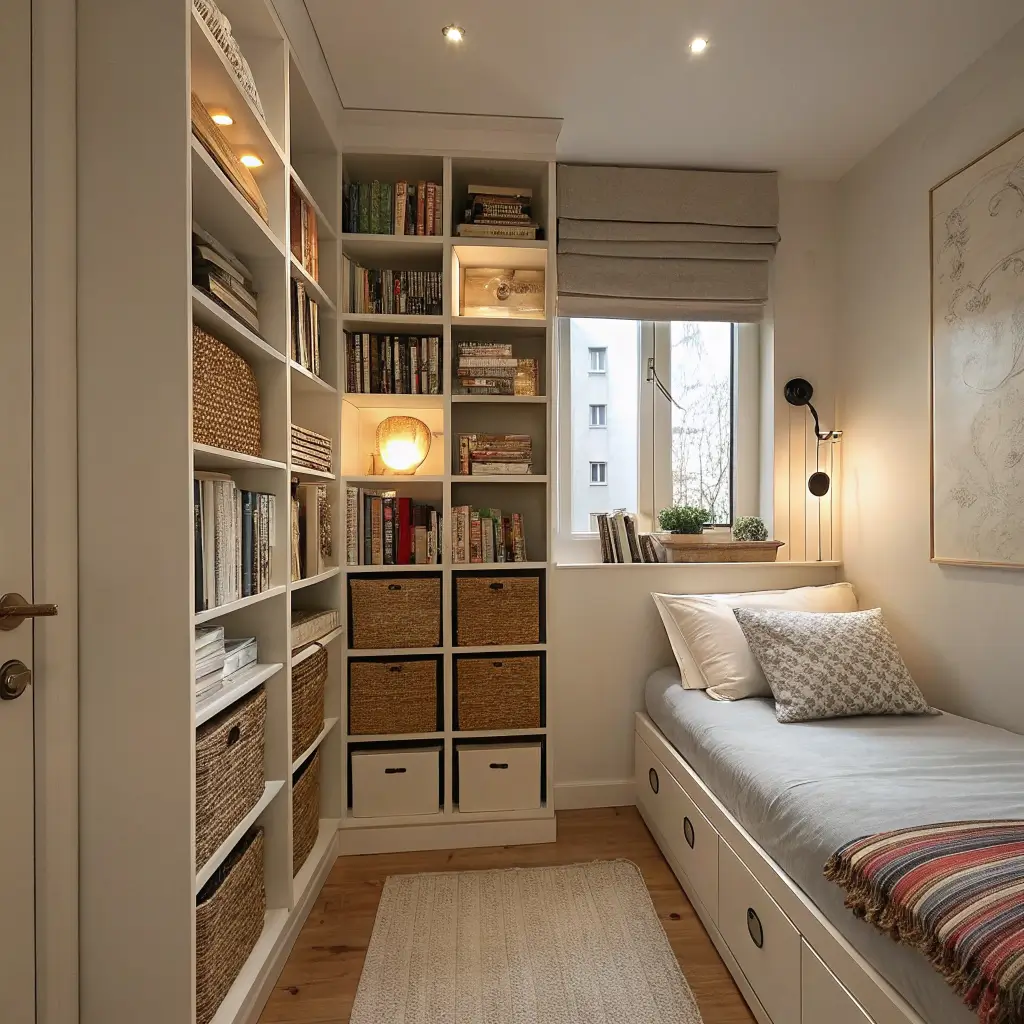
Here’s the thing about tiny bedrooms – you’ve got to think like a rock climber and go vertical. Floor space might be at a premium, but those walls? They’re basically free real estate that most people completely ignore.
I learned this lesson the hard way when I realized I was treating my walls like expensive wallpaper instead of valuable storage space. Floor-to-ceiling shelving units can hold everything from books to decorative boxes to that random collection of things you can’t quite categorize but can’t bring yourself to throw away.
The key is creating a cohesive wall storage system that doesn’t look like you just randomly stuck shelves everywhere. Consider installing floating shelves at different heights to create visual interest while maximizing storage. You can even incorporate small plants or decorative items between your practical storage to keep things from looking too utilitarian.
Pro tip? Use the space above your door frame – it’s perfect for storing seasonal items or things you don’t need daily access to. Ever notice how hotels maximize every inch of wall space? There’s a reason for that, and it’s not just aesthetic.
2. Floating Bed Minimal Space Setup
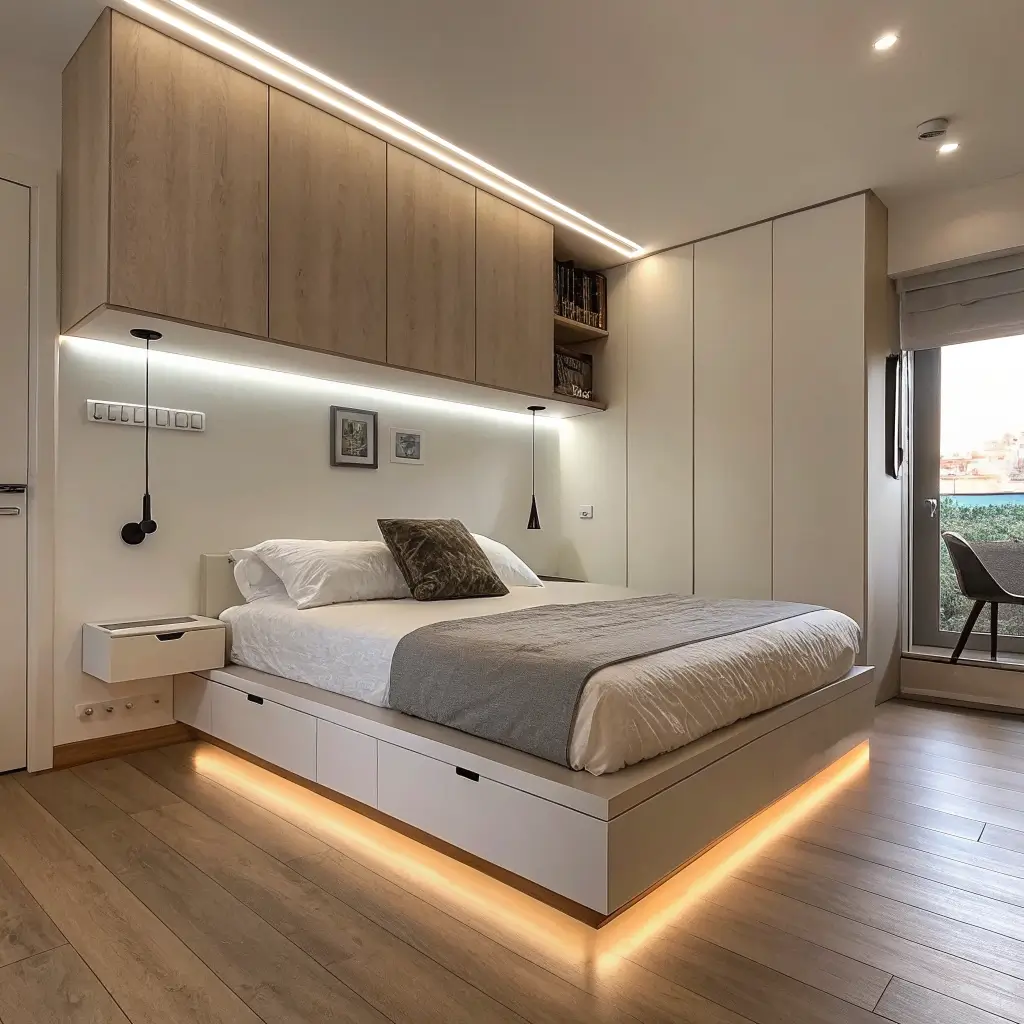
Now this is where things get interesting. A floating bed isn’t just about looking cool (though it definitely does) – it’s about creating the illusion of more floor space while adding serious storage functionality underneath.
When your bed appears to “float” above the ground, it tricks your eye into perceiving more room than actually exists. It’s basically optical illusion magic, and honestly, who doesn’t want a little magic in their bedroom? The space underneath becomes prime real estate for storage bins, shoes, or even a small workspace if you’re really tight on room.
You can achieve this look with a platform bed frame that has built-in storage or by mounting your mattress on a custom platform with hidden storage compartments. IMO, this is one of the smartest investments you can make in a tiny space because it serves multiple functions without taking up additional room.
The minimal aesthetic also means fewer visual distractions, which makes your small space feel cleaner and more open. Sometimes less really is more – shocking, I know 🙂
3. Under-Bed Hidden Storage Design
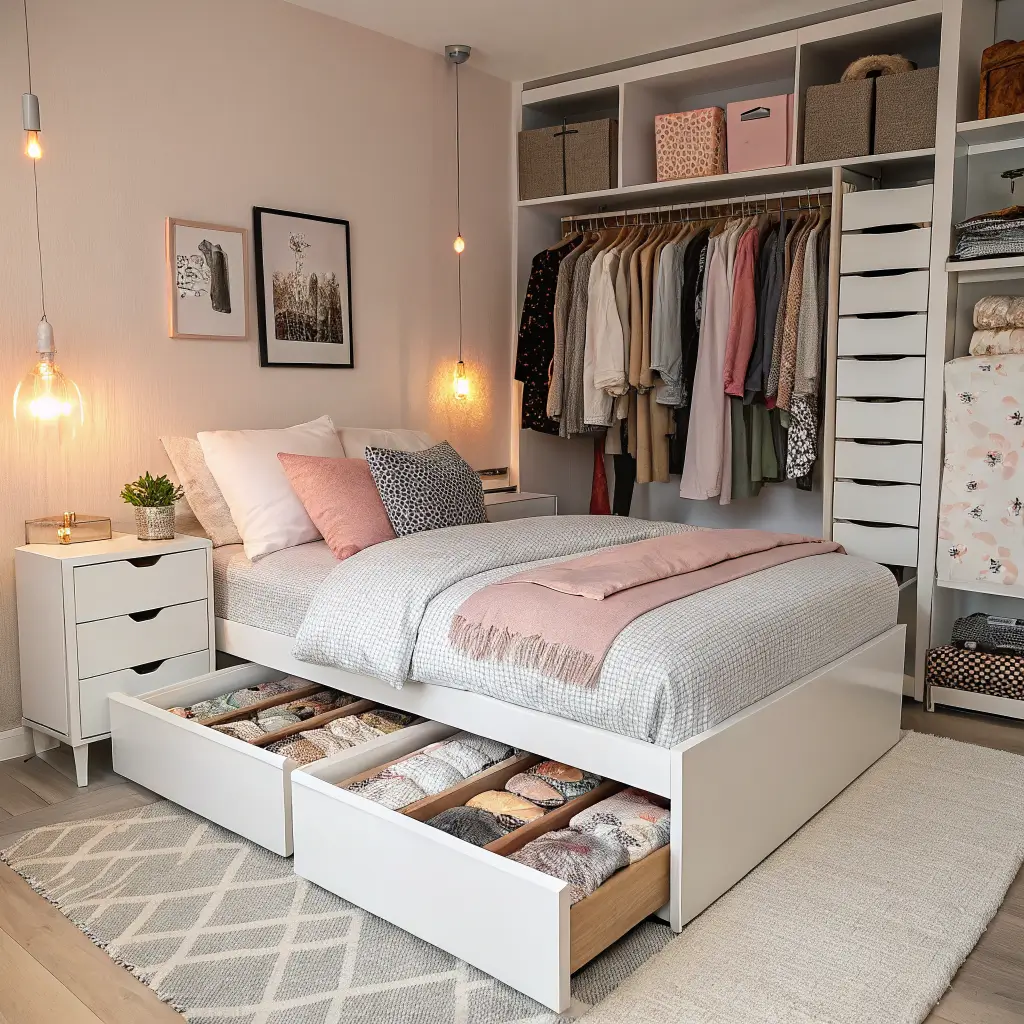
Let’s talk about the goldmine of storage space that’s literally hiding right under your nose (or rather, under your bed). This area is probably the most underutilized space in tiny bedrooms, and it’s driving me crazy how many people just ignore it!
Rolling storage boxes are your best friend here. You can store everything from out-of-season clothes to extra bedding to that box of sentimental items you can’t part with but don’t need to see every day. The beauty of rolling storage is that you can easily access everything without having to move your entire bed setup.
For maximum efficiency, consider getting a bed frame specifically designed with built-in drawers. These aren’t your grandma’s creaky wooden drawers – modern designs are sleek, silent, and surprisingly spacious. You can fit an entire wardrobe’s worth of clothes under there if you organize smartly.
Here’s a game-changer: vacuum storage bags for seasonal items. They compress bulky winter coats and comforters down to practically nothing, giving you way more storage capacity than you’d think possible. It’s like having a magic shrinking machine for your stuff.
Also Read: 10 Stylish Tiny Bedroom Design Ideas for Modern Homes
4. Corner Bed Space Saver Layout
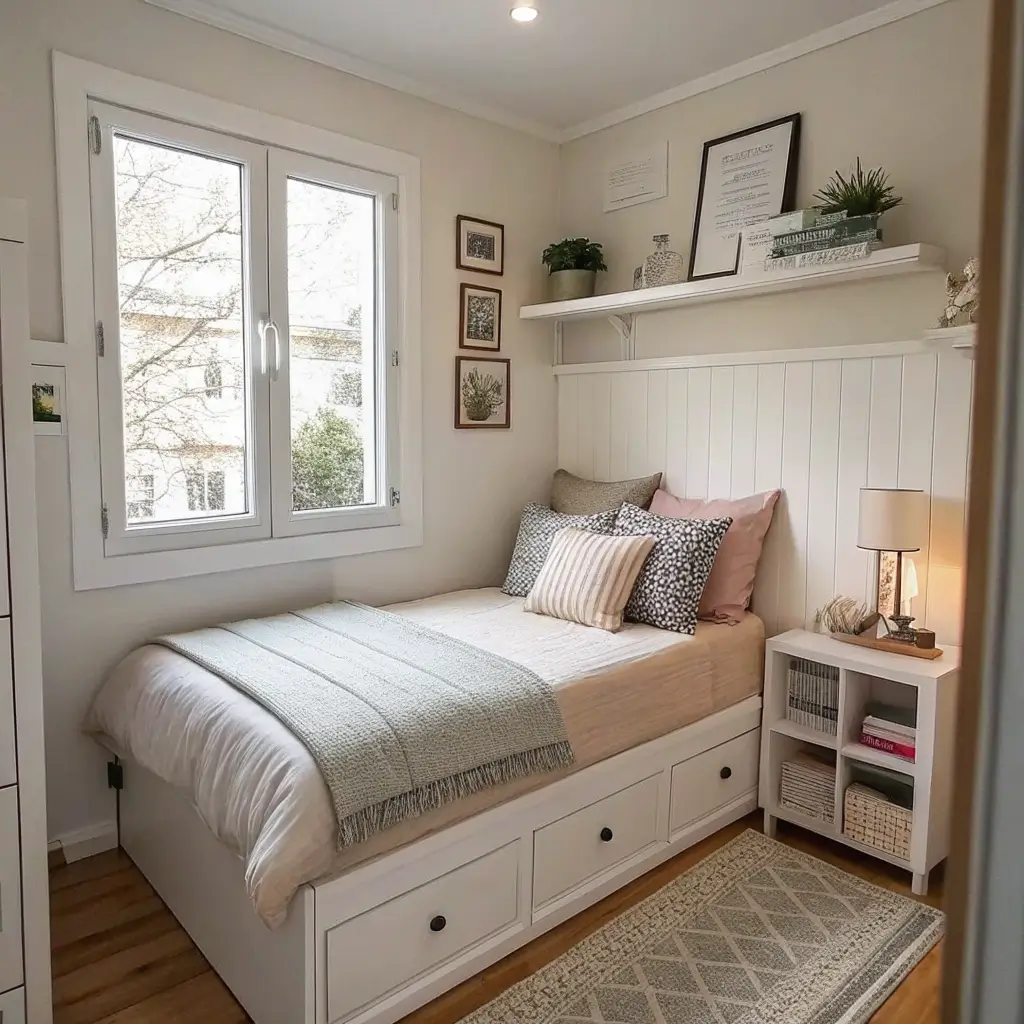
Corners are the forgotten heroes of small bedroom design. Most people just shove a random piece of furniture there and call it a day, but positioning your bed in the corner can actually free up a surprising amount of usable floor space.
When you push your bed into a corner, you’re essentially creating an entire wall of open space for other furniture or activities. This layout works especially well if you’re a solo sleeper or don’t mind climbing over your partner to get out of bed (hey, no judgment here).
The trick is making sure the corner placement doesn’t feel claustrophobic. Use light-colored bedding and keep the walls bright to maintain an airy feel. You can even install floating nightstands on the exposed side to keep essentials within reach without taking up floor space.
Corner placement also creates interesting opportunities for creative headboard solutions. You could install corner shelving that doubles as both decoration and storage, or use removable wall decals to create a headboard effect without permanent installation.
5. Loft Bed With Workspace Below
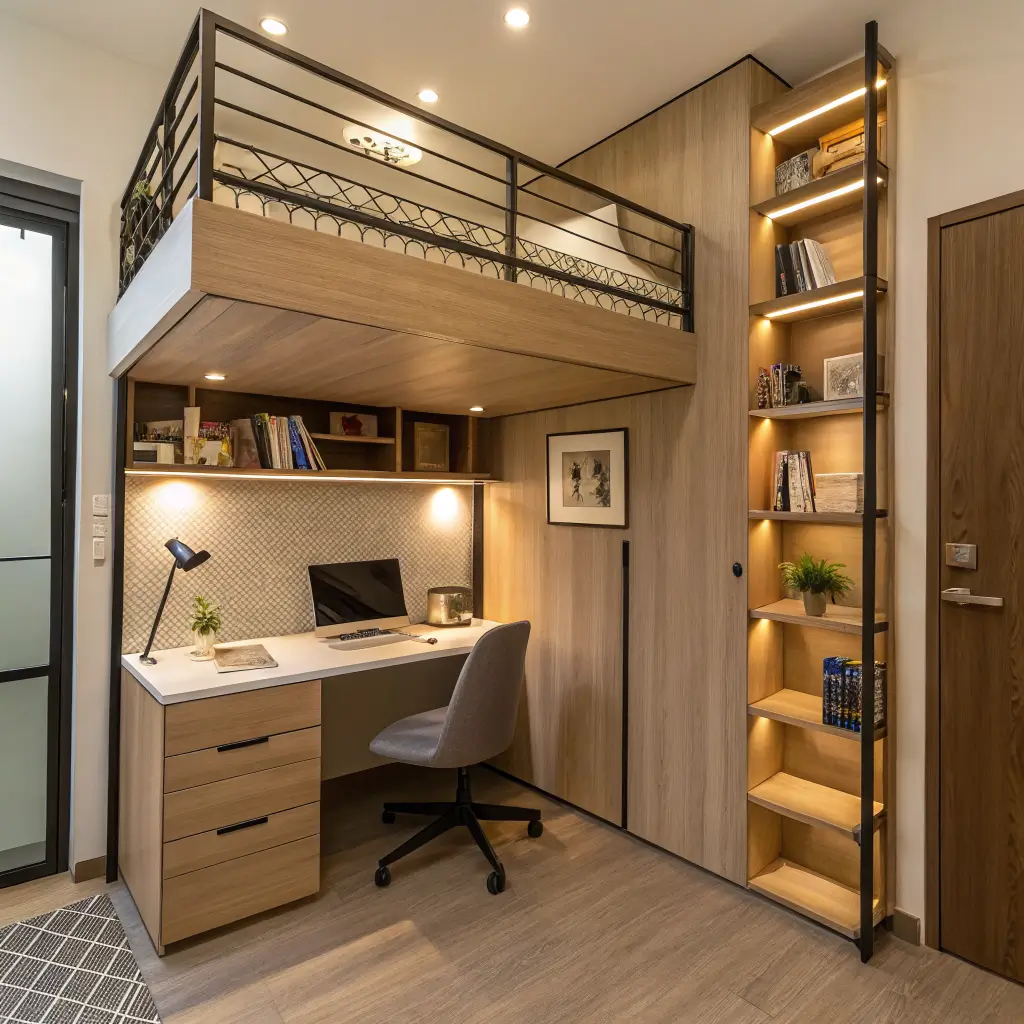
Okay, I know what you’re thinking – “loft beds are for college dorms and kids’ rooms.” But hear me out! A well-designed adult loft bed can completely transform a tiny bedroom by literally doubling your usable space.
The area underneath becomes prime real estate for a home office setup, reading nook, or even additional storage. I’ve seen tiny bedrooms where the space under a loft bed houses an entire workstation complete with desk, chair, and filing system. It’s like having a two-story apartment in miniature.
Modern loft beds don’t have to look like dormitory furniture. You can find sleek, minimalist designs that look more like architectural features than bedroom furniture. The key is choosing a design that matches your overall aesthetic and doesn’t make the room feel too industrial.
FYI, make sure you have enough ceiling height for this to work comfortably. You don’t want to feel like you’re sleeping in a cave or constantly bumping your head. A good rule of thumb is ensuring you can sit up comfortably in bed without touching the ceiling.
6. Mirror Illusion Tiny Room Design
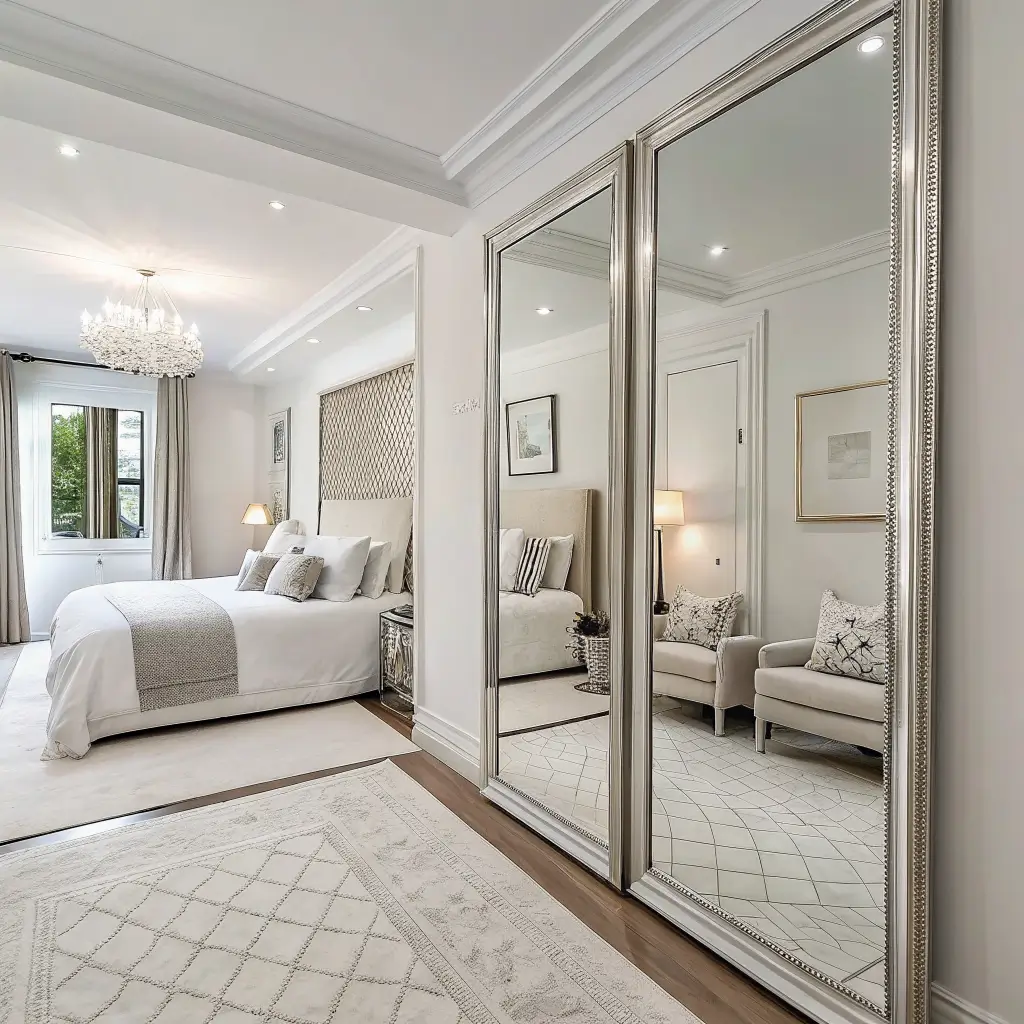
Here’s where we get into some serious visual trickery. Mirrors are basically cheat codes for making small spaces feel larger, and I’m not just talking about hanging one random mirror on the wall and calling it a day.
Strategic mirror placement can literally double the perceived size of your room. A large mirror positioned opposite a window reflects natural light and the outdoor view, creating the illusion of having another window. It’s like borrowing space from the outside world.
Consider creating a mirrored accent wall or using mirrored furniture pieces like nightstands or dressers. The reflection creates depth and makes boundaries feel less defined. Just don’t go overboard – too many mirrors can make a space feel more like a funhouse than a bedroom.
Mirrored closet doors are particularly effective in tiny bedrooms because they serve dual purposes: hiding clutter while visually expanding the space. Plus, getting dressed becomes way easier when you can see yourself from multiple angles without contorting into weird positions.
Also Read: 10 Dreamy Office and Dressing Room Combo Ideas for Luxury Spaces
7. Foldable Furniture Smart Bedroom
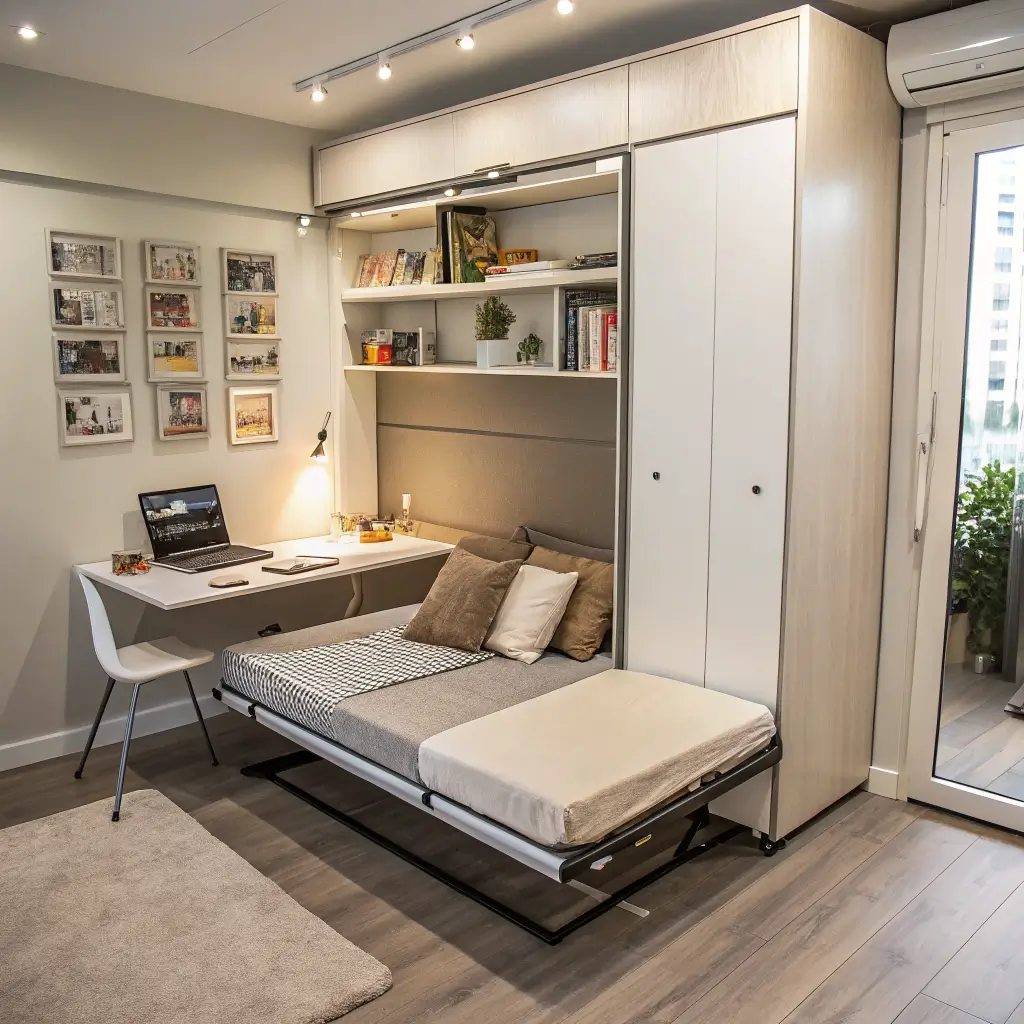
Welcome to the world of transforming furniture – where everything has multiple personalities and nothing is quite what it seems. This is honestly one of my favorite approaches to tiny bedroom design because it’s so practical yet feels so futuristic.
Wall-mounted folding desks can disappear completely when not in use, giving you workspace when you need it and open floor space when you don’t. Folding chairs can hang on hooks behind doors or slide under beds. Even nightstands can fold flat against the wall when you need to create more room for activities.
The beauty of foldable furniture is that it adapts to your daily rhythm instead of forcing you to work around permanent fixtures. Need space for morning yoga? Fold up the desk. Having friends over? Collapse the extra seating. It’s like having furniture that understands your lifestyle.
Just make sure the folding mechanisms are high-quality – there’s nothing worse than furniture that’s more trouble to set up than it’s worth. Trust me, I’ve wrestled with enough rickety folding tables to last a lifetime.
8. Light Color Minimalist Tiny Bedroom
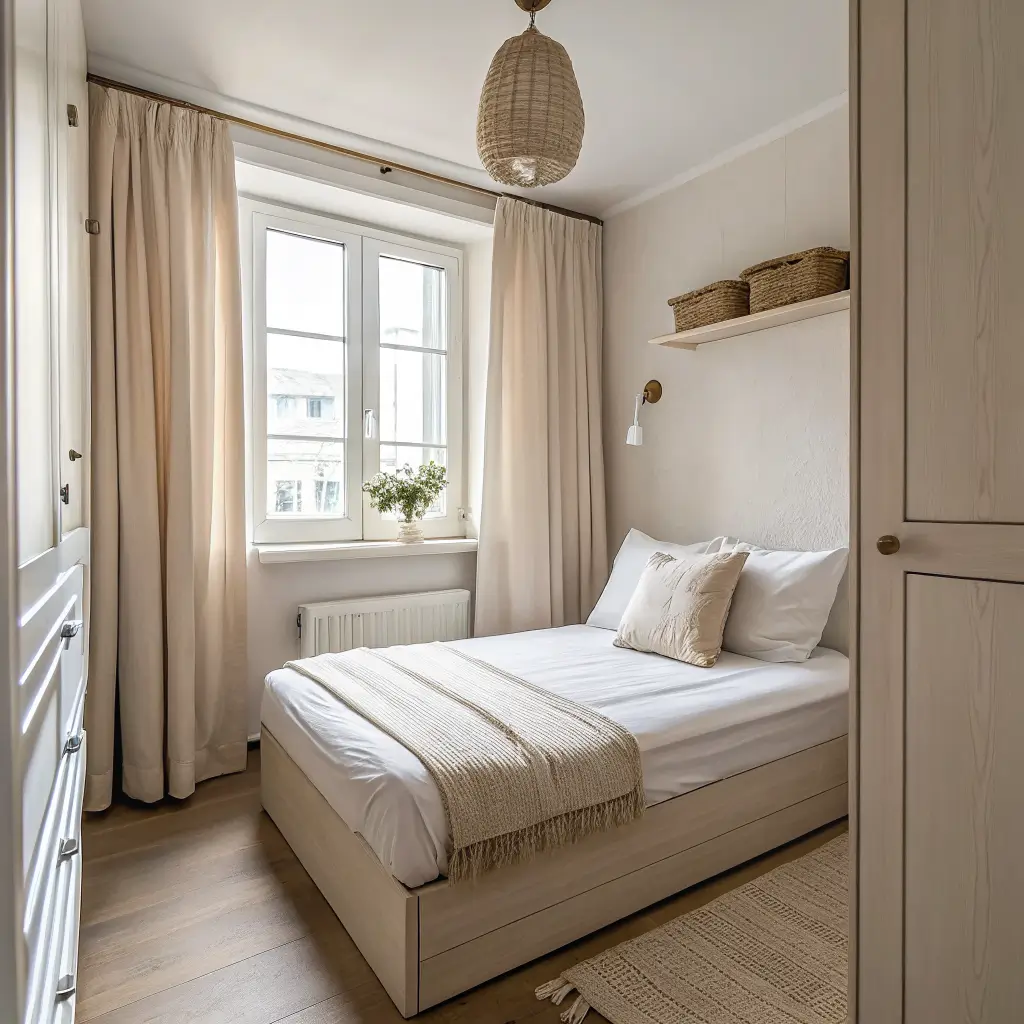
This might sound obvious, but the power of light colors in small spaces cannot be overstated. Dark colors absorb light and make boundaries feel closer, while light colors reflect light and push boundaries outward. It’s basic physics, but the psychological effect is dramatic.
White, cream, and soft pastels create an airy, spacious feeling that makes your tiny bedroom feel less like a cell and more like a serene retreat. This doesn’t mean everything has to be stark white – you can layer different shades of light colors to create depth and interest without sacrificing the spacious feeling.
The minimalist approach means being ruthless about clutter. Every item in your bedroom should either serve a purpose or bring you joy (thanks, Marie Kondo). This isn’t about living like a monk – it’s about being intentional with your choices so that your space feels calm rather than chaotic.
Light-colored bedding, walls, and furniture create a cohesive look that doesn’t fight for visual attention. When everything flows together harmoniously, your eye isn’t constantly stopping and starting, which makes the space feel larger and more peaceful.
9. Built-In Wall Storage Bedroom
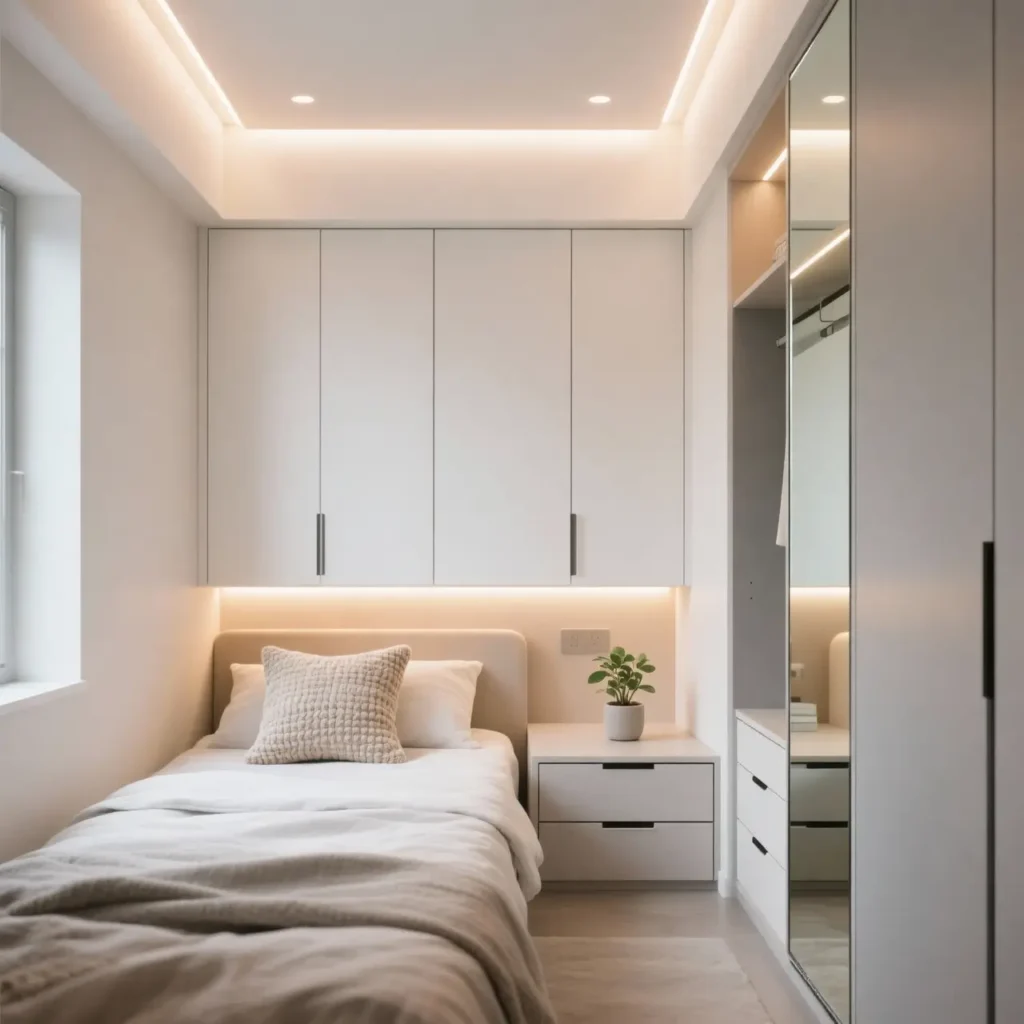
Custom built-in storage is the holy grail of tiny bedroom solutions. Yes, it requires more upfront investment and planning, but the payoff in both functionality and aesthetics is incredible. Built-ins maximize every inch of available space in ways that standalone furniture simply can’t match.
Think floor-to-ceiling wardrobes that fit perfectly in alcoves, built-in nightstands that don’t eat up floor space, or storage benches that fit exactly under windows. When storage is built into the architecture of the room, it becomes part of the space rather than competing with it.
The best part about built-ins is that they can be designed to fit your specific needs and belongings. Need extra hanging space for long dresses? No problem. Want hidden storage for electronics? Easy. Have an awkward corner that standard furniture can’t utilize? Built-ins laugh in the face of weird angles.
If full custom built-ins aren’t in the budget, consider modular systems that can be configured to fit your space perfectly. Many furniture companies now offer customizable storage solutions that give you the built-in look without the built-in price tag.
Also Read: 10 Gorgeous Pink Dressing Room Ideas for Aesthetic Glow Up
10. Multi-Functional Furniture Tiny Room
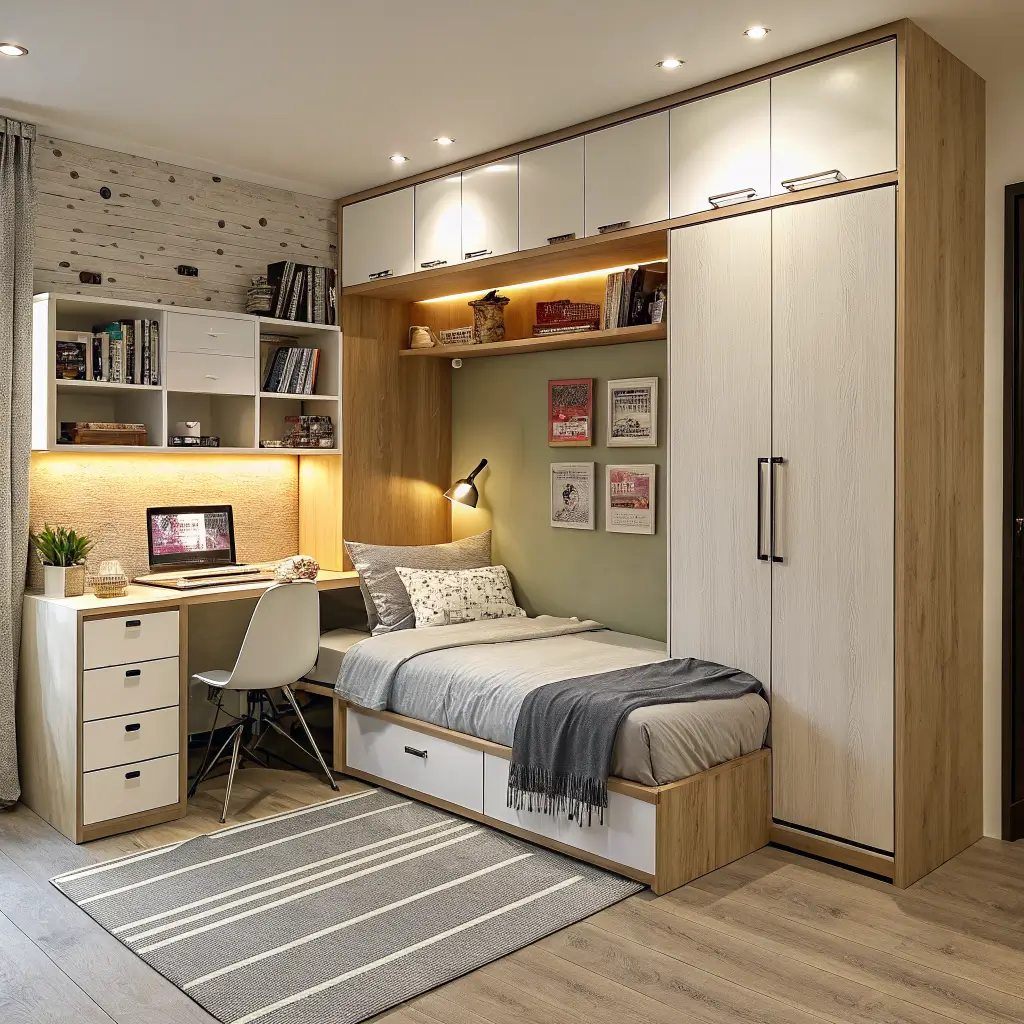
Last but definitely not least, let’s talk about furniture that works overtime. In tiny bedrooms, every piece of furniture should earn its keep by serving multiple functions. Single-purpose items are basically luxury items that you probably can’t afford space-wise.
Ottoman storage benches provide seating, storage, and can even serve as temporary tables. Nightstands with drawers and shelves keep essentials organized while providing surface space. Beds with built-in drawers eliminate the need for separate dressers.
The key is finding pieces that genuinely serve multiple functions well, rather than trying to do everything poorly. A coffee table that converts to a dining table sounds great in theory, but if it’s wobbly as a table and uncomfortable for coffee, you’re not actually solving any problems.
Look for clever design solutions like nesting tables that tuck away when not needed, or headboards with built-in shelving. The best multi-functional furniture doesn’t look like it’s trying too hard – it just quietly makes your life easier while taking up minimal space.
Making Your Tiny Bedroom Work for You
Here’s the truth about tiny bedrooms – they’re not a limitation, they’re a design challenge that forces you to be creative and intentional. Some of the most beautiful, functional bedrooms I’ve seen have been tiny spaces where every decision was made with purpose.
The key is finding the right combination of these strategies that works for your specific space and lifestyle. Maybe you need the storage power of under-bed solutions combined with the visual expansion of mirrors. Or perhaps a loft bed setup with foldable furniture gives you the flexibility you’re craving.
Don’t try to implement every single idea at once (trust me, that way lies madness and a very confused-looking bedroom). Start with the solution that addresses your biggest pain point, whether that’s lack of storage, feeling cramped, or needing workspace. Once you’ve solved that primary challenge, you can layer in additional improvements.
Remember, the goal isn’t to make your tiny bedroom feel like something it’s not – it’s to make it the best version of what it is. A well-designed tiny bedroom can feel more comfortable and functional than a poorly planned large one. Sometimes constraints force us to be more creative, and creativity often leads to better solutions than simply throwing space at problems.
Your tiny bedroom might not be the sprawling master suite of your dreams, but with the right approach, it can become a space that perfectly suits your needs while feeling surprisingly spacious. And who knows? You might find that you actually prefer the cozy, efficient charm of a well-designed small space over the echoing emptiness of a larger room. After all, bigger isn’t always better – sometimes it’s just bigger.