10 Stunning Rock Garden Design Ideas for a Modern Look

Listen, I get it. You’re staring at that sad patch of dirt in your yard, wondering how to turn it into something that doesn’t make your neighbors quietly judge your landscaping skills.
Rock gardens might just be your salvation – and trust me, they’re way cooler than you think.
After years of battling unruly grass and watching my water bill skyrocket, I discovered rock gardens are basically the lazy gardener’s dream come true.
Less maintenance, more style, and honestly? They look pretty badass when done right. Let’s dive into ten rock garden designs that’ll make your outdoor space the envy of the block.
Minimalist Zen Rock Garden
Clean lines, maximum chill vibes
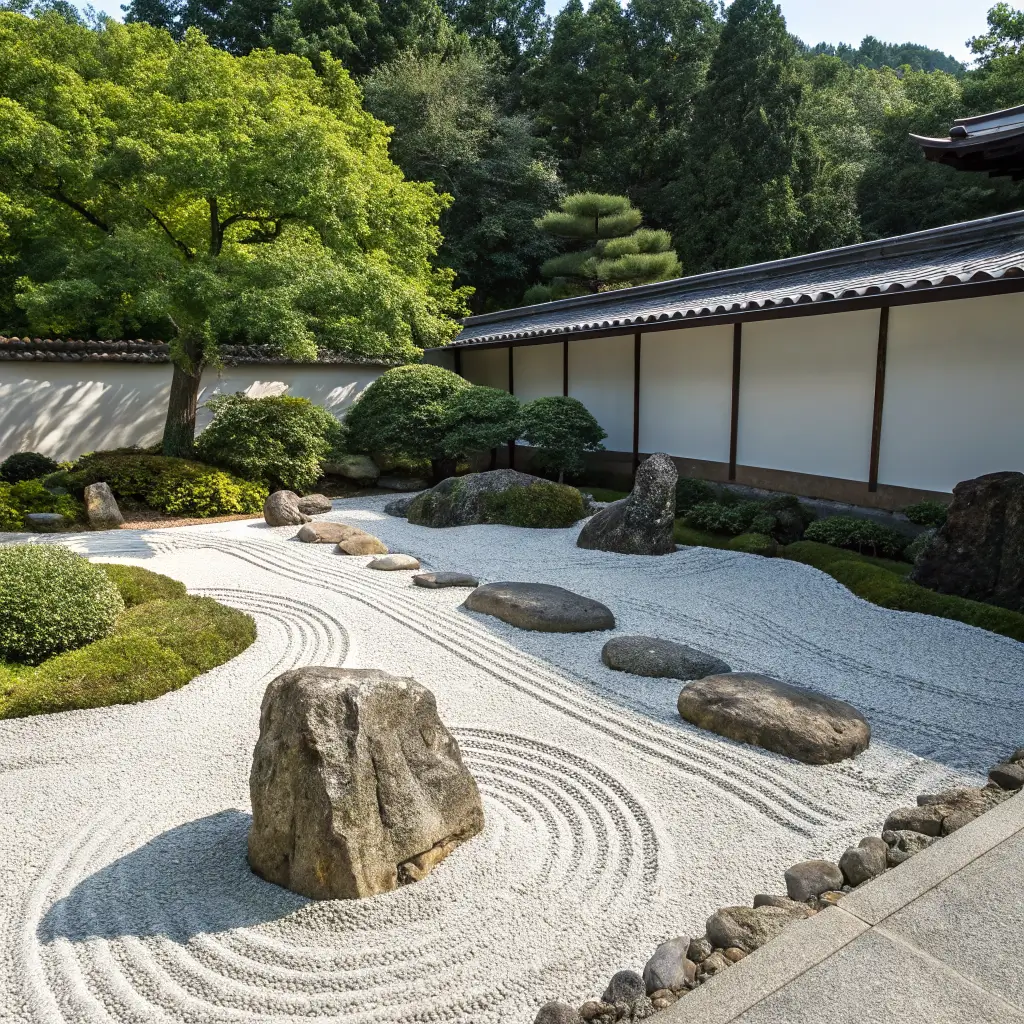
You know that feeling when you walk into a perfectly organized space and instantly feel calmer? That’s exactly what a minimalist zen rock garden delivers. I’m talking about the art of doing more with less – way less.
The beauty of zen design lies in its simplicity. Picture smooth river rocks arranged in flowing patterns, maybe some carefully placed boulders that look like they’ve been there forever. The key here is restraint – resist the urge to add every cool rock you find at the garden center.
Essential elements for your zen oasis:
- Large, smooth stones as focal points
- Raked gravel or sand between rocks
- Minimal plant life (think one or two carefully chosen specimens)
- Clean, geometric borders
I learned this the hard way when I first attempted a zen garden and went overboard with decorative elements. It looked more like a rock shop exploded than a peaceful retreat. Sometimes less really is more, and your zen garden should breathe with empty space.
The maintenance? Practically nonexistent. A quick rake of the gravel every few weeks, and you’re golden. Perfect for those of us who want a gorgeous garden without the weekend warrior routine.
Small Corner Rock Garden Design
Big impact, tiny footprint
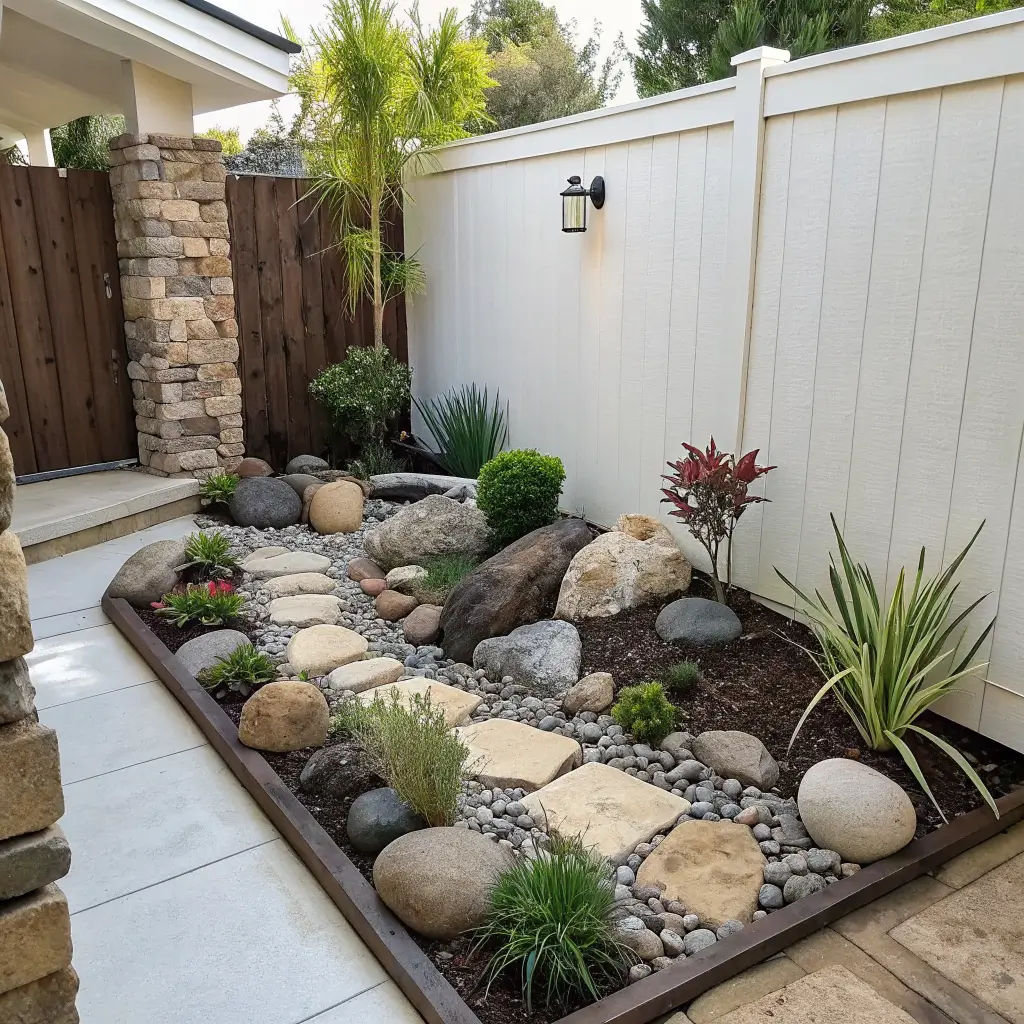
Got a weird corner that’s been driving you crazy? That awkward spot where nothing seems to grow right? Corner rock gardens are about to become your new best friend.
Small spaces actually work in your favor here. You can create incredible depth and interest without needing a massive area. I’ve seen corner gardens that pack more visual punch than sprawling landscapes – it’s all about working smart, not big.
Maximizing your corner space:
- Use vertical elements like tall, narrow stones
- Layer rocks at different heights for depth
- Choose plants with varying textures
- Add a small focal point like a unique boulder
The trick is creating layers. Start with your largest rocks as anchors, then build around them with medium and smaller stones. Think of it like decorating a really cool, outdoor bookshelf. Each level should have something interesting to look at.
One corner garden I designed used three large slate pieces stood vertically, creating natural planting pockets between them. Added some hardy succulents and suddenly that dead corner became the most photographed spot in the yard. Not bad for a 4×4 foot space, right?
Modern Front Yard Rock Garden
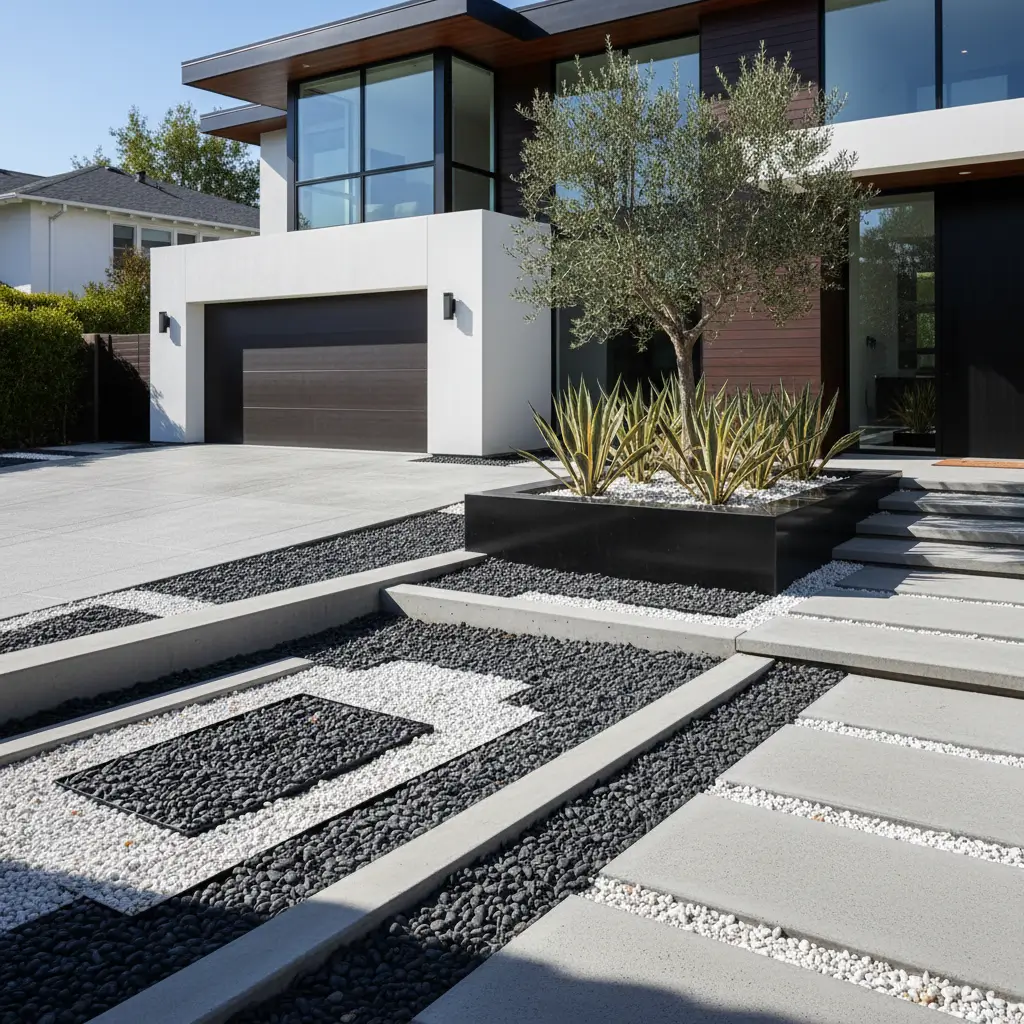
Curb appeal that actually appeals
Let’s be real – most front yard landscaping is boring. Predictable. Your neighbors probably have the same foundation shrubs and mulched beds as everyone else on the block. Time to shake things up.
Modern rock gardens in front yards make a statement. They say, “I know what I’m doing, and I’m not afraid of a little edge.” The key is balancing contemporary design with your home’s architecture.
Modern design principles that work:
- Geometric patterns and clean lines
- Contrasting textures (smooth vs. rough rocks)
- Strategic use of color through stone selection
- Integration with existing hardscaping
I’ve noticed that modern rock gardens photograph incredibly well – something about the interplay of light and shadow on different stone surfaces. If you’re into that Instagram-worthy curb appeal, this style delivers.
The beauty of going modern in your front yard is the low maintenance factor. No more weekend edging around flower beds or replacing seasonal plants. Your modern rock garden looks intentional year-round, and honestly, that’s the kind of landscaping confidence we all need.
Also Read: 10 Gorgeous Vertical Garden Design Ideas for Cozy Homes
Desert Style Rock Garden
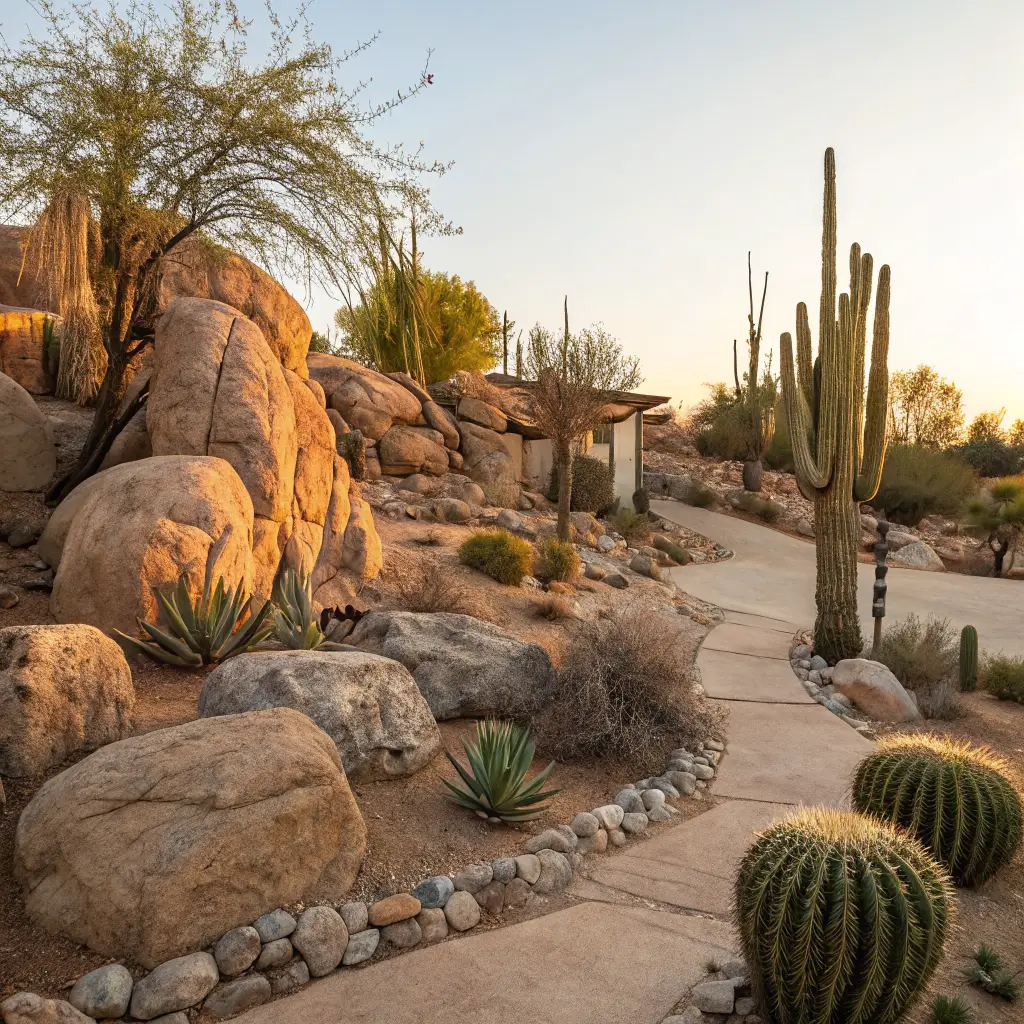
Embrace the drought-resistant life
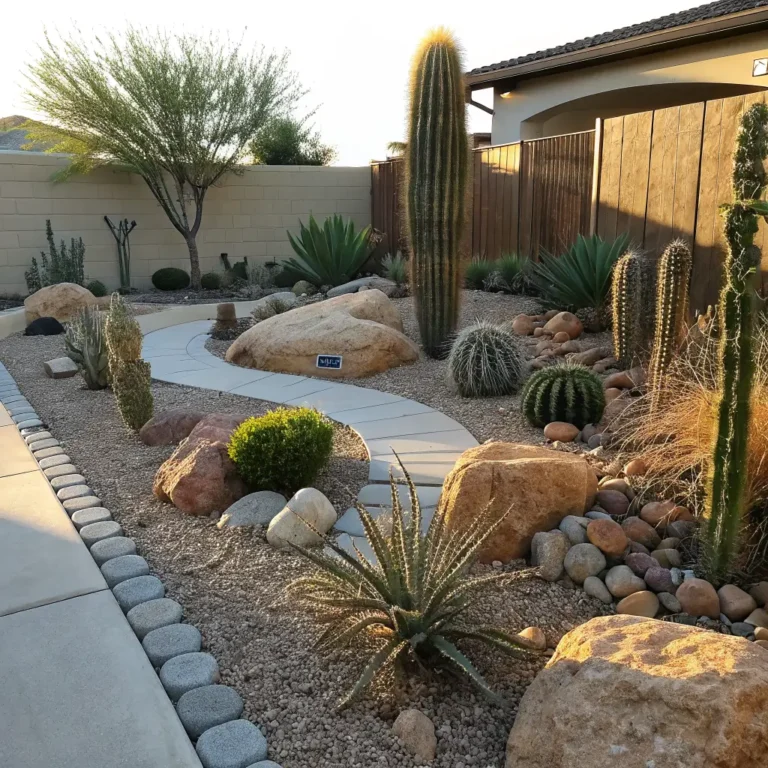
Water restrictions got you down? Desert-style rock gardens are basically giving Mother Nature a high-five while keeping your landscape looking incredible. This isn’t about creating a barren wasteland – it’s about celebrating the beauty of arid climates.
Desert gardens have this rugged, authentic feel that’s hard to replicate with other styles. The combination of weathered rocks, dramatic succulents, and strategic gravel creates landscapes that look like they’ve been shaped by time and weather.
Desert garden must-haves:
- Weathered sandstone or volcanic rock
- Native drought-resistant plants
- Decomposed granite or desert gravel
- Strategic placement of architectural plants like agave or yucca
What I love about desert style is how it challenges traditional gardening assumptions. Who says you need lush green grass to have a beautiful yard? Some of the most stunning landscapes I’ve seen embrace the beauty of scarcity.
The practical benefits are huge too. Once established, desert rock gardens need minimal water and virtually no fertilizer. Your summer water bill will thank you, and you’ll spend more time enjoying your garden instead of maintaining it.
Rock Garden with Succulents
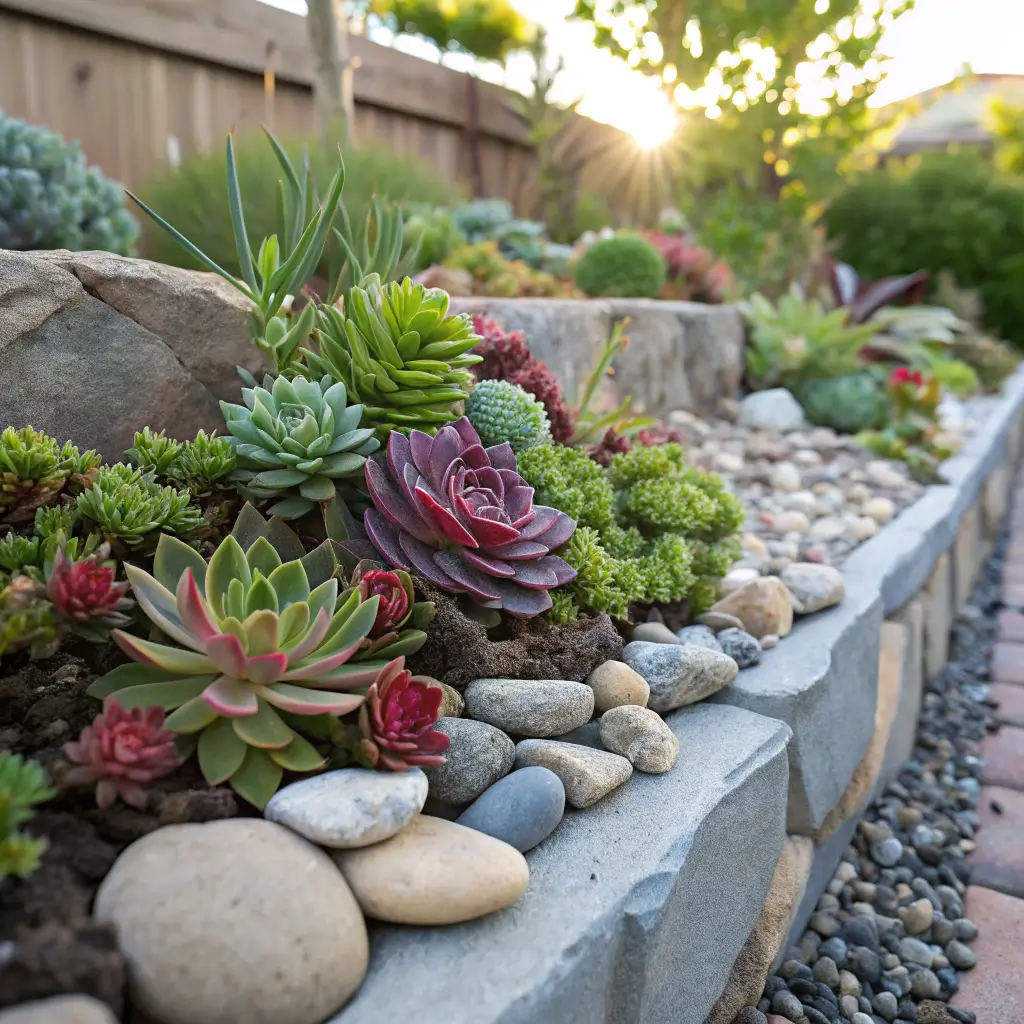
Low maintenance meets high style
Succulents are having a moment, and honestly, it’s about time. These little powerhouses bring incredible variety to rock gardens while requiring almost zero babying. Perfect for those of us who love beautiful plants but occasionally forget to water them (guilty as charged).
The pairing of rocks and succulents feels natural – like they were meant to grow together. Succulents thrive in the well-draining conditions that rock gardens provide, and their architectural forms complement the strong lines of stone perfectly.
Succulent and rock combinations that work:
- Echeveria nestled between river rocks
- Tall sedums emerging from boulder crevices
- Spreading varieties cascading over rock walls
- Architectural agaves as dramatic focal points
I’ve experimented with different succulent arrangements over the years, and the key is thinking about growth patterns. Some succulents stay compact, others spread, and some shoot up tall flower stalks. Planning for these different habits prevents your garden from looking chaotic as it matures.
The color combinations you can achieve are incredible. From blue-gray agaves to burgundy sedums to bright green echeverias – your rock garden becomes a living palette that changes with the seasons and growing conditions.
Sloped Rock Garden Landscaping
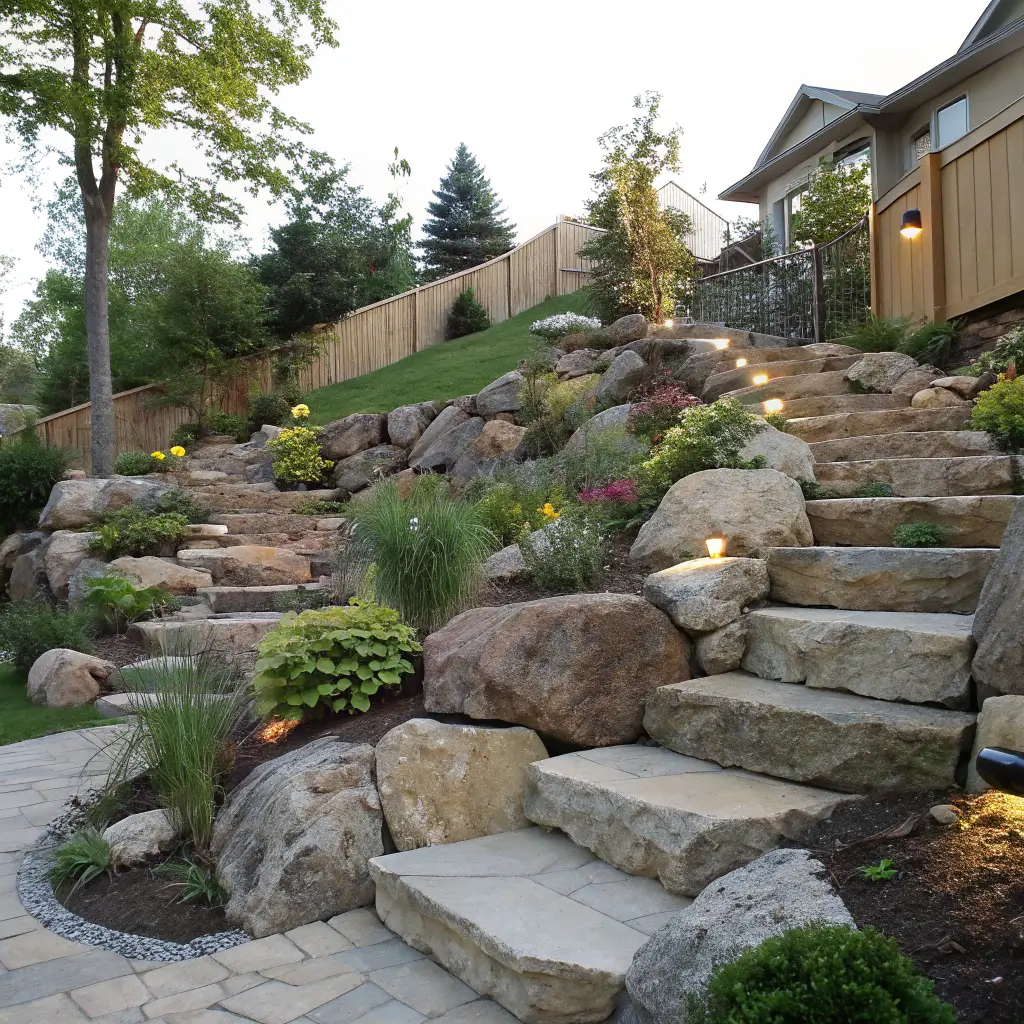
Turn that challenging slope into a showstopper
Slopes are the landscaping challenge nobody wants to deal with. Erosion, difficult maintenance, plants that slide downhill after heavy rain – it’s enough to make you want to just throw in the towel and call it “natural.”
But here’s the thing: slopes can become the most dramatic feature in your landscape when you work with them instead of against them. Rock gardens on slopes create natural terracing, control erosion, and provide incredible visual interest.
Slope solutions that actually work:
- Large boulders as natural retaining elements
- Terraced planting areas between rock placement
- Stepping stone pathways for maintenance access
- Strategic drainage planning
The secret is thinking like water. Where will runoff naturally flow? How can you direct and slow it down? Your rock placement becomes functional sculpture, creating pockets for plants while managing water flow.
I learned this lesson after watching my first slope garden attempt literally wash away during a spring storm. Now I always start with the largest rocks first, creating stable anchor points that everything else builds around. Much more successful, and way less depressing to watch during heavy rain.
Also Read: 10 Inspiring Garden Layout Design Ideas for Perfect Yards
Japanese Inspired Rock Garden
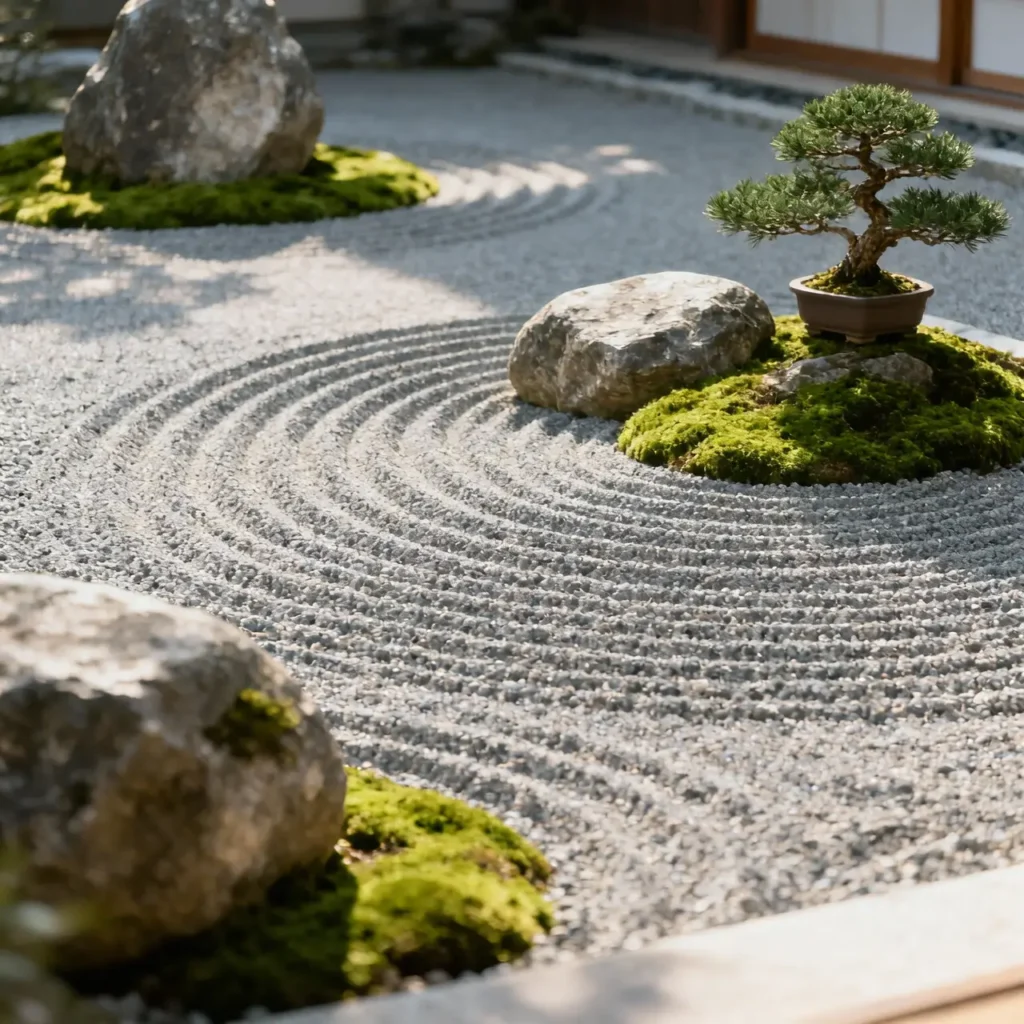
Ancient wisdom meets modern yards
Japanese garden design has been perfecting the art of rock placement for centuries. There’s something deeply satisfying about creating a space that feels both intentional and natural – like it’s always been there.
The principles behind Japanese rock gardens go way beyond just arranging stones. It’s about creating balance, representing natural landscapes in miniature, and designing spaces that invite contemplation.
Key elements of Japanese design:
- Asymmetrical balance in rock placement
- Natural-looking arrangements that represent mountains, islands, or waterfalls
- Integration of water elements (real or suggested)
- Careful attention to viewing angles
What strikes me about Japanese-inspired gardens is how they make you slow down and really look. Each element has been considered from multiple angles, creating compositions that reveal new details as you move through the space.
The plant selection tends toward subtle rather than showy – think mosses, ferns, and carefully pruned shrubs rather than bright flowers. The rocks and their arrangement become the stars, with plants providing subtle texture and seasonal interest.
Budget-Friendly DIY Rock Garden
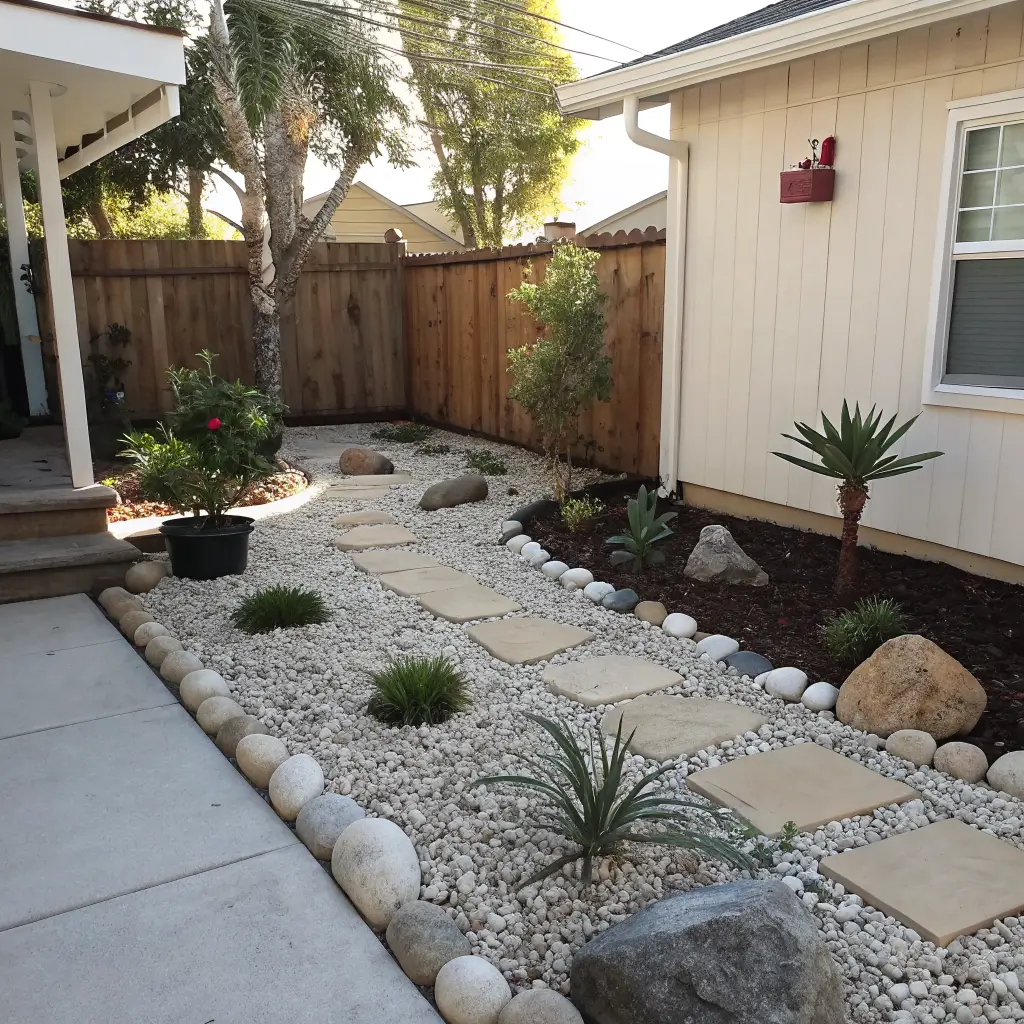
Great design doesn’t require a trust fund
Let’s talk money, because rock gardens can get expensive fast if you’re not strategic. The good news? Some of the most beautiful rock gardens I’ve seen were created on shoestring budgets with clever sourcing and smart design choices.
The key is knowing where to splurge and where to save. You don’t need premium stones for every element – sometimes the most interesting rocks are the ones you find yourself (with permission, of course).
Money-saving strategies that work:
- Source rocks from construction sites, quarries, or even Craigslist
- Use native plants that thrive without amendments
- Start small and expand over time
- Repurpose materials you already have
I built my first rock garden almost entirely from stones I collected during weekend drives. Stopped at construction sites (with permission), hit up local quarries, and even found some great pieces along hiking trails. The variety you get from sourcing your own materials often creates more interesting compositions than buying everything from one supplier.
The labor is where you can really save. Rock placement isn’t rocket science, but it does require some muscle and patience. Start with your largest pieces first, and don’t be afraid to move things around until they look right. Sometimes the best placement takes a few tries to discover.
Rock Garden with Water Feature
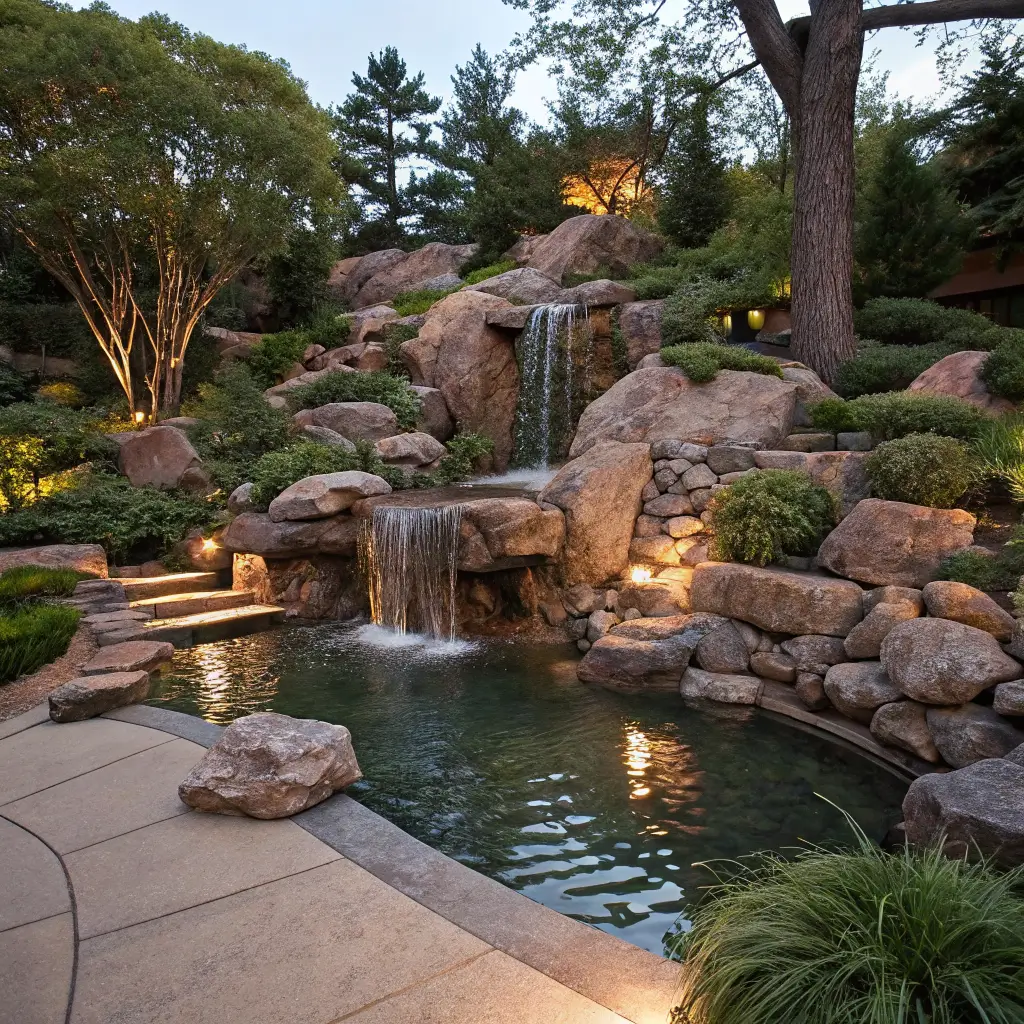
Adding the sound of serenity
Water changes everything in a garden. The sound, the movement, the way it reflects light – suddenly your rock garden becomes a living, breathing space instead of just a static display.
The combination of rocks and water feels primordial, like you’re creating a miniature version of how landscapes form naturally. Whether it’s a simple bubbling fountain or an elaborate waterfall, water features bring your rock garden to life.
Water feature options to consider:
- Bubbling boulder fountains
- Small cascading waterfalls
- Reflecting pools between rock formations
- Dry creek beds that handle runoff
I’ll be honest – my first attempt at adding water to a rock garden was a disaster. Didn’t plan for proper circulation, chose the wrong pump size, and ended up with what looked like a sad puddle surrounded by rocks. Learning experience? Absolutely. Worth it for the final result? Definitely.
The maintenance consideration is real though. Water features need regular attention to keep them clean and functioning properly. But there’s something incredibly satisfying about the sound of moving water in your own backyard. It masks street noise and creates a focal point that draws both people and wildlife.
Also Read: 10 Creative Tiny Garden Design Ideas for Small Spaces
Pathway Rock Garden Design
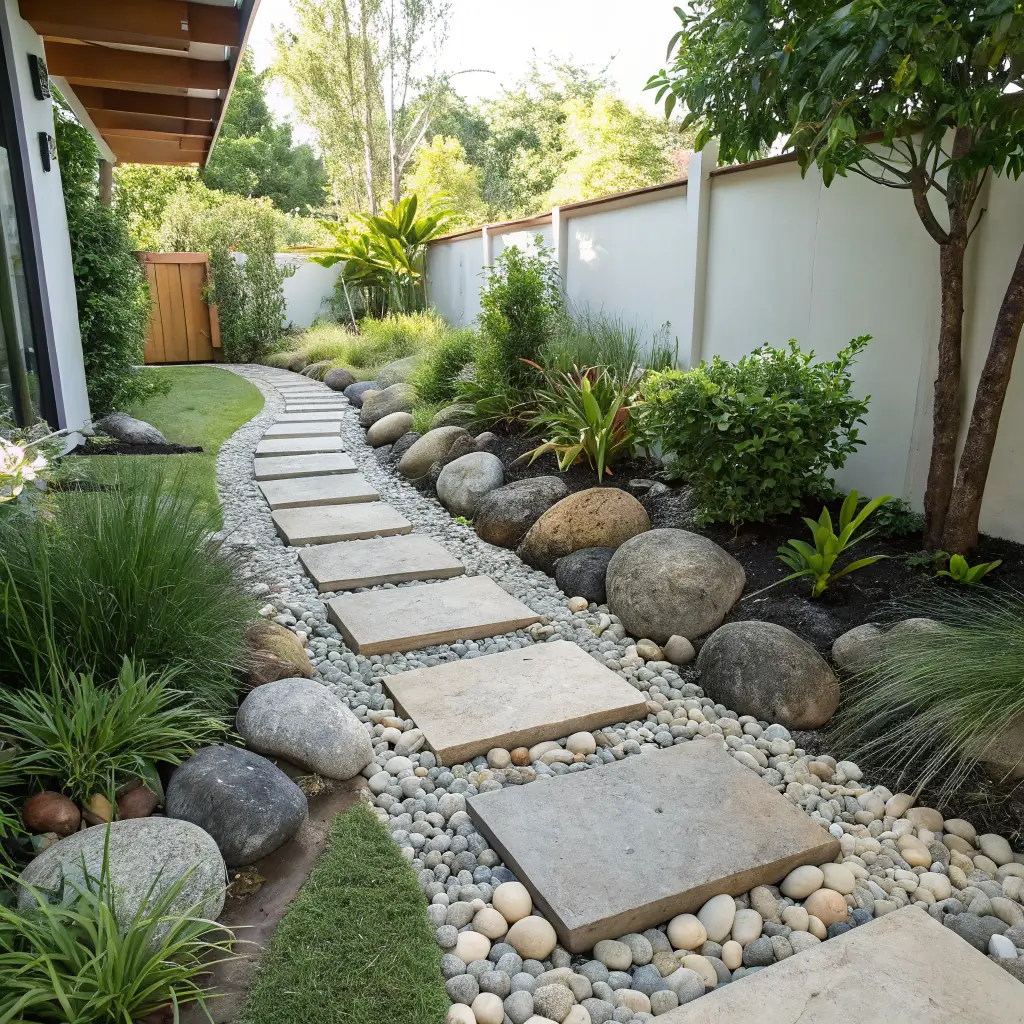
Guiding the journey through your landscape
Pathways do more than just get you from point A to point B – they control how people experience your garden. Rock garden pathways can be subtle suggestions or dramatic statements, depending on your style and space.
The beauty of incorporating pathways into rock gardens is how they create structure while maintaining the natural feel. Whether you’re using stepping stones, gravel paths, or carefully arranged rock borders, pathways help organize the space without making it feel overly designed.
Pathway design considerations:
- Width appropriate for intended use
- Surface materials that complement your rocks
- Lighting for evening use and safety
- Connection to existing landscape elements
What I’ve learned about garden pathways is that they’re as much about the journey as the destination. A winding path through a rock garden creates anticipation – what’s around the next bend? A straight path feels purposeful and direct. Both approaches work, but they create very different experiences.
The practical side matters too. Make sure your pathways actually work for their intended use. A romantic winding path is great until you’re trying to navigate it with a wheelbarrow full of mulch. Think about maintenance access and everyday functionality alongside aesthetic appeal.
Conclusion
Final thoughts? Rock gardens offer incredible versatility for creating outdoor spaces that reflect your personality while working with your lifestyle. Whether you’re drawn to the zen simplicity of minimalist design or the drama of desert landscapes, there’s a rock garden style that’ll work for your space and budget.
The best part about rock gardening is how forgiving it is. Rocks don’t die if you forget to water them, and most rock garden plants are pretty resilient too. You can experiment, rearrange, and evolve your design over time without starting from scratch.
So grab some rocks, pick a style that speaks to you, and start creating. Your future self (and your water bill) will thank you! 🙂