10 Elegant Japanese Garden Design Ideas for Calm Spaces

You know that feeling when you step into a Japanese garden and instantly your shoulders drop, your breathing slows, and suddenly your biggest worry is whether you remembered to feed the cat? Yeah, that’s the magic we’re chasing here.
I’ve been obsessed with Japanese garden design for years, and trust me, creating your own zen sanctuary isn’t just for monks or people with unlimited budgets.
Whether you’ve got a sprawling backyard or just a cramped balcony that barely fits your bike, there’s a Japanese garden style that’ll work for you. And before you start thinking you need to become a master gardener overnight – relax.
Some of the most stunning Japanese gardens are surprisingly simple to create and maintain.
Zen Rock Garden with Minimalist Gravel Patterns
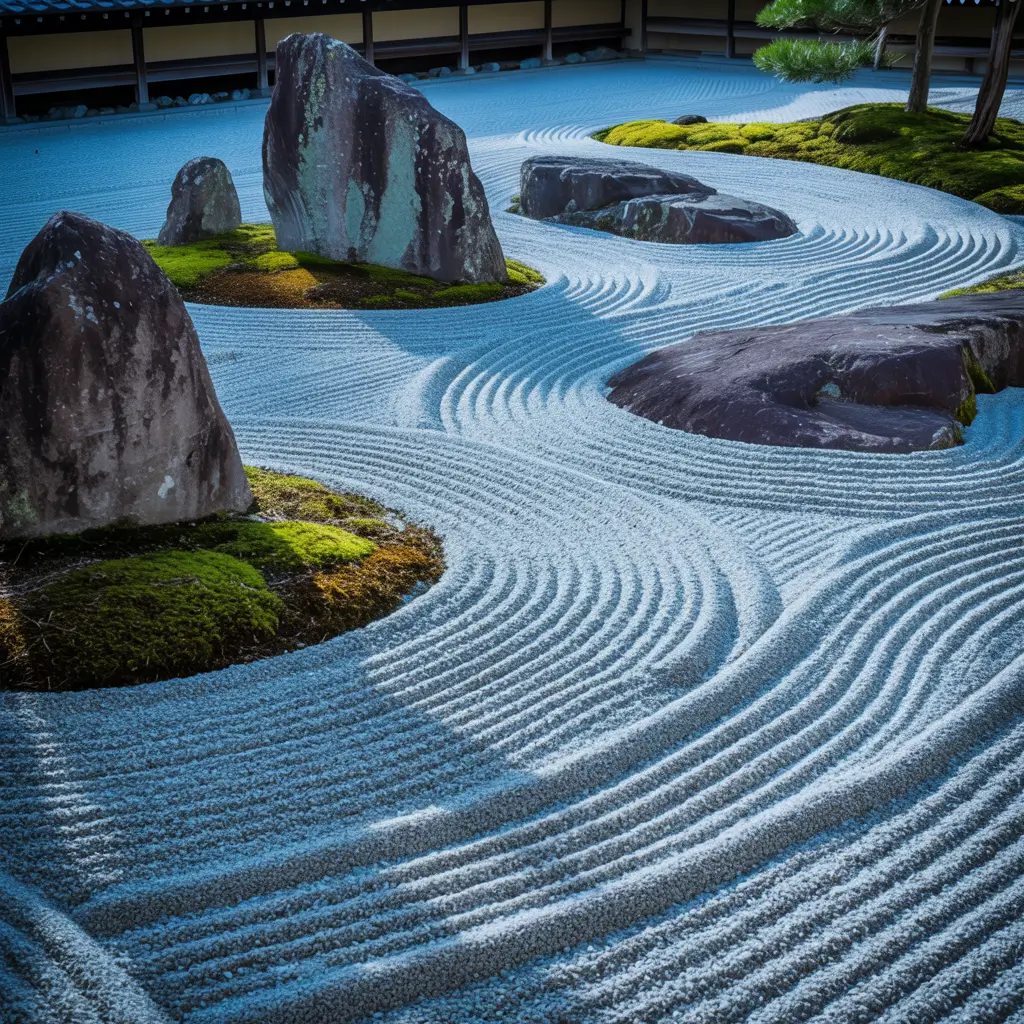
Let’s start with the granddaddy of Japanese garden design – the classic zen rock garden. This isn’t just throwing some rocks in your yard and calling it Zen (though honestly, that’s still better than most suburban landscapes :P).
The Foundation Elements:
- Fine white or light gray gravel as your base
- Carefully positioned stones of varying sizes
- A wooden rake for creating patterns
- Minimal plant life (we’re talking seriously minimal)
I remember the first time I attempted this in my backyard. I spent three hours arranging seven rocks, thinking I was channeling ancient wisdom. My neighbor asked if I was building a weird sandbox. But here’s the thing – the beauty lies in the intentional simplicity.
The gravel patterns represent water flow, and you’ll rake them in gentle, sweeping motions. Start with concentric circles around your larger stones, then experiment with parallel lines or gentle waves. The therapeutic act of raking becomes part of the garden’s purpose.
Pro tip: Don’t go crazy with stone placement on your first try. Three to five stones of different sizes work perfectly for most spaces. Position them asymmetrically – Japanese design loves odd numbers and avoids perfect symmetry.
Ever wondered why this style feels so calming? It’s because your brain gets a break from visual chaos. No bright flowers screaming for attention, no complex patterns to decipher – just clean lines and natural textures.
Small Courtyard Japanese Tea Garden Design
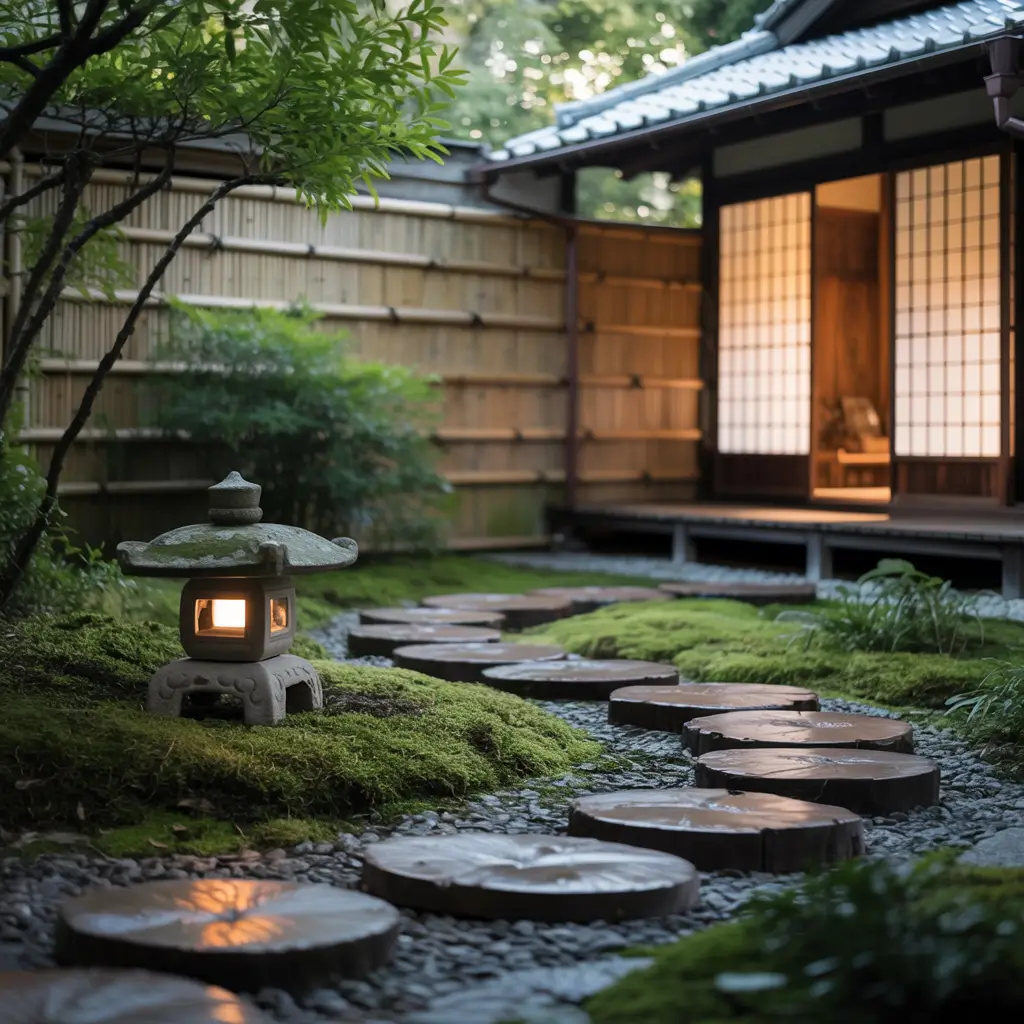
Now, if you’ve got a small courtyard that’s currently serving as a glorified storage area for garden tools and that exercise bike you swore you’d use, let’s transform it into something magical.
Essential Elements for Your Tea Garden:
- Stone lantern (even a small one makes a huge impact)
- Stepping stones in an irregular, natural path
- Low-maintenance plants like hostas, ferns, or small maples
- A simple wooden bench or stone seat
- Gravel or moss ground cover
The key here is creating a sense of journey in a small space. I learned this the hard way after cramming too many elements into my 8×10 courtyard. It looked like a garden center exploded. Less is definitely more.
Your stepping stones should meander slightly – nobody walks in perfectly straight lines in nature, right? Space them so you naturally slow down as you move through the space. This isn’t a highway; it’s a meditation in motion.
Plant selection becomes crucial in small spaces. Stick to a limited color palette – various shades of green with perhaps one accent plant that changes with seasons. Japanese maples are gorgeous but need the right climate. Hostas are nearly bulletproof and give you those broad, peaceful leaves that photograph beautifully for your Instagram garden posts.
Bamboo Privacy Fence Zen Garden Layout
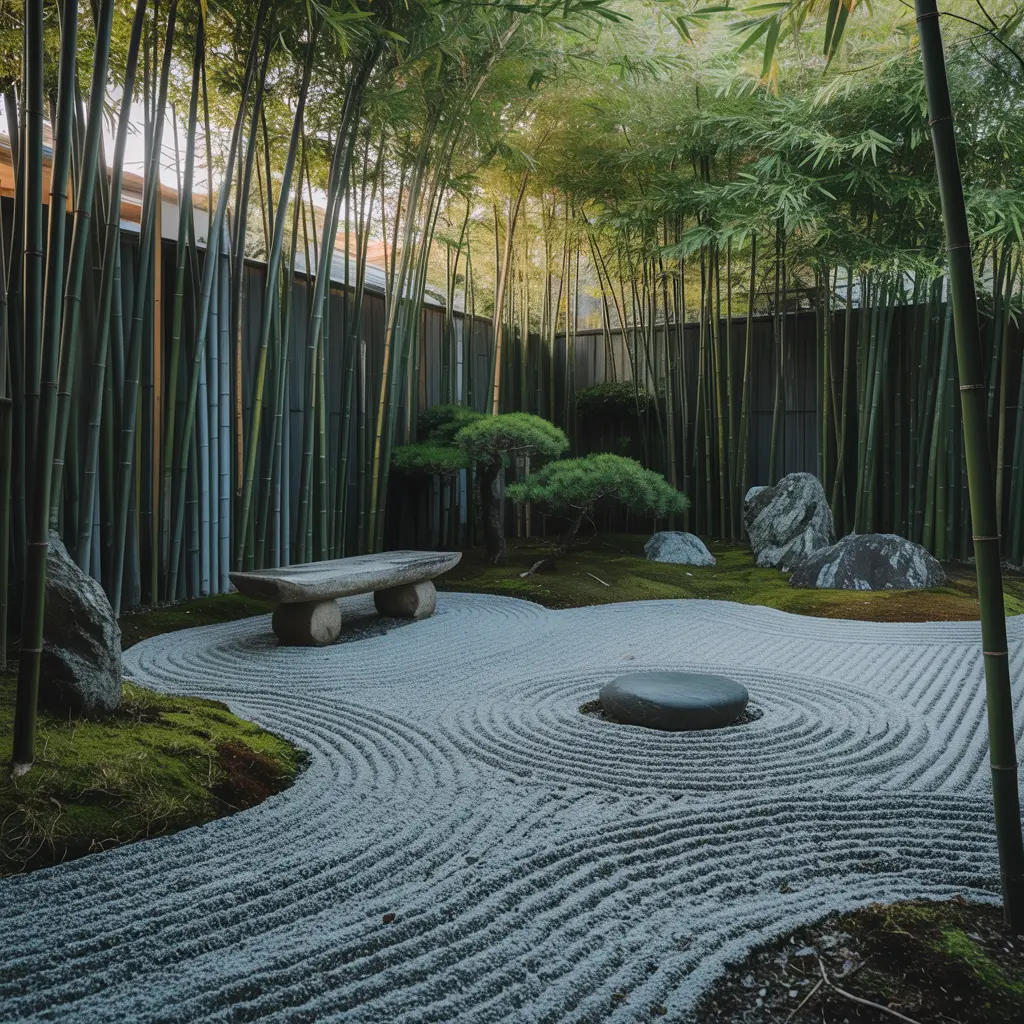
Privacy fences don’t have to look like prison walls. Bamboo screening creates an instant zen vibe while keeping your neighbors from judging your weekend gardening outfit choices.
Bamboo Fence Benefits:
- Natural sound barrier (goodbye, neighbor’s leaf blower at 7 AM)
- Quick installation compared to traditional fencing
- Flexible design options
- Sustainable material choice
Behind your bamboo screen, create layers of texture and height. Start with taller elements at the back – maybe some ornamental grasses or a small Japanese maple. Move to medium-height shrubs in the middle, and finish with ground-level plantings or gravel areas.
I’ve found that bamboo fencing works best when you don’t try to hide that it’s bamboo. Embrace the natural variations in color and thickness. Some people stain theirs to match existing structures, but honestly? The natural golden-brown color is perfect as-is.
Layout tip: Create visual breaks in your fence line with slightly different heights or angles. A perfectly uniform fence line can feel institutional. We want zen, not correctional facility vibes.
Also Read: 10 Beautiful Roof Garden Design Ideas for Modern Homes
Koi Pond Japanese Garden with Wooden Bridge
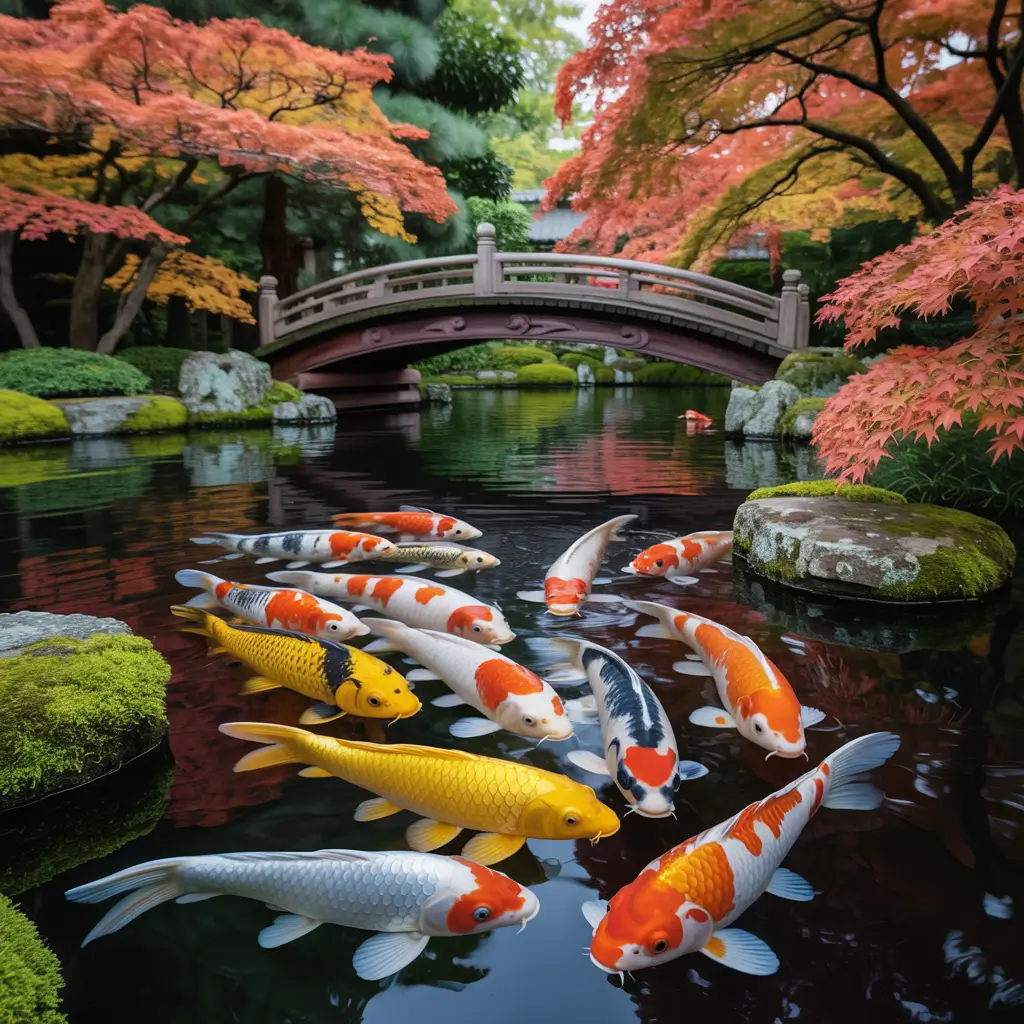
Okay, let’s talk about the Instagram star of Japanese gardens – the koi pond with wooden bridge. Yes, it’s gorgeous. Yes, everyone will be impressed. But let’s be real about what you’re signing up for here.
What You Actually Need:
- Proper pond liner and filtration (koi are messier than you think)
- Bridge that’s actually functional, not just decorative
- Adequate pond depth for your climate zone
- Commitment to fish care (they’re not lawn ornaments)
I’ll be honest – my first koi pond attempt was a disaster. I underestimated the filtration needs, overestimated my dedication to water testing, and definitely underestimated how much koi eat. But when it’s done right? Pure magic.
The bridge doesn’t need to be elaborate. A simple arched wooden structure that actually lets you walk across the water creates that perfect reflection photo op. Position it at the pond’s narrowest point for both aesthetic and practical reasons.
Plant your pond edges thoughtfully. Water irises, ornamental grasses, and strategically placed rocks create natural-looking transitions from water to land. Avoid the temptation to ring the entire pond with plants – leave some clean, open edges for visual breathing room.
Modern Japanese Dry Landscape Garden (Karesansui)
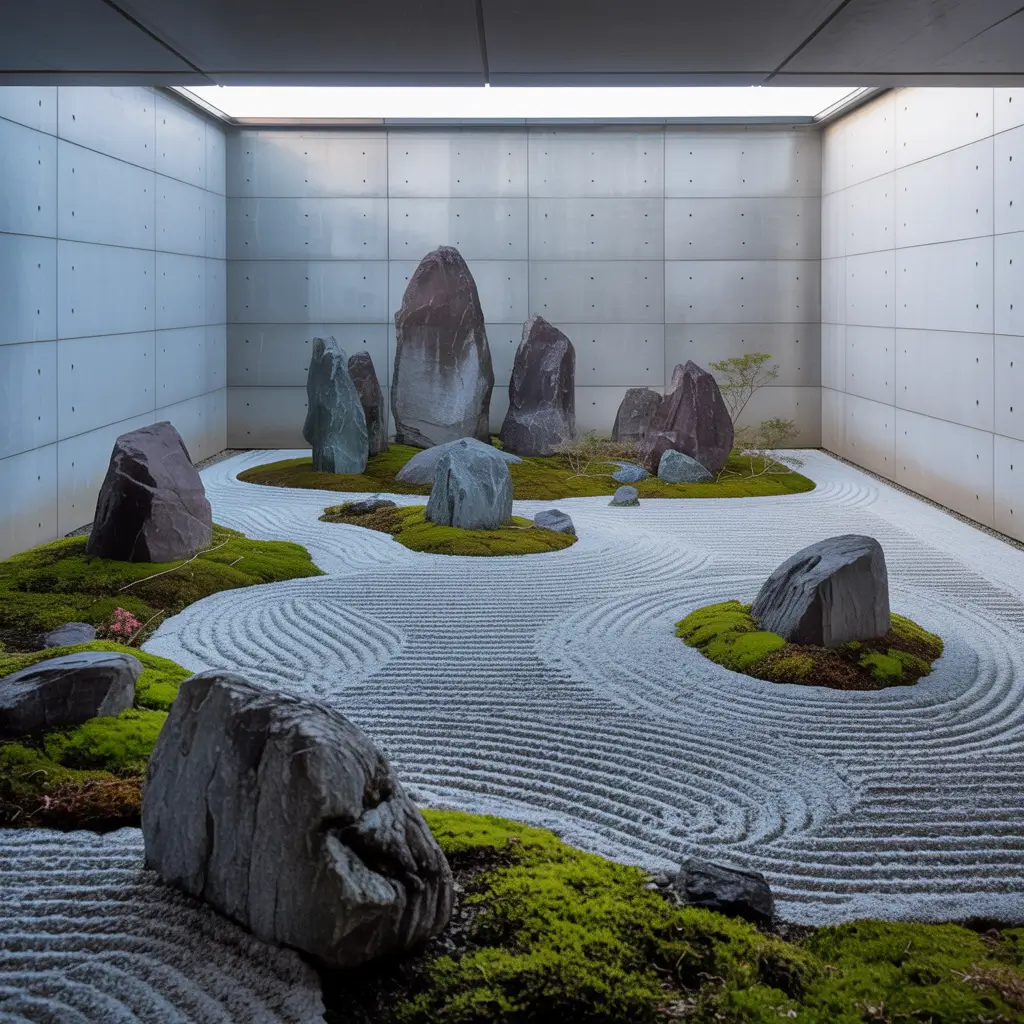
For those who love the Japanese aesthetic but aren’t exactly blessed with green thumbs, the modern interpretation of karesansui (dry landscape) gardens is your salvation.
Contemporary Karesansui Elements:
- Larger format stones as focal points
- Varied gravel textures and colors
- Minimal geometric planters with single-specimen plants
- Clean-lined hardscaping
This isn’t your traditional temple garden – it’s Japanese principles meets modern living. Think bold, sculptural rocks placed with intention, surrounded by meticulously maintained gravel patterns. Add one stunning plant – maybe a single architectural succulent or perfectly pruned pine – and you’ve got drama.
The modern twist allows for non-traditional materials too. Decomposed granite instead of traditional gravel, contemporary steel edging, or even colored gravels can work if they maintain the overall sense of simplicity and purpose.
What makes this style perfect for busy people? Zero irrigation needs, minimal seasonal maintenance, and maximum visual impact. Your neighbors will think you hired a landscape architect. You’ll know you just followed some basic principles and trusted the process.
Tiny Balcony Japanese Zen Garden Setup
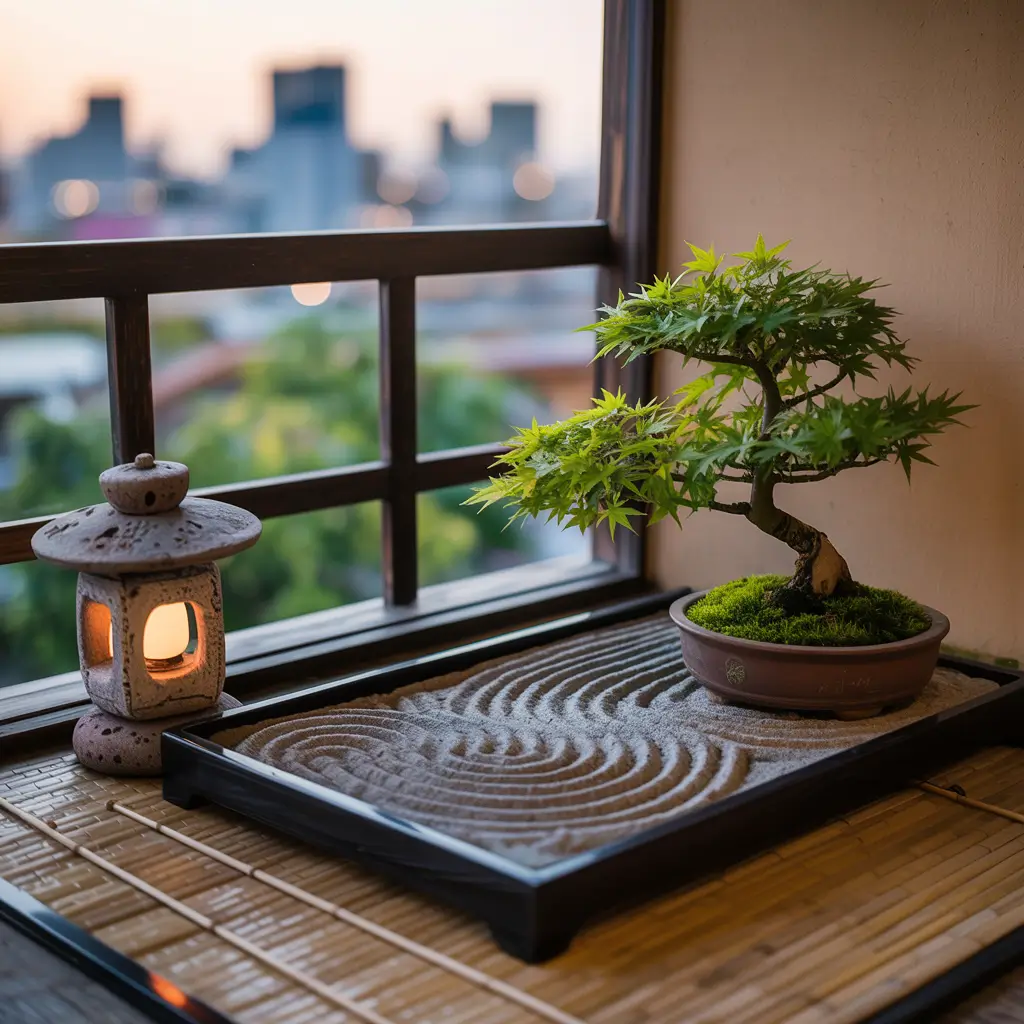
Living in an apartment doesn’t disqualify you from zen garden ownership. I’ve created stunning mini zen spaces on balconies smaller than most people’s closets.
Balcony Garden Essentials:
- Large, shallow containers for your gravel garden
- Miniature rake (or make your own from a fork)
- Small stones or Buddha statue as focal points
- One or two carefully chosen plants in simple containers
The trick is embracing the miniature scale rather than trying to cram a full-sized garden into a tiny space. A 2×3 foot container filled with fine gravel and three perfect stones can be more impactful than a cluttered collection of tiny plants.
Container choice matters hugely. Skip the decorative pots with busy patterns. Simple, rectangular planters in neutral colors let the zen elements shine. I use large ceramic trays – the kind restaurants use – and they’re perfect.
For plants, think single specimens with strong architectural form. One beautiful succulent, a small bamboo, or a perfectly trimmed bonsai-style plant. The goal is contemplation, not a botanical showcase.
Also Read: 10 Stunning Front Yard Garden Design Ideas That Wow
Stone Pathway Garden with Moss Accents
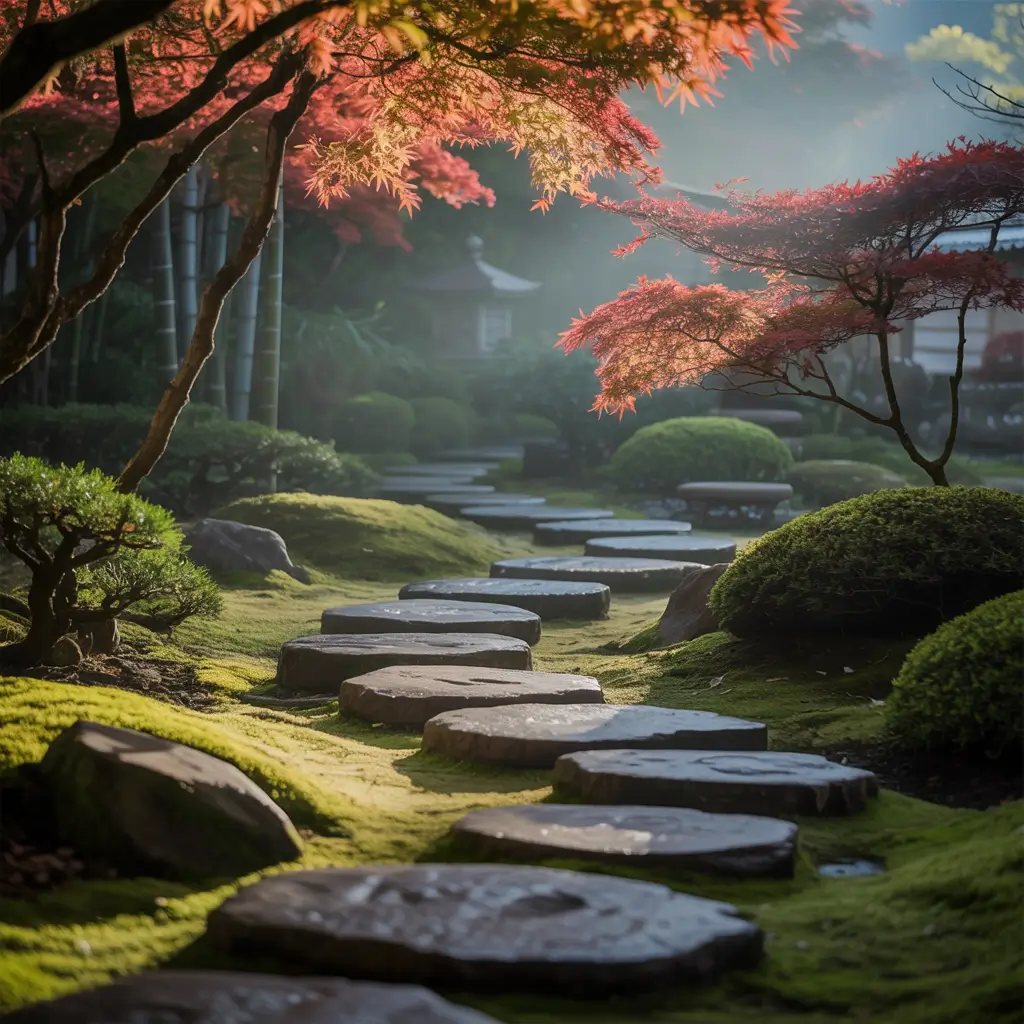
There’s something deeply satisfying about walking on well-placed stepping stones. It’s like nature’s version of hopscotch, but way more sophisticated.
Creating Your Stone Path:
- Irregular, natural stones rather than perfect circles
- Varied spacing that encourages a slower pace
- Moss cultivation in gaps and surrounding areas
- Subtle lighting for evening ambiance
Moss gets a bad rap in traditional gardening, but in Japanese design, it’s liquid gold. Those soft, green carpets between stones create texture and visual interest while requiring virtually no maintenance once established.
Pro moss tip: If your climate isn’t naturally moss-friendly, you can encourage growth by mixing buttermilk with existing moss and painting it on rocks and soil. Sounds weird, works great.
Stone selection becomes an art form here. You want varied sizes and shapes, but they should feel like they belong to the same family. I spend embarrassing amounts of time at stone yards, touching rocks and imagining how they’ll look in context. The stone yard employees definitely think I’m eccentric, but whatever – it’s worth it for the perfect pathway.
Traditional Torii Gate Entrance Garden Design
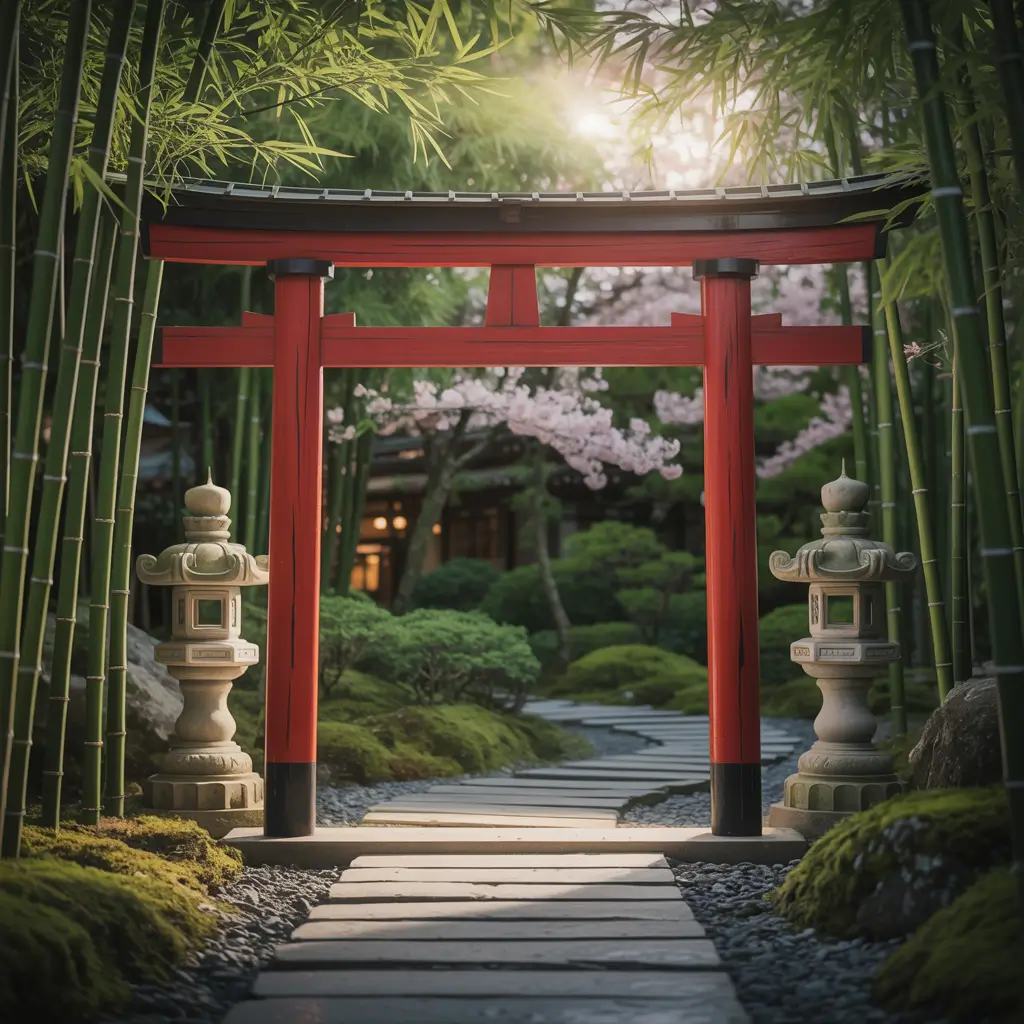
Installing a torii gate is like putting a frame around your garden experience. It creates that psychological transition from everyday space to sacred space.
Gate Placement Considerations:
- Proportional sizing to your space (a massive gate in a tiny yard looks ridiculous)
- Natural material choices – wood weathers beautifully
- Strategic positioning to frame a view or create anticipation
- Pathway integration with your overall garden flow
I’ve seen people plop torii gates randomly in their yards like lawn ornaments, and honestly, it makes me cringe a little. The gate should mark a transition – from public to private space, from mundane to contemplative, from outside to garden sanctuary.
Traditional red vermillion color is gorgeous but might feel overwhelming in smaller spaces. Natural wood tones blend better with most residential settings while still creating that ceremonial entrance feeling.
The area beyond your gate becomes crucial. You’re making a promise with that entrance – the space beyond better deliver on the zen vibes you’re advertising. No pressure, right? 🙂
Japanese Garden with Waterfall and Natural Stones
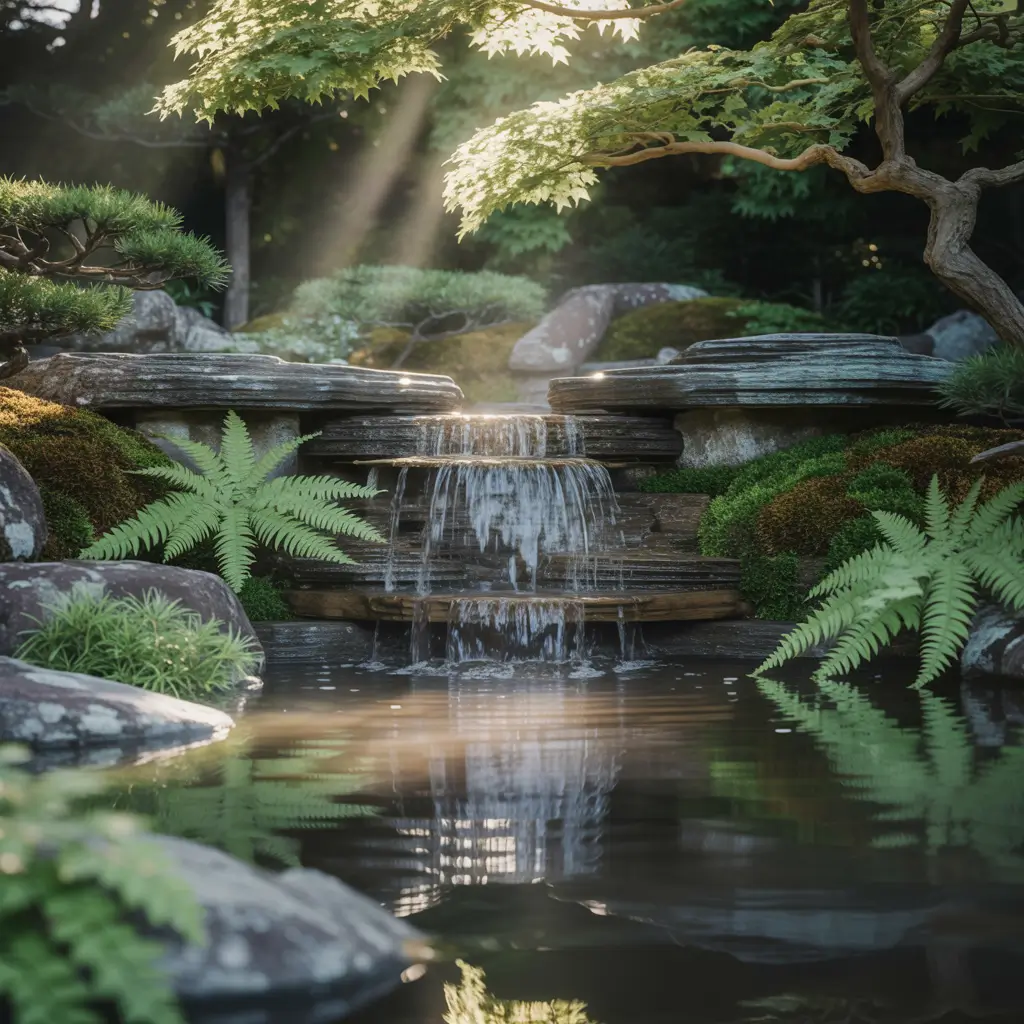
Water features add that magical sound element that makes Japanese gardens so immersive. But let’s talk about realistic waterfall expectations for normal humans with normal budgets.
Waterfall Reality Check:
- Start small – a 2-3 foot drop is plenty dramatic
- Natural stone placement trumps size every time
- Proper pump sizing prevents that annoying trickling sound
- Maintenance accessibility (you’ll need to clean it occasionally)
The stones around your waterfall should look like they’ve been there forever. This means varying sizes, natural positioning, and allowing for plant growth in the crevices. Those perfectly stacked stone walls scream “artificial” from a mile away.
I learned this lesson after building what looked like a stone pyramid with water dribbling down it. Not exactly the natural waterfall vibe I was going for. Asymmetrical placement and irregular stone sizes fixed everything.
Plant integration around water features creates that lush, established look. Ferns love the moisture, ornamental grasses add movement, and carefully placed hostas provide broad leaf contrast against angular stones.
Also Read: 10 Elegant Terrace Garden Design Ideas for Luxury Vibes
Minimalist White Sand Zen Meditation Garden
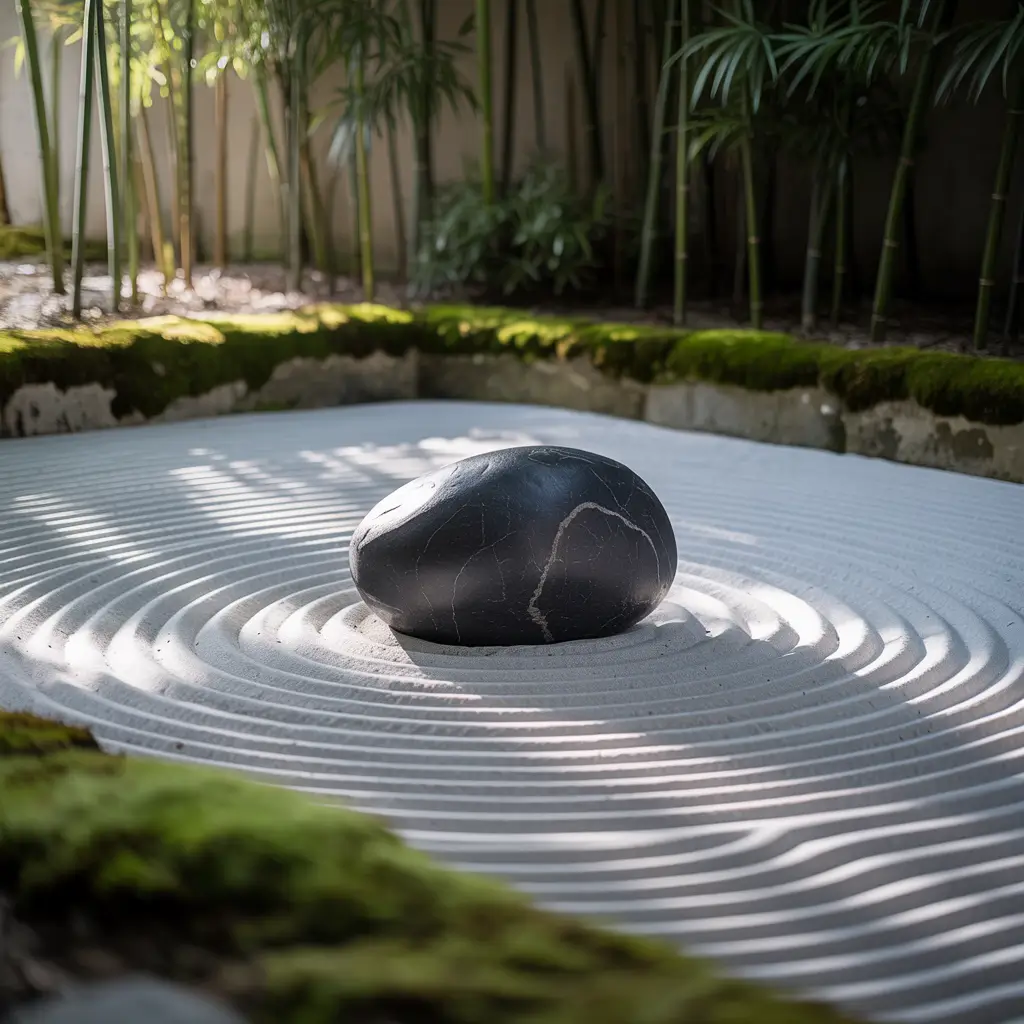
We’re ending with the most stripped-down version – pure minimalism that would make Marie Kondo proud. White sand meditation gardens are the ultimate in less-is-more design philosophy.
White Sand Garden Elements:
- Fine, white sand as the primary surface
- Single focal element – one perfect stone or simple sculpture
- Precise geometric patterns raked into the sand
- Absolute commitment to maintenance (this isn’t low-maintenance gardening)
Here’s where I’ll be brutally honest – white sand gardens are stunning but demanding. Every leaf that falls, every paw print from the neighbor’s cat, every careless footstep shows up immediately. You’re signing up for regular maintenance if you want that pristine look.
But when it’s perfect? It’s absolutely transcendent. The pure white surface reflects light beautifully, creating an almost ethereal quality that changes throughout the day. The act of raking becomes meditation itself – rhythmic, purposeful, calming.
Pattern inspiration can come from traditional Japanese designs or your own creativity. Concentric circles, parallel lines, or gentle waves all work. The key is consistency and intention in whatever pattern you choose.
Creating Your Personal Zen Sanctuary
Look, Japanese garden design isn’t about perfectly copying traditional temple gardens (unless that’s your thing, in which case, go for it). It’s about creating intentional space that brings calm into your daily life.
Start small, embrace imperfection, and remember that gardens evolve. My first attempts looked nothing like my vision, but they taught me what worked in my space and climate. That messy learning process is part of the journey.
Whether you’re raking gravel at 6 AM because it centers you for the day ahead, or you just want a backyard that doesn’t make you cringe when the neighbors peer over the fence – these design principles work. Simplicity, intention, and natural materials never go out of style.
FYI, the most important element in any Japanese garden design? Your own commitment to maintaining the peaceful energy you’re creating. The physical elements are just the beginning – the real magic happens when you slow down enough to actually experience the space you’ve built.
Now go grab that rake and start creating your own slice of zen paradise. Your stress levels will thank you, and your Instagram followers will be properly jealous. Win-win, if you ask me.