10 Elegant Coffee Shop Design Outdoor Ideas for Stylish Spaces

Picture this: you’re sipping your perfectly crafted latte in an outdoor space so gorgeous that you forget you’re actually just sitting behind your local coffee shop. The ambiance hits different when you nail that perfect outdoor coffee vibe, doesn’t it?
I’ve spent way too many hours (and way too much money) hopping between outdoor cafés, studying what makes some spaces absolutely irresistible while others feel like afterthoughts.
Trust me, after countless caffeine-fueled adventures and a few design mistakes of my own, I’ve cracked the code on what transforms a basic outdoor area into a coffee paradise that keeps customers coming back.
Whether you’re a coffee shop owner looking to maximize your outdoor potential or just someone who dreams of creating the perfect backyard coffee sanctuary, these ten design ideas will spark your imagination.
Let’s explore some seriously stunning outdoor coffee concepts that prove great design doesn’t always require a massive budget – just a bit of creativity and understanding of what makes people want to linger over their morning brew.
Boho Garden Coffee Corner Setup
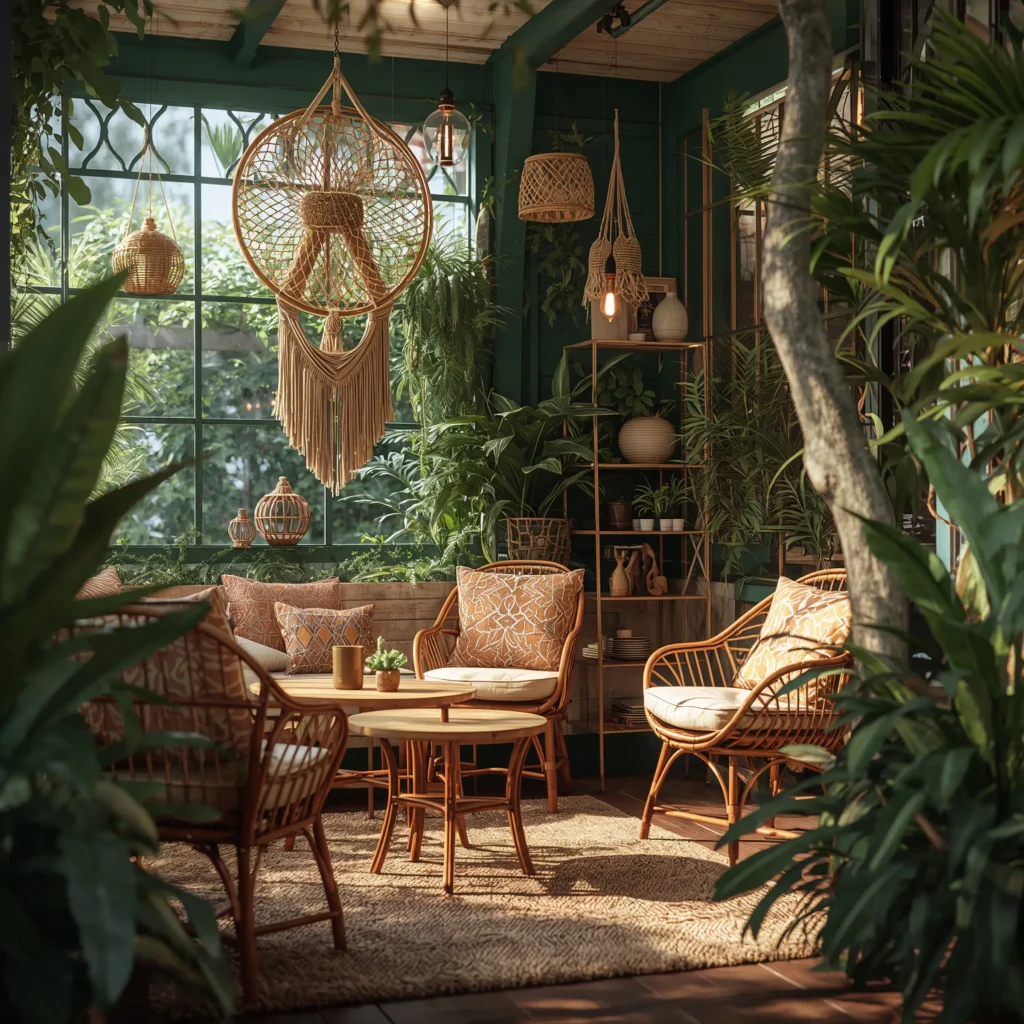
Ever walked into a space that instantly made you feel like you could stay forever? That’s the magic of boho design – it creates this effortless, laid-back atmosphere that screams “take your time, enjoy the moment.”
The boho garden setup revolves around mixing textures, patterns, and natural elements in a way that looks intentionally unintentional. I love how this style embraces imperfection and creates these cozy nooks that feel like secret hideaways. You start with mismatched vintage furniture – think wicker chairs, wooden stools, and maybe a few floor cushions scattered around low tables.
Plants become your best friend in this design. Hanging macramé planters filled with trailing pothos or ivy create natural curtains between seating areas. Ground-level planters with ornamental grasses and colorful flowers add layers of green that make the space feel alive and breathing.
The textile game needs to be strong here. Throw pillows in rich jewel tones, patterned rugs that can handle outdoor weather, and maybe some flowing curtains or tapestries create that signature boho layered look. Warm string lights weaving through branches or along fence lines add that golden hour glow that makes everything look Instagram-worthy, even at 7 AM.
What makes this setup brilliant for coffee shops? It creates intimate spaces within larger areas. Customers naturally gravitate toward these cozy corners because they feel private and special, even when they’re sharing the space with others.
Minimal Scandinavian Outdoor Café Design
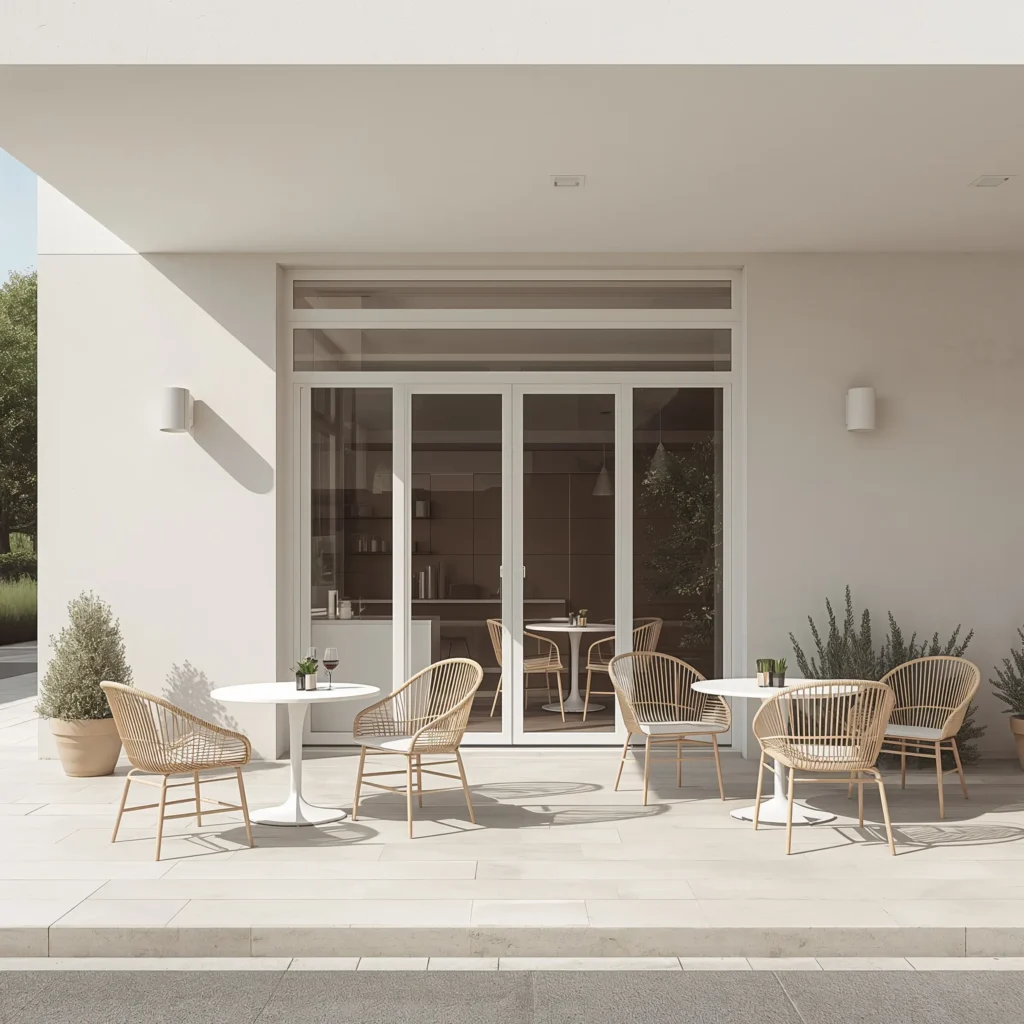
If boho is about maximalism done right, Scandinavian design is minimalism perfected. This approach focuses on clean lines, natural materials, and that effortless sophistication that somehow makes a simple wooden table look like it belongs in a design magazine.
Light wood dominates this aesthetic – think blonde birch or pale oak furniture that practically glows in natural light. The beauty lies in the simplicity: clean-lined tables, streamlined chairs without excessive decoration, and maybe some simple bench seating along walls or planters.
White and cream colors create this fresh, airy feeling that makes spaces appear larger than they actually are. I’ve noticed that Scandinavian-inspired cafés always feel more spacious, even when they’re working with compact areas. Smart color choices can literally trick your brain into perceiving more room.
The plant selection stays minimal but impactful. Large, architectural plants like snake plants or fiddle leaf figs in simple white or concrete planters create focal points without overwhelming the clean aesthetic. Strategic placement of greenery defines spaces without building actual walls.
Lighting follows the same principles – think sleek pendant lights or simple lanterns rather than elaborate fixtures. The goal is functionality that doubles as understated beauty. This design particularly shines during daytime hours when natural light can bounce off those pale surfaces and create this gorgeous, Nordic-inspired glow.
Rustic Wooden Patio Coffee Shop Style
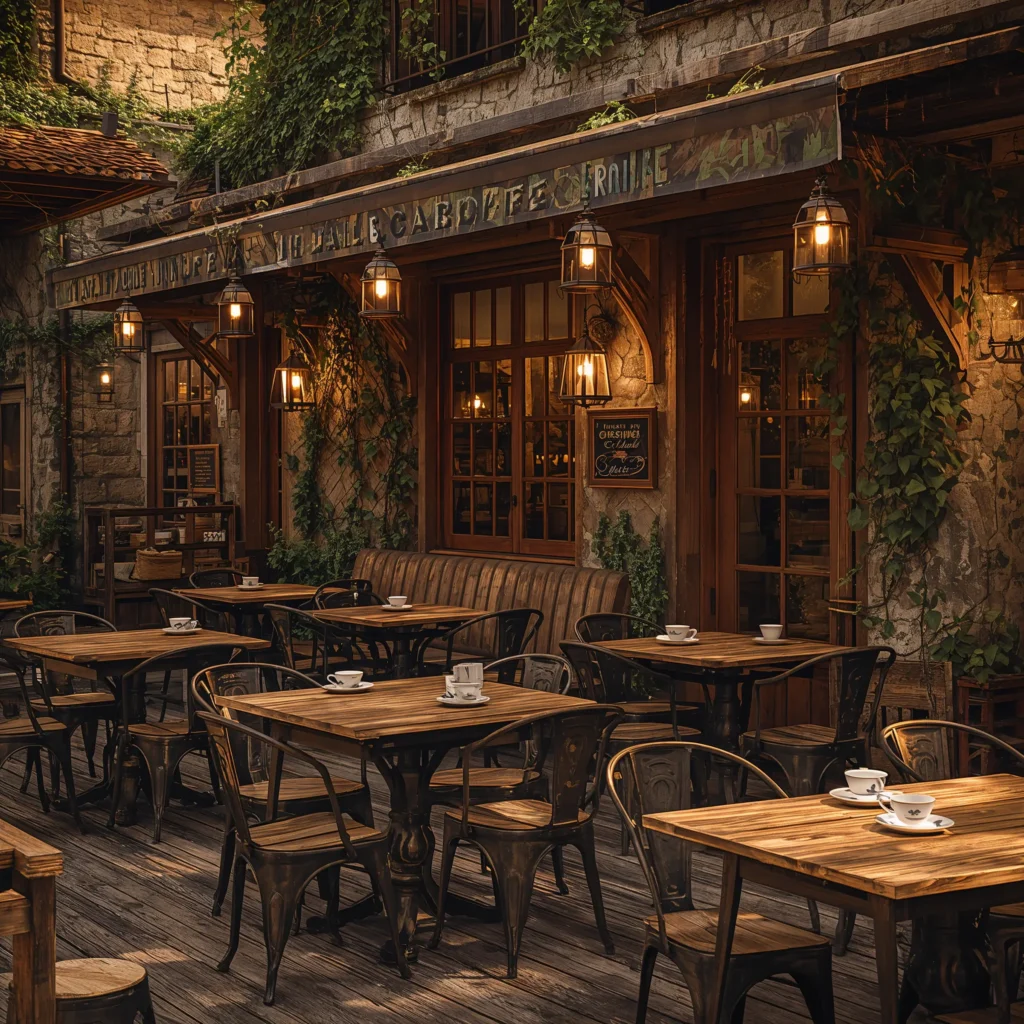
There’s something deeply satisfying about rustic wood design that connects us to simpler times. Maybe it’s the way weathered wood tells stories, or how natural imperfections create character that mass-produced furniture just can’t match.
Reclaimed wood becomes the star of this show – old barn doors transformed into table tops, weathered fence posts repurposed as plant stands, and vintage wooden crates stacked to create seating or display areas. The patina and natural wear patterns add authenticity that you literally can’t buy new.
Heavy wooden furniture anchors the space beautifully. Think solid farmhouse-style tables that could survive a tornado, paired with sturdy wooden chairs or benches. The weight and substance of rustic furniture creates this grounded feeling that makes customers want to settle in for the long haul.
Metal accents provide perfect contrast to all that wood – wrought iron chair frames, galvanized steel planters, or vintage metal signs add industrial touches without overwhelming the natural warmth. Strategic rust and patina on metal elements enhance that authentic, lived-in feeling.
The beauty of rustic design lies in its forgiving nature. Dings, scratches, and weather damage become part of the charm rather than problems to fix. This makes it incredibly practical for high-traffic outdoor areas where furniture takes a beating from weather and constant use.
Also Read: 10 Creative Small Coffee Shop Design Ideas for Stylish Vibes
Small Balcony Café Seating Layout Idea
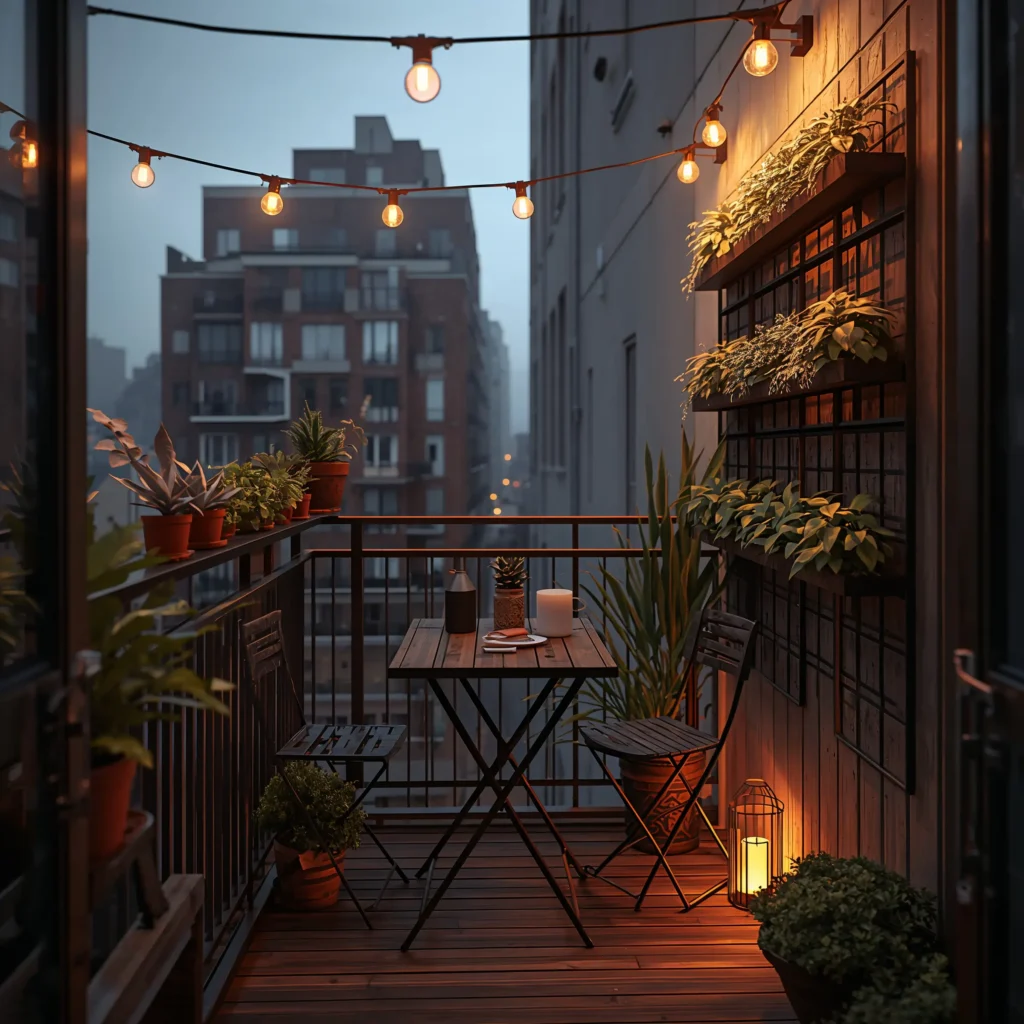
Working with limited space? Small balcony setups prove that square footage doesn’t determine charm. I’ve seen tiny balcony cafés create more intimate, memorable experiences than sprawling patios simply because they maximize every inch with intention.
Vertical thinking becomes crucial in small spaces. Wall-mounted shelves hold plants and décor, hanging planters create green walls without taking floor space, and fold-down tables provide surface area that disappears when not needed. Every element needs to earn its place through either function or serious style points.
Built-in seating along railings or walls maximizes capacity while maintaining flow. Counter-height tables against railings take advantage of existing structures and often provide better views than traditional table heights. Smart storage solutions hide clutter while keeping essentials accessible – think benches with hidden compartments or tables with built-in plant holders.
The key is creating layers of interest at different heights. Low planters at floor level, mid-height furniture, and overhead elements like string lights or hanging plants draw the eye upward and create the illusion of more space. Strategic mirrors can also bounce light around and make compact areas feel more open.
Color choices matter more in small spaces. Lighter shades make areas feel larger, while one bold accent wall or colorful umbrellas add personality without overwhelming the limited square footage.
Tropical Jungle Outdoor Coffee Space
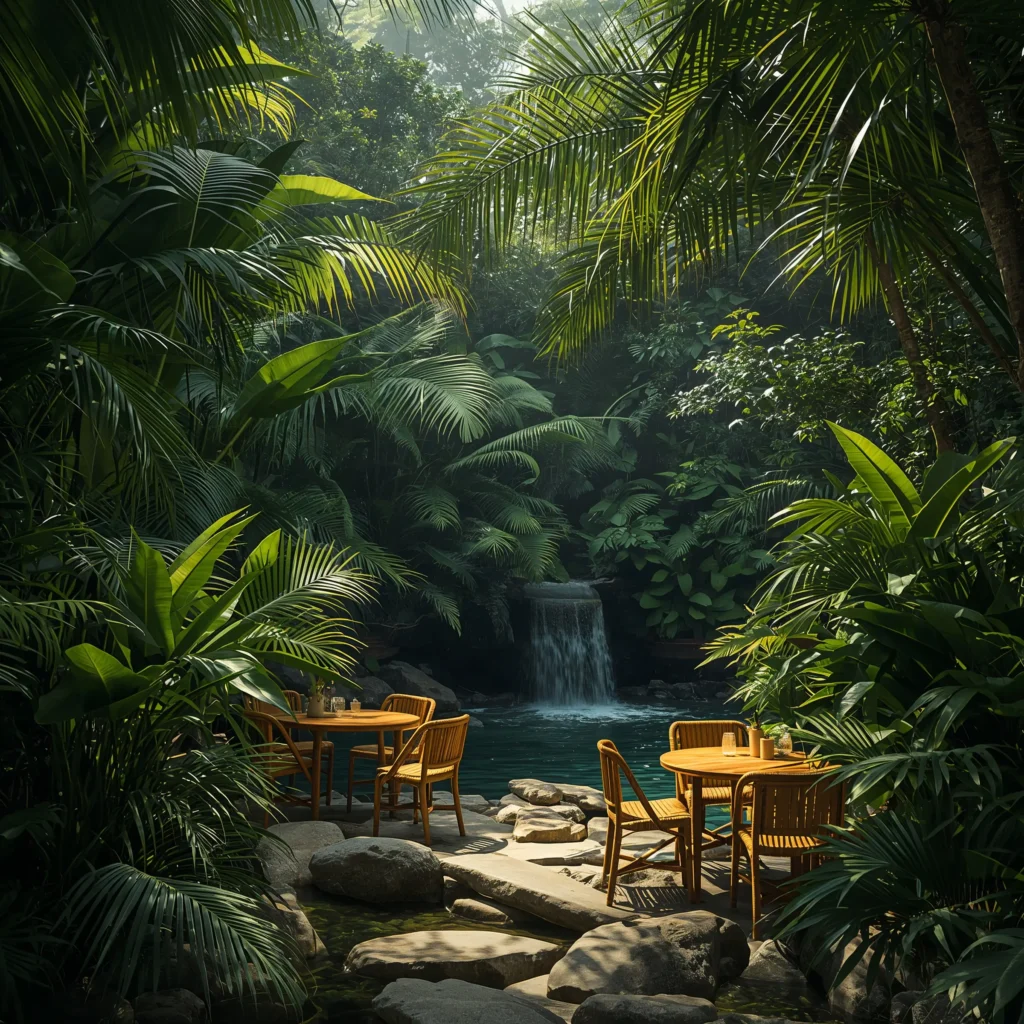
Want to transport customers to a completely different climate? Tropical jungle design creates this lush, vacation-like escape that makes people forget they’re still in their hometown. It’s like giving customers a mini getaway with their morning coffee.
Massive greenery dominates this concept – think oversized palm fronds, broad-leafed plants, and layers upon layers of tropical foliage. The goal is creating that dense, almost overwhelming abundance of plant life that makes you feel like you’re sitting in a rainforest clearing.
Natural materials ground the tropical theme beautifully. Bamboo furniture, woven rattan seating, and teak wood tables all complement the lush plant life. Stone or pebble pathways between seating areas add to that natural, jungle-trek feeling.
Water features elevate the tropical experience significantly. A small fountain, bamboo water feature, or even the sound of water trickling through hidden speakers creates that authentic jungle soundscape that masks city noise and enhances relaxation.
The color palette stays green-focused but incorporates pops of tropical brights – think vibrant orange cushions, bright yellow umbrellas, or colorful ceramic planters that mimic tropical flowers. These accent colors prevent the green from becoming monotonous while maintaining the theme.
Overhead coverage becomes essential, both for plant health and customer comfort. Large umbrellas, pergolas covered in vines, or even misting systems create that humid, sheltered feeling that makes the tropical illusion complete.
Modern Industrial Open-Air Café Design
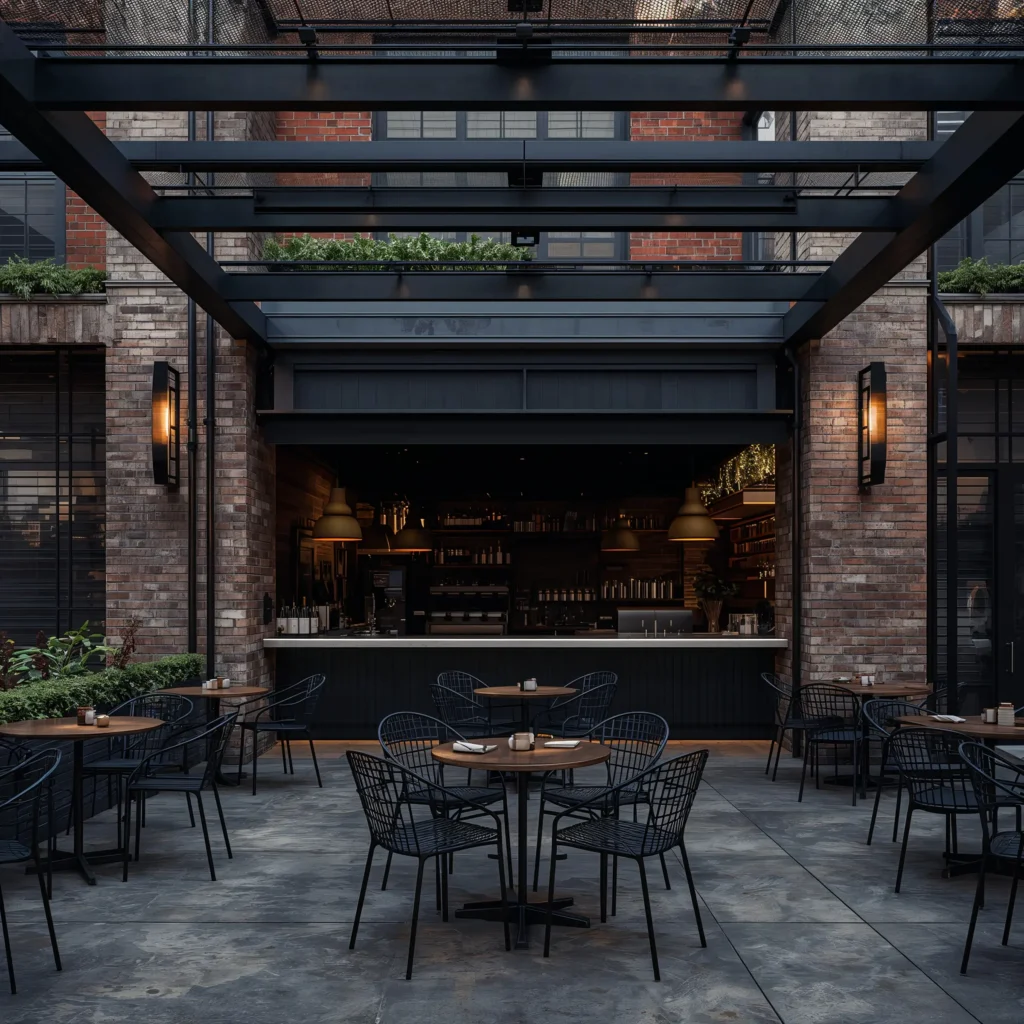
Industrial design brings urban sophistication to outdoor spaces through raw materials and clean lines. This aesthetic celebrates the beauty in functional elements – exposed pipes become design features, concrete transforms into elegant furniture, and metal structures create architectural interest.
Steel and concrete dominate the material palette, creating this sleek, contemporary foundation. Polished concrete tables paired with powder-coated steel chairs achieve that perfect balance of durability and style. The key is choosing pieces that look intentionally industrial rather than accidentally utilitarian.
Exposed structural elements become design features rather than eyesores. Visible steel beams, concrete support columns, or metal mesh panels create visual texture and architectural interest. Strategic lighting highlights these structural elements and transforms them into focal points during evening hours.
The plant selection stays minimal but impactful – think architectural succulents in concrete planters or single-specimen trees that create dramatic silhouettes against clean backgrounds. The contrast between organic plant forms and hard industrial materials creates visual tension that keeps things interesting.
Color schemes typically stick to neutrals – grays, blacks, whites, and maybe one bold accent color like deep red or bright orange. This restrained palette lets the materials and structural elements shine while preventing visual chaos.
Modern industrial works particularly well in urban environments where it complements existing architecture rather than fighting against it. The style also ages beautifully as weather and use create natural patina on metal elements.
Also Read: 10 Beautiful Coffee Shop Interior Design Ideas for Cozy Vibes
Fairy Lights Cozy Night Coffee Garden
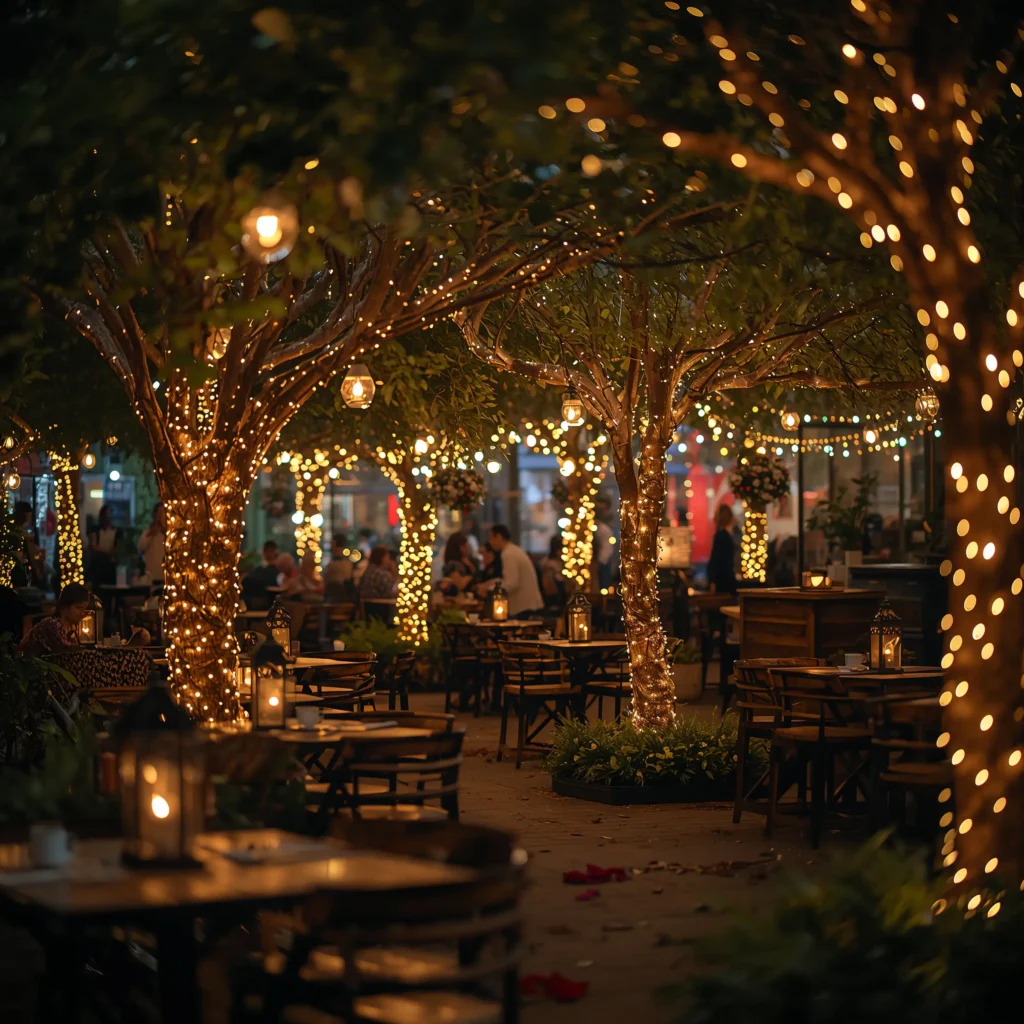
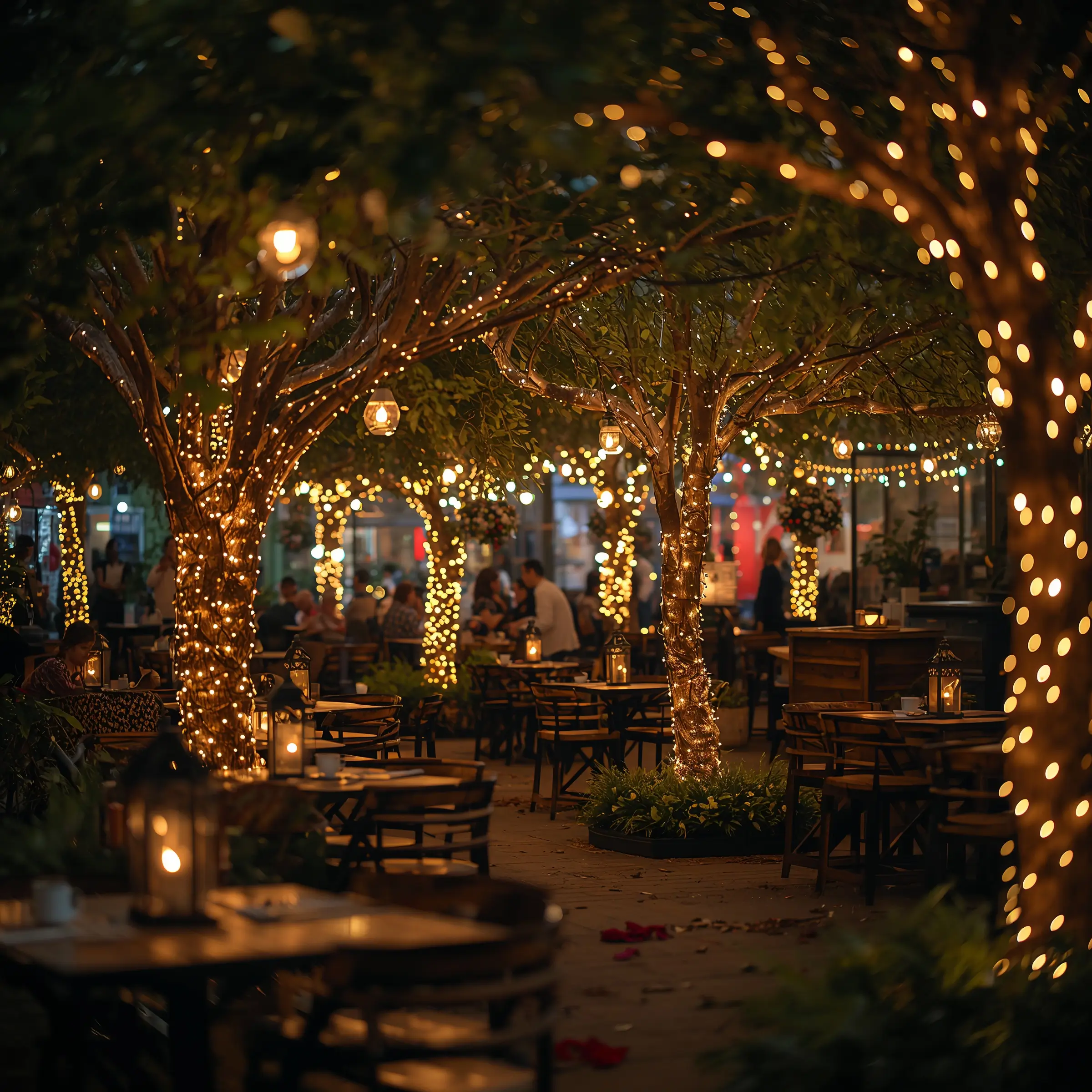
Nothing transforms an outdoor space quite like strategic lighting, and fairy lights create this magical, almost ethereal atmosphere that makes evening coffee dates absolutely unforgettable. It’s amazing how something as simple as tiny bulbs can completely change the mood of a space.
String lights become the foundation of this design concept, creating warm pools of light that define seating areas and pathways. I’ve learned that the key is layering different types of string lights – Edison bulbs for warm, substantial light, tiny fairy lights for sparkle, and maybe some colored bulbs for playful accents.
The layout focuses on creating intimate lighting zones rather than flooding the entire area with uniform brightness. Clusters of lights around specific seating areas make each table feel like its own private retreat. Varying heights and patterns prevent the lighting from looking too uniform or predictable.
Candles and lanterns add layers to the lighting scheme. Battery-operated candles provide flickering warmth without fire hazards, while hanging lanterns create focal points and additional light sources. The goal is building complexity through multiple light sources rather than relying on overhead lighting alone.
Plant selection becomes crucial for this nighttime-focused design. Plants with interesting silhouettes or variegated leaves catch and reflect light beautifully. Ornamental grasses create movement when lit from behind, while flowering plants add color that glows under warm lighting.
The furniture can stay relatively simple since the lighting carries the design impact. Comfortable seating that encourages lingering becomes more important than flashy furniture, as customers will be drawn to stay longer in these cozy, well-lit spaces.
Street Side Compact Café Seating Idea
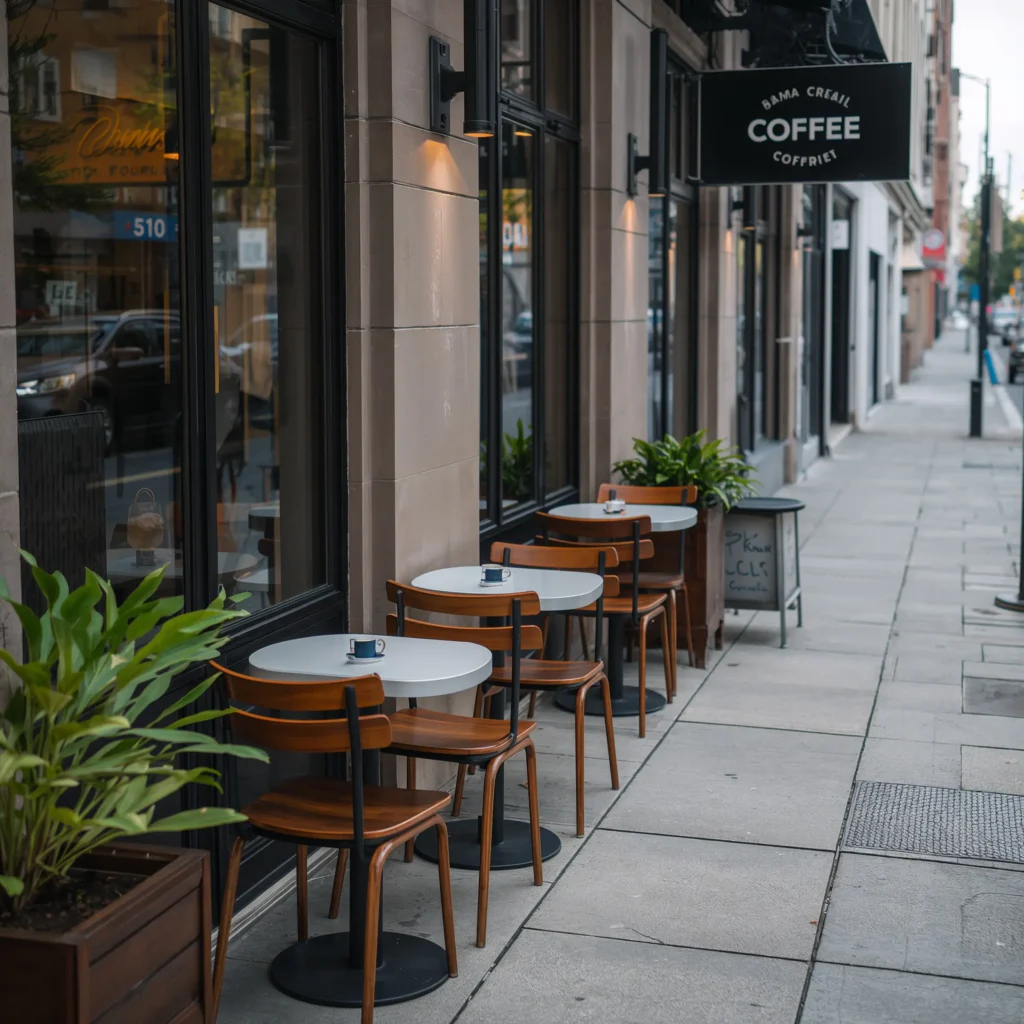
Street-side cafés face unique challenges – limited space, street noise, varying foot traffic, and the need to create appeal for both seated customers and passersby. But when done right, these compact setups create some of the most dynamic, people-watching friendly coffee experiences.
Flexibility becomes the name of the game for street-side designs. Furniture needs to be easily moveable for cleaning and weather protection, yet substantial enough to feel permanent and inviting. Folding chairs and lightweight tables that stack efficiently solve storage issues while maintaining style.
Privacy screens help define the café space while providing wind protection and visual barriers from busy street activity. Planters with tall grasses or small trees create natural boundaries without completely blocking sightlines. Strategic placement maintains that “part of the action” feeling while creating defined café territory.
Weather resistance takes priority in furniture and décor choices. All elements need to handle sun, wind, and unexpected rain without immediately looking weathered or damaged. Powder-coated metals, treated woods, and weather-resistant fabrics become essential rather than optional.
Signage and visual appeal work harder in street-side locations since the space needs to attract customers from moving traffic. Bold umbrellas, colorful furniture, or eye-catching planters help the café stand out from surrounding businesses. Clear sightlines into the seating area let potential customers see other people enjoying the space.
The key is balancing openness with defined boundaries – customers want to feel part of the street energy without feeling completely exposed to every passerby.
Vintage European Courtyard Coffee Shop
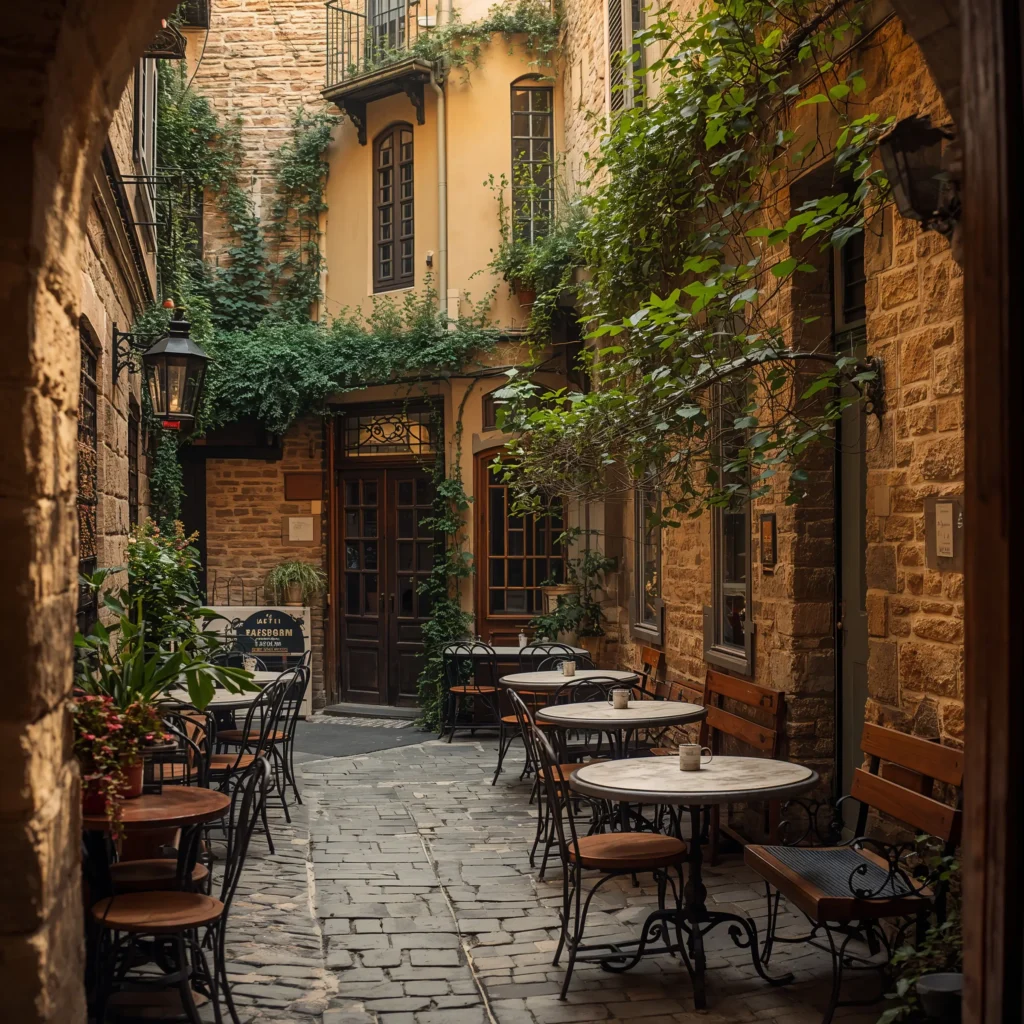
European courtyard design brings old-world charm and sophisticated relaxation to coffee spaces. This aesthetic draws from centuries of café culture and creates that timeless appeal that makes customers feel like they’ve discovered a hidden gem.
Stone and brick materials create the foundation for authentic European character. Natural stone flooring, brick accent walls, or even faux finishes that mimic aged materials establish that historic feeling. The patina and texture of weathered stone instantly transport customers to cobblestone streets and hidden courtyards.
Wrought iron furniture provides classic European styling with practical durability. Ornate chair backs, decorative table bases, and maybe some vintage-inspired café bistro sets create that unmistakable Continental café atmosphere. The key is choosing pieces that look authentic rather than theme-park fake.
Climbing plants and trained vines soften hard architectural elements beautifully. Ivy growing up walls, grape vines overhead, or flowering climbers on trellises create that established, mature garden feeling that takes decades to achieve naturally. Strategic plant placement can create instant history and charm.
Water features enhance the courtyard atmosphere significantly. A small fountain, wall-mounted water feature, or even a decorative well creates focal points and that gentle water sound that defines peaceful European squares. These elements provide natural white noise that masks urban street sounds.
The color palette stays muted and sophisticated – creams, soft grays, sage greens, and maybe touches of deep burgundy or navy. This restrained approach lets the architectural elements and plant life provide visual interest while maintaining that refined European sensibility.
Also Read: 10 Amazing Coffee Shop Design Ideas for Modern Spaces
Rooftop Urban Coffee Lounge Design
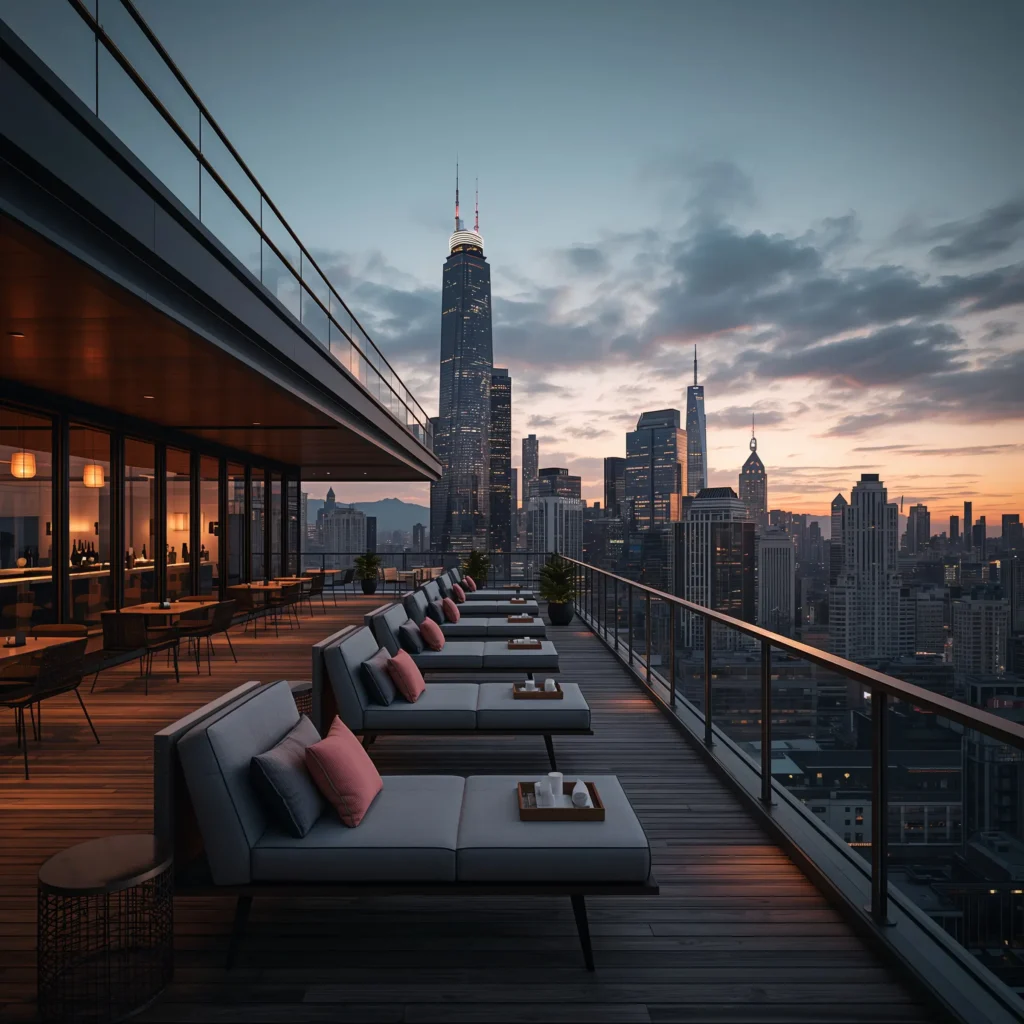
Rooftop locations offer unbeatable views and unique design opportunities, but they also present challenges like wind exposure, sun intensity, and often limited structural support for heavy elements. Success lies in embracing rather than fighting these conditions.
Wind resistance becomes a crucial design consideration for rooftop spaces. Furniture needs sufficient weight or securing systems to handle gusts without becoming projectiles. Low-profile seating, weighted umbrellas, and windscreen barriers help create comfortable microclimates within the larger space.
The view becomes a primary design element rather than just a backdrop. Furniture arrangement should maximize sightlines to the best views while creating conversation areas that take advantage of different vantage points. Strategic placement lets every seat offer something special, whether it’s skyline views or interesting architectural details.
Shade structures gain critical importance on rooftops where natural shade is often nonexistent. Pergolas, umbrellas, or even architectural shade sails protect customers from sun while creating defined seating zones. The key is choosing structures that complement rather than compete with the urban views.
Plant selection needs to handle wind, sun, and often limited soil depth. Ornamental grasses, succulents, and other hardy plants create greenery without requiring extensive maintenance or protection. Container gardening allows for seasonal changes and easier plant care in challenging rooftop conditions.
Lighting takes on special significance in rooftop settings where the transition from day to evening creates dramatic mood changes. String lights, uplighting on plants, and maybe some architectural lighting create atmosphere while working with rather than competing against city lights below.
Wrapping It Up: Your Perfect Outdoor Coffee Paradise
After exploring all these design possibilities, you might be feeling a bit overwhelmed by the options (or maybe you’re already planning your weekend furniture shopping trip :)). The truth is, the best outdoor coffee space combines elements that speak to your specific situation, budget, and personal style preferences.
The magic happens when you stop trying to copy someone else’s design perfectly and start adapting ideas to your unique space and needs. Maybe you love the lush plants from the tropical concept but prefer the clean lines of Scandinavian furniture. Perhaps the fairy lights from the cozy garden design would look amazing in your industrial setup. The best spaces often blend multiple influences rather than sticking rigidly to one theme.
Remember that great outdoor coffee design is ultimately about creating spaces where people want to spend time. Whether that means providing Instagram-worthy backgrounds, comfortable seating for long conversations, or peaceful retreats from busy daily life depends entirely on understanding your audience and your goals.
FYI, start small and build gradually rather than trying to transform everything overnight. Sometimes the most successful spaces evolve organically as you discover what works and what needs adjustment. Your perfect outdoor coffee paradise is out there waiting – it just might look a little different than you originally imagined, and honestly? That’s probably going to make it even better.