10 Stunning Front Yard Garden Design Ideas That Wow

Let’s be real – your front yard probably looks like it’s stuck in a design time warp from the ’90s, doesn’t it? You know what I’m talking about: that uninspiring patch of grass with maybe a lone shrub standing guard like some sad garden sentinel.
But here’s the thing – transforming your front yard doesn’t require a landscape architecture degree or selling a kidney to fund it.
I’ve spent years figuring out what actually works in front yard design (and trust me, I’ve made some spectacular mistakes along the way).
Whether you’re dealing with a postage-stamp-sized space or blessed with a sprawling front lawn, there are game-changing ideas that can turn your curb appeal from “meh” to “magnificent” without breaking your back or your bank account.
Ready to create a front yard that actually makes you smile when you pull into your driveway? Let’s dig in.
1. Small Front Yard Garden Layout Ideas
Working with a small front yard? Welcome to the club! Most of us aren’t dealing with mansion-sized landscapes, and honestly, that’s not necessarily a bad thing. Small spaces force you to be creative, and creativity often leads to the most stunning results.
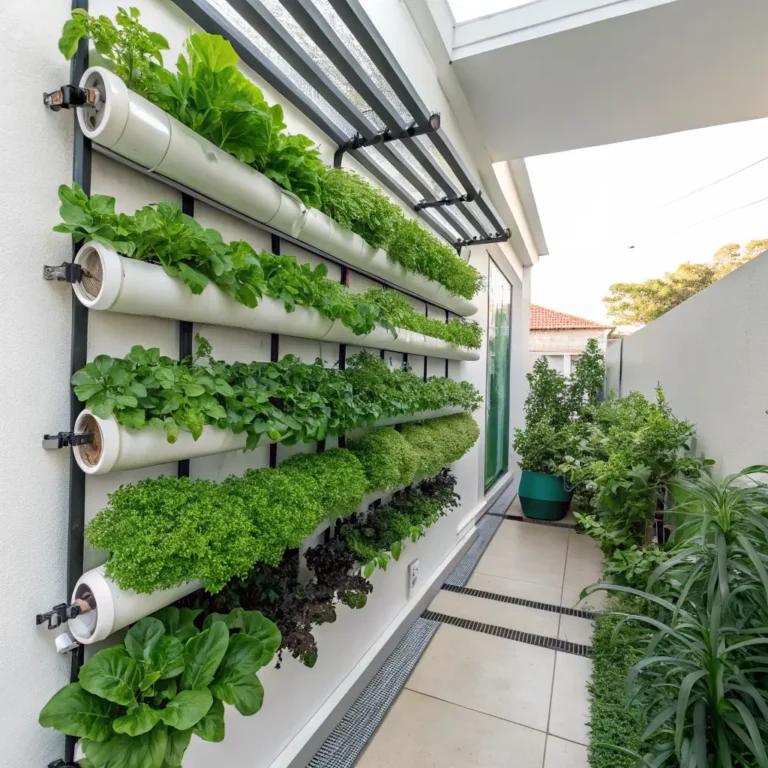
The secret sauce for small front yards is all about vertical thinking and strategic placement. I learned this the hard way when I tried cramming every plant I loved into my tiny 15×10 front space. Spoiler alert: it looked like a botanical yard sale gone wrong.
Here’s what actually works: layer your plants like you’re creating a living sandwich. Start with taller elements at the back (think ornamental grasses or compact shrubs), add medium-height perennials in the middle, and finish with low-growing groundcovers or annuals at the front. This creates depth that tricks the eye into seeing more space than you actually have.
Container gardening becomes your best friend in small spaces. Group pots of different heights and sizes near your entrance – it creates an instant focal point and you can switch things up seasonally. Plus, if you’re renting, containers mean you can take your garden with you when you move.
Don’t forget about corner spaces – they’re garden gold! A well-placed corner planting can define your space and create privacy without feeling cramped. I love using ornamental grasses here because they add movement and texture without taking up much real estate.
2. Low Maintenance Front Yard Garden Ideas
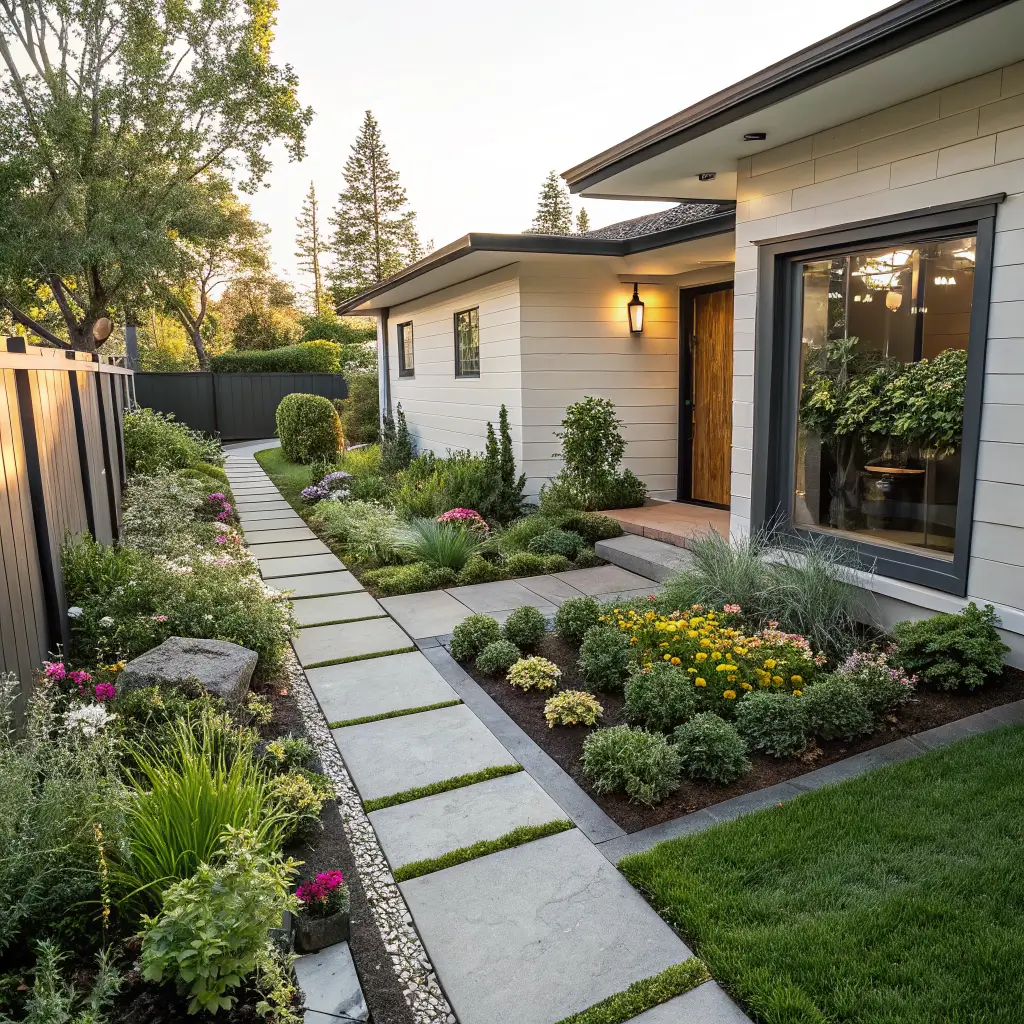
Can we have a moment of honesty? Not everyone wants to spend their weekends playing plant nurse. If you’d rather be binge-watching Netflix than deadheading flowers, low maintenance landscaping is your salvation.
The backbone of any low-maintenance garden is choosing the right plants from the start. Native plants are like that reliable friend who never causes drama – they thrive in your local climate without constant babying. I switched to mostly natives three years ago, and my weekend plant chores dropped from hours to maybe 30 minutes of light tidying.
Perennials over annuals – this is non-negotiable if you want to minimize work. Sure, annuals give you that instant gratification burst of color, but they’re basically garden one-night stands. Perennials come back year after year, getting better with age. Hostas, daylilies, and ornamental grasses are the workhorses of the low-maintenance garden world.
Mulch is your secret weapon for reducing maintenance. A good 2-3 inch layer suppresses weeds, retains moisture, and gives everything a polished look. I prefer organic mulches like shredded bark or compost – they break down over time and improve your soil. Win-win!
Consider groundcovers instead of traditional flower beds. Plants like creeping phlox, ajuga, or pachysandra create beautiful carpets of color and texture while crowding out weeds. Once established, they’re practically maintenance-free.
3. Modern Minimalist Front Yard Garden Designs
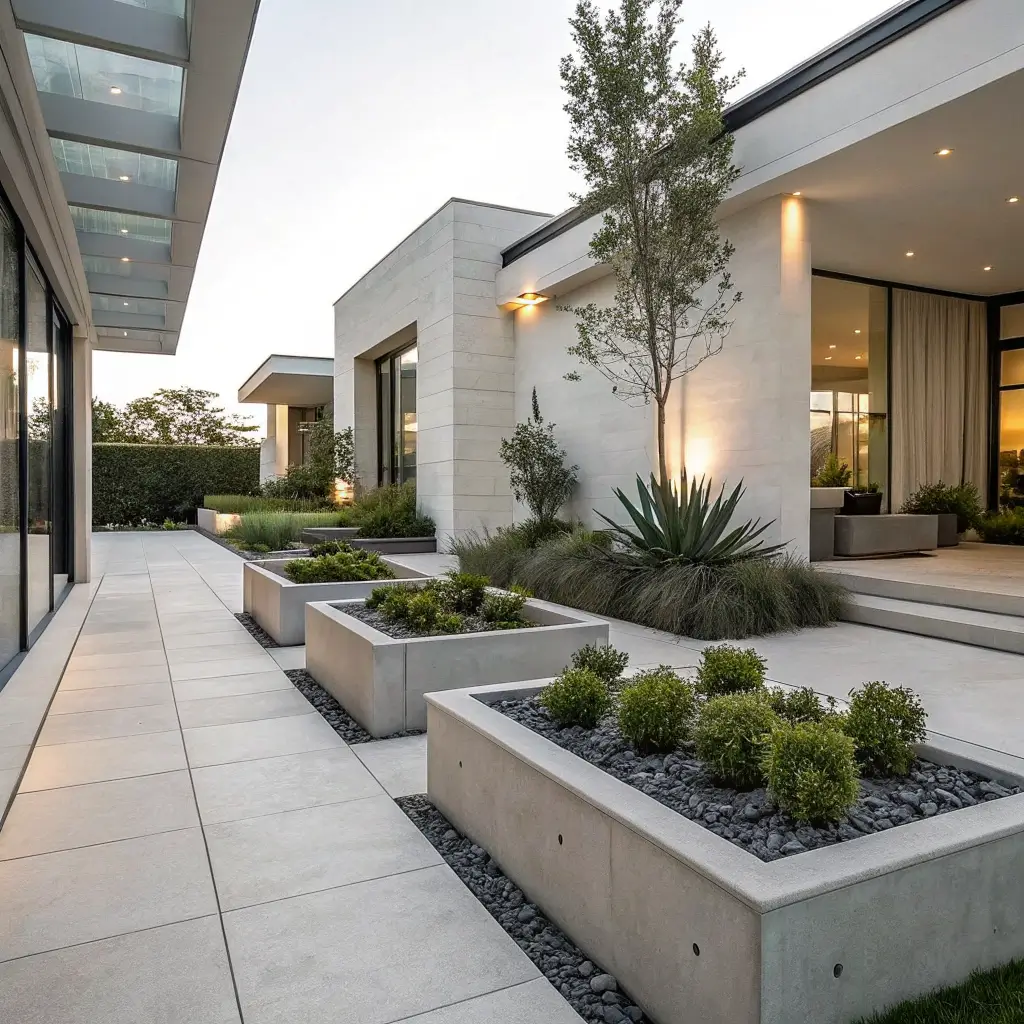
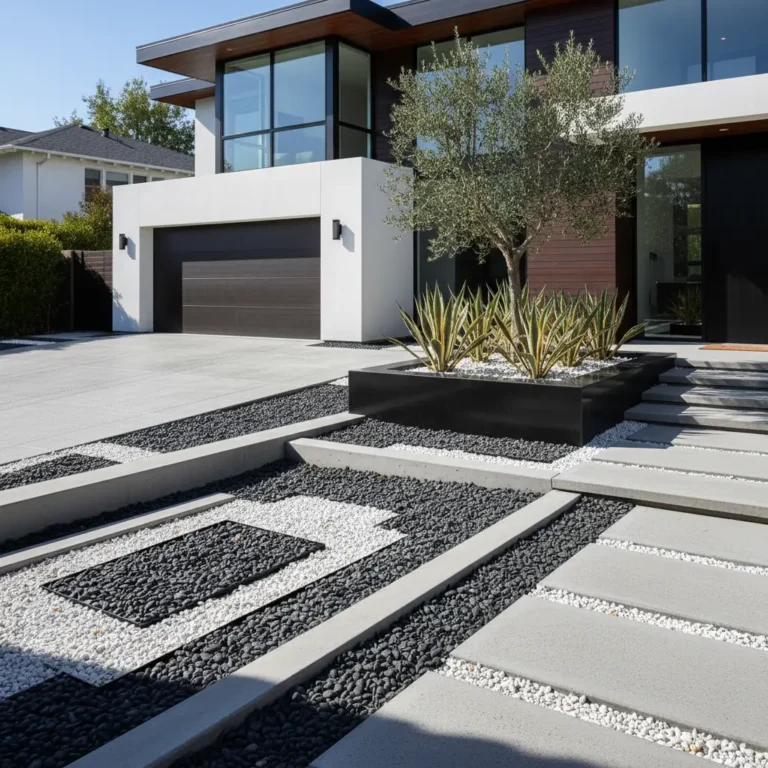
Minimalism isn’t just for Instagram-worthy interiors – it works brilliantly in front yard design too. The modern minimalist approach is all about clean lines, strategic plant placement, and the power of negative space.
Less really is more when you’re going for minimalist vibes. Instead of cramming in every plant that catches your eye, choose a few statement pieces and let them shine. I’m talking about architectural plants like ornamental grasses, sculptural agaves, or a perfectly placed Japanese maple.
Repetition creates cohesion in minimalist design. Pick 2-3 plant varieties and use them throughout your space rather than creating a botanical zoo. This might sound boring, but the result is incredibly sophisticated. Mass plantings of the same ornamental grass or repeated clusters of the same perennial create rhythm and movement.
Hardscaping becomes crucial in minimalist designs. Clean-lined raised planters, geometric pathways, or a simple water feature can serve as focal points. The key is choosing materials that complement your home’s architecture – think sleek concrete planters for modern homes or natural stone for more traditional styles.
Color palettes should be restrained. Stick to a monochromatic or two-color scheme. Green and white is classic and timeless, while green and purple creates sophisticated contrast without being overwhelming. Save the rainbow flower displays for the backyard!
Also Read: 10 Elegant Terrace Garden Design Ideas for Luxury Vibes
4. Budget-Friendly Front Yard Garden Ideas
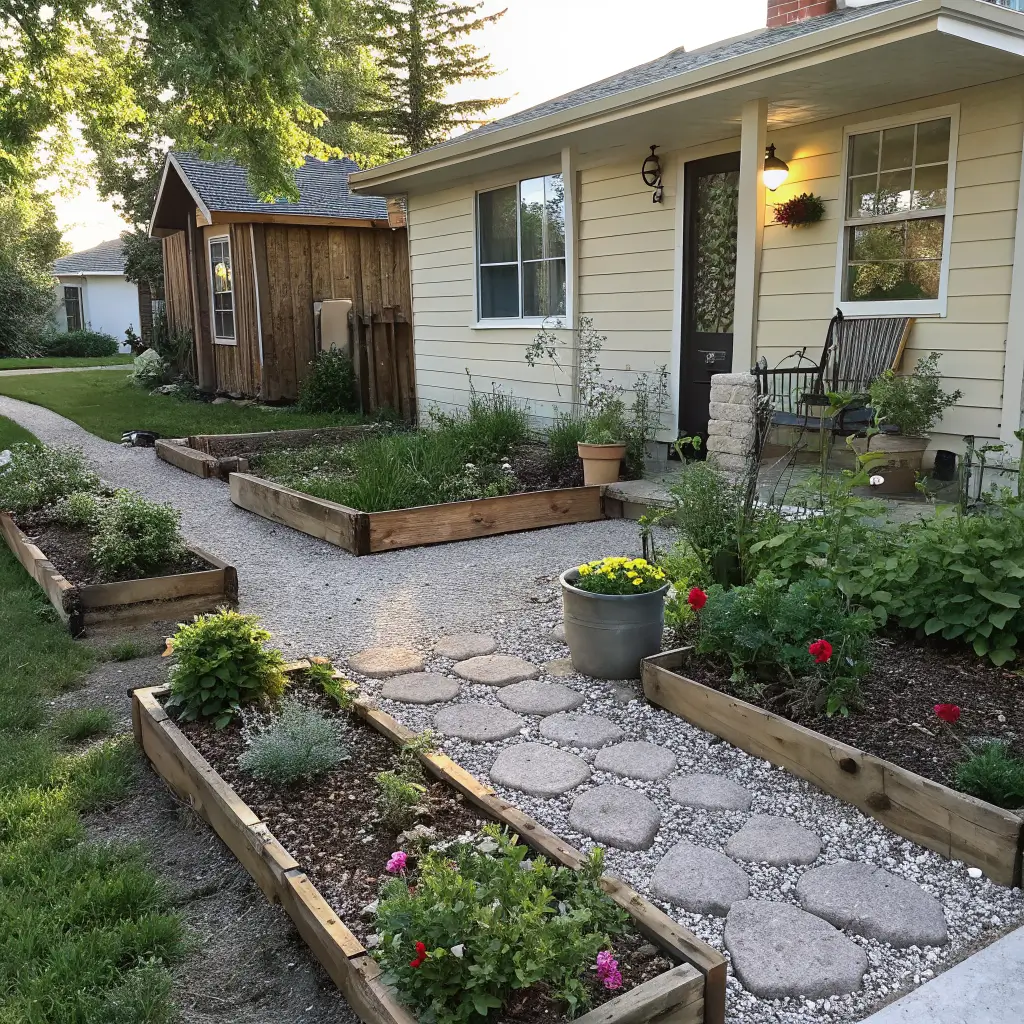
Garden design on a shoestring budget? Been there, done that, bought the clearance rack plants! The good news is that stunning front yards don’t require trust fund money – they just need smart planning and a bit of patience.
Start with seeds and small plants rather than buying mature specimens. I know it requires patience (not my strong suit), but a $3 pack of zinnia seeds will give you way more bang for your buck than a $15 mature plant. Plus, there’s something deeply satisfying about growing plants from babies.
Divide and conquer – literally. If you have friends or neighbors with established perennial gardens, ask if you can dig up divisions in early spring or fall. Most gardeners are thrilled to share – perennials need dividing anyway, and it’s a win-win situation. I’ve scored amazing hostas, daylilies, and ornamental grasses this way.
Shop end-of-season sales religiously. Nurseries want to clear inventory, and you can snag quality plants for 50-75% off their peak season prices. Sure, they might look a bit rough around the edges, but with some TLC, they’ll bounce back beautifully next season.
DIY hardscaping can save you thousands. Instead of hiring professionals for pathways or edging, consider DIY options like gravel paths, repurposed brick borders, or simple wooden raised beds. YouTube University has taught me more about landscape construction than I ever thought possible!
Mulch alternatives can slash costs too. Instead of buying expensive decorative mulch, contact local tree services – they often give away wood chips for free. It might not be as uniform as store-bought mulch, but it works just as well and costs nothing.
5. Front Yard Garden Ideas with Rocks and Gravel
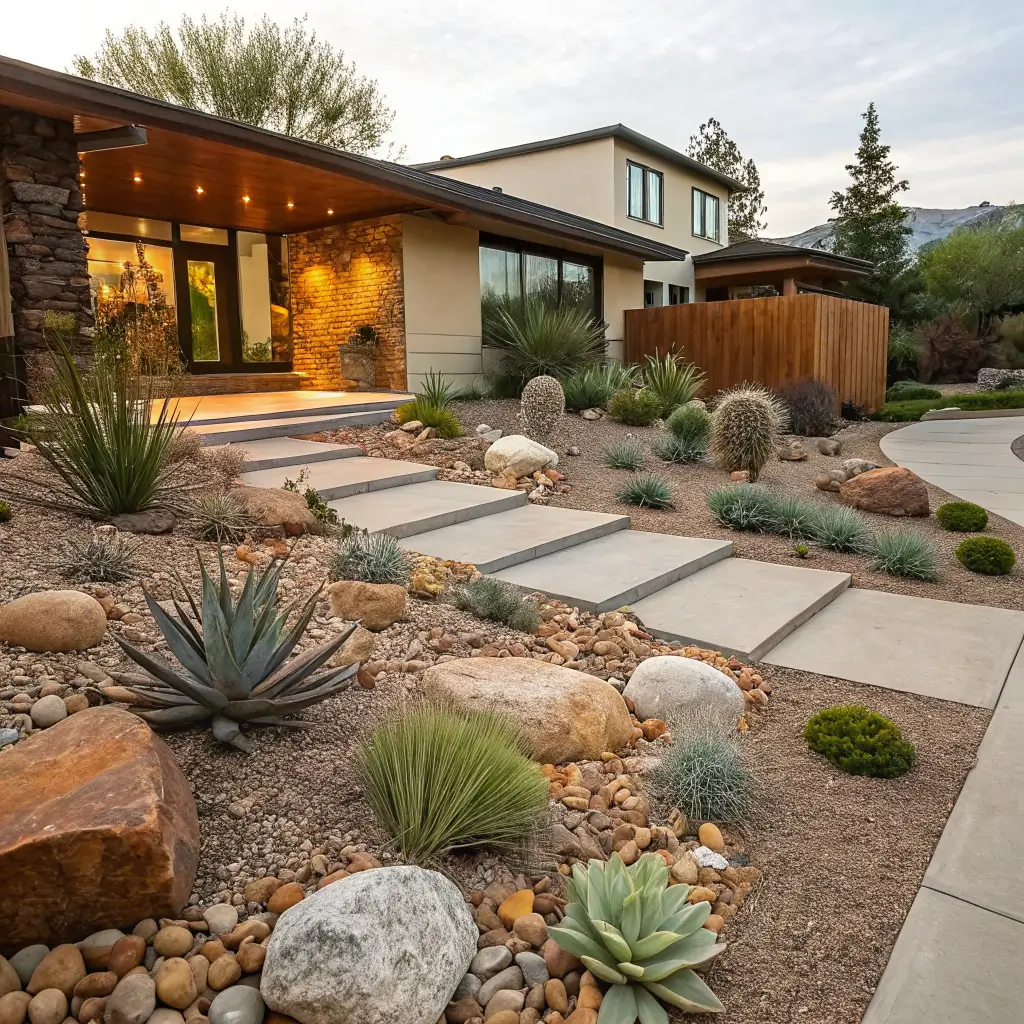
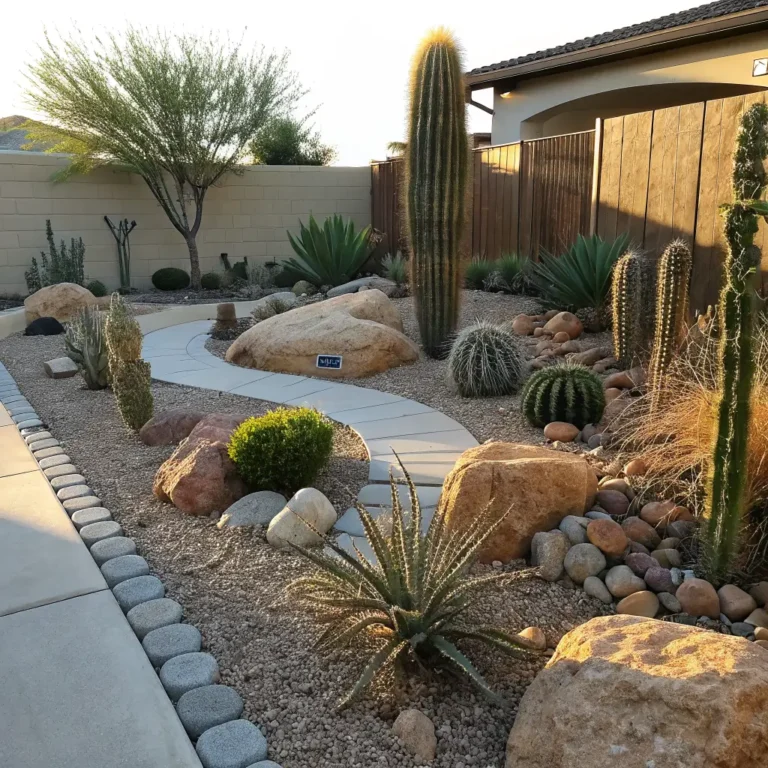
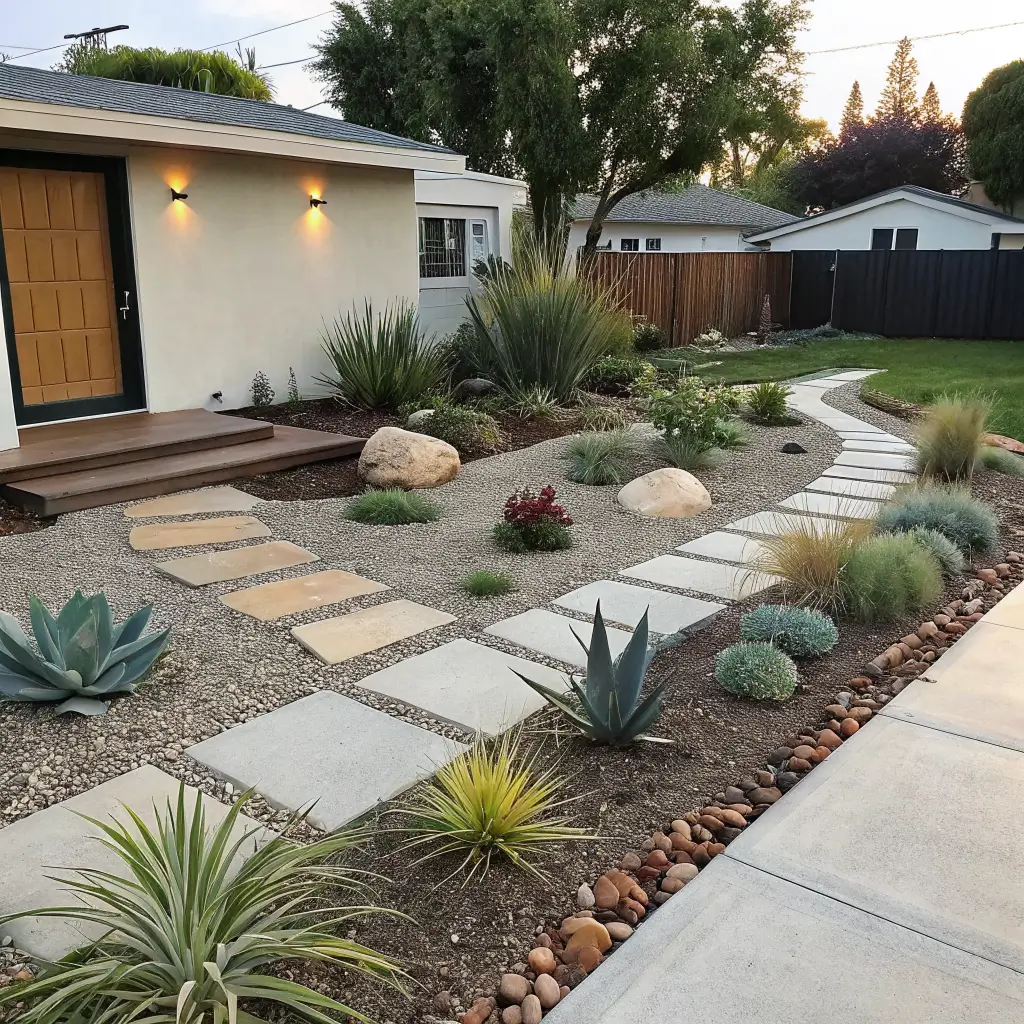
Rock gardens aren’t just for desert climates – they’re incredibly versatile and practically maintenance-free once established. Plus, rocks don’t die, don’t need watering, and never go out of style. Pretty compelling argument, right?
Gravel pathways add instant sophistication to any front yard design. I love using different sized gravels to create visual interest – maybe larger river rock bordered by smaller pea gravel. The sound of footsteps on gravel is surprisingly satisfying too (weird, but true).
Rock mulch around plants creates a completely different aesthetic than traditional organic mulch. It’s particularly stunning with drought-tolerant plants like sedums, ornamental grasses, or architectural succulents. The contrast between soft plant textures and hard rock surfaces is visually striking.
Boulders as focal points can anchor your design and create natural-looking boundaries. You don’t need massive specimens – even modestly sized rocks can make a big impact when placed thoughtfully. I like using odd numbers (groups of 3 or 5) for the most natural look.
Dry creek beds solve both aesthetic and practical problems. If you have drainage issues or just want to add visual interest, a meandering “creek” of river rock can guide the eye through your landscape while managing water runoff. It’s like having a stream without the maintenance headaches!
Mix textures and colors when working with stone. Combining smooth river rock with rough fieldstone, or mixing warm and cool colored stones creates depth and prevents the “parking lot” look that can happen with too much uniformity.
6. Simple Front Yard Flower Bed Ideas
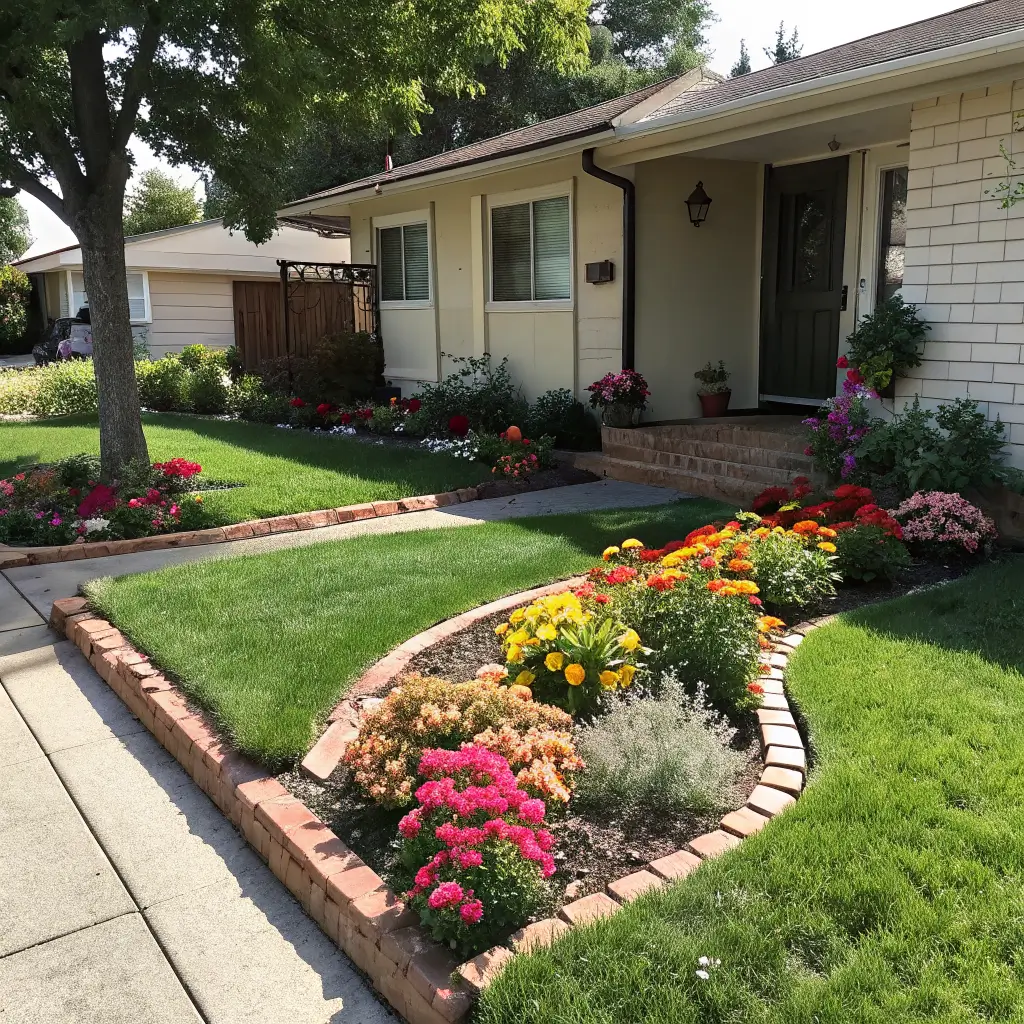
Sometimes you just want pretty flowers without the complexity, and there’s absolutely nothing wrong with that! Simple flower beds can be the most impactful element of your front yard when done thoughtfully.
Foundation plantings are your bread and butter for simple, effective flower beds. Plant along your home’s foundation or front walkway for instant impact. I’ve found that keeping the plant palette simple – maybe 3-4 varieties max – creates more visual punch than trying to include every flower under the sun.
Seasonal succession keeps your beds interesting year-round without complicating maintenance. Spring bulbs give way to summer perennials, which transition into fall-blooming plants. The key is choosing plants that naturally hand off the baton to each other throughout the growing season.
Color blocking creates bold, simple statements. Instead of mixing colors randomly, group similar hues together for maximum impact. A sweep of purple salvia next to yellow black-eyed Susans creates way more drama than spotting the same plants randomly throughout the bed.
Edge definition makes even the simplest flower bed look intentional and polished. Whether you use metal edging, stone, or even a cleanly cut grass border, defined edges separate your garden from lawn space and give everything a finished appearance.
Height variation prevents your flower bed from looking flat and boring. Even simple plantings benefit from having some vertical elements – maybe a few taller perennials or ornamental grasses scattered throughout lower-growing flowers.
Also Read: 10 Creative Home Garden Design Ideas for Cozy Living
7. Drought-Tolerant Front Yard Garden Ideas
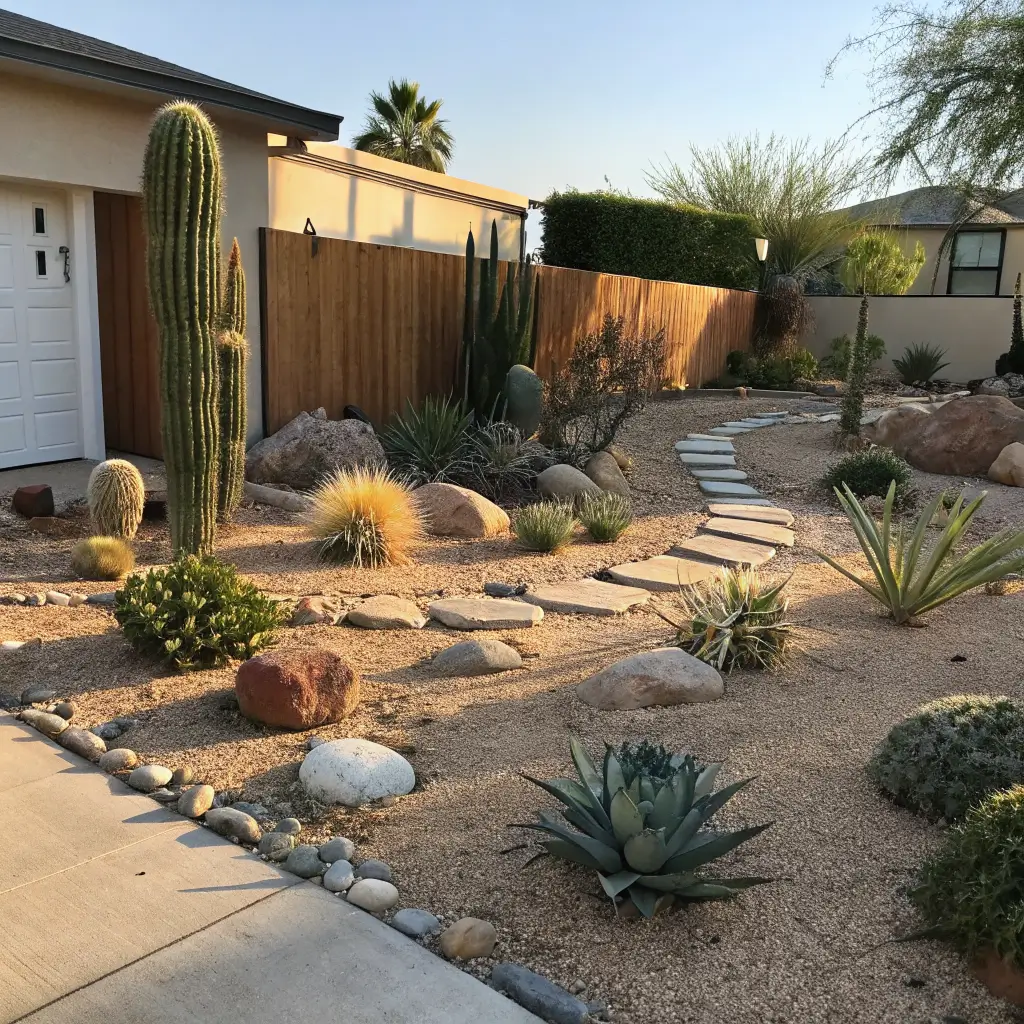
Climate change is real, water restrictions are becoming common, and honestly, who wants to stand outside with a hose every evening? Drought-tolerant landscaping isn’t just environmentally responsible – it’s practical and often more beautiful than thirsty traditional gardens.
Native plants are your drought-fighting superheroes. They’ve evolved to thrive in your local climate conditions, which means they can handle dry spells like champions. I’ve been amazed at how resilient native wildflowers and grasses are – they actually look better during drought stress than my pampered hybrid plants ever did.
Succulent gardens aren’t just for desert dwellers anymore. Even in temperate climates, many succulents are surprisingly hardy and create stunning architectural displays. Sedums, hen-and-chicks, and even some agave varieties can handle freezing temperatures while providing year-round structure and interest.
Mediterranean plants bring that vacation vibe to your front yard while sipping water like they’re on a diet. Lavender, rosemary, olive trees (where hardy), and ornamental grasses create a sophisticated palette that smells amazing and attracts beneficial insects. Plus, you can snip herbs for cooking – gardens that multitask are my favorite kind!
Xeriscaping principles guide smart drought-tolerant design. Group plants with similar water needs together, use mulch heavily to retain soil moisture, and create microclimates with hardscaping that can collect and direct rainwater to plant roots.
Timing matters when establishing drought-tolerant plants. Plant in fall when possible – this gives roots time to establish before facing summer stress. Spring planting works too, but you’ll need to be more attentive to watering that first season.
8. Front Yard Garden Ideas with Pathways
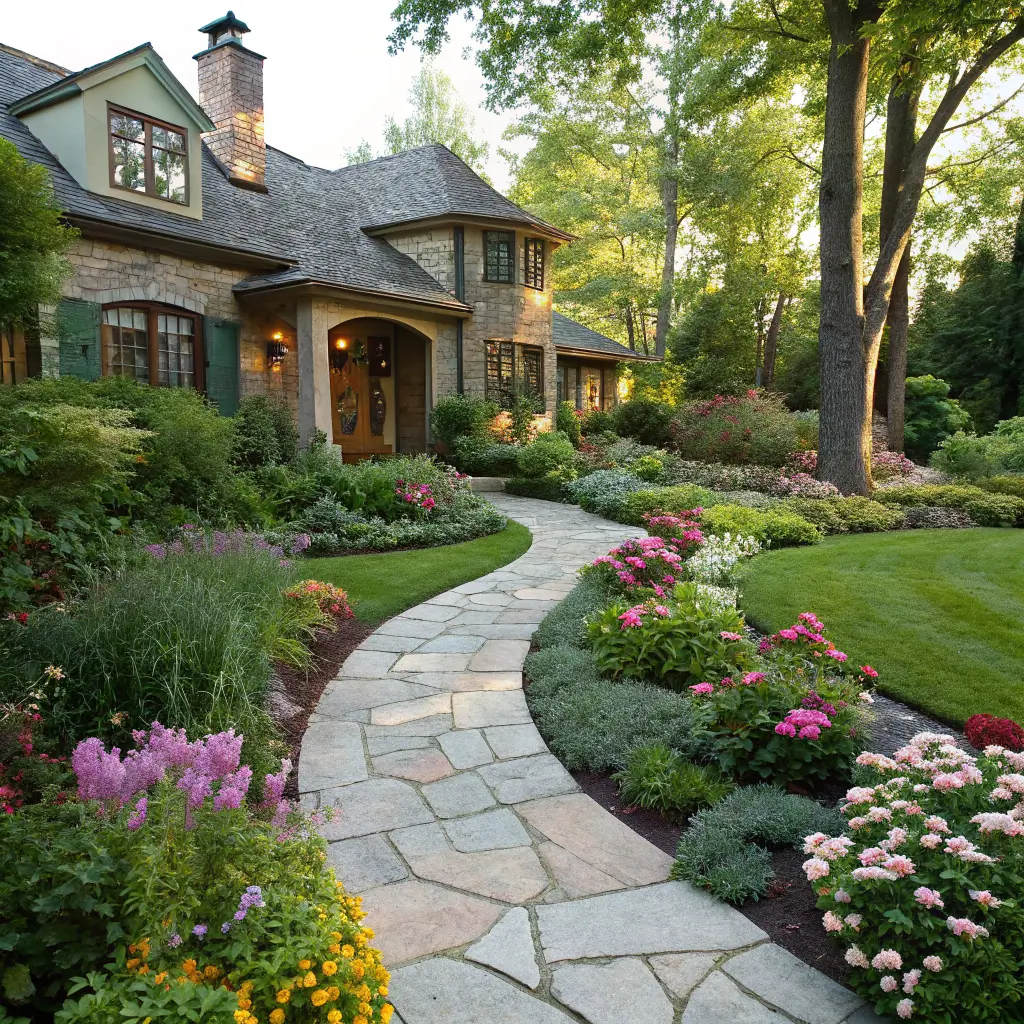
A well-designed pathway doesn’t just get you from point A to point B – it guides visitors through your landscape story and creates structure that ties everything together. Trust me, adding a thoughtful pathway can transform even the most basic front yard into something special.
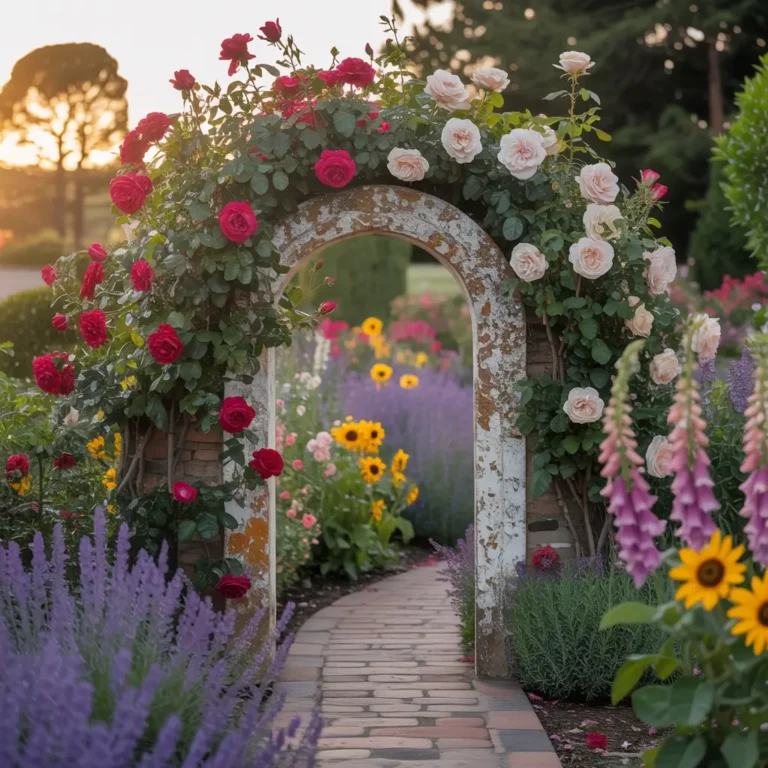
Curved pathways feel more natural and interesting than straight shots to your front door. Ever notice how nature rarely creates perfectly straight lines? A gently meandering path invites exploration and makes even small front yards feel larger and more mysterious.
Material choices dramatically impact your garden’s overall style. Gravel paths feel casual and cottage-like, flagstone suggests established elegance, brick adds traditional charm, and concrete pavers work well for modern designs. I’ve learned that mixing materials – like gravel bordered by larger stones – often creates the most interesting results.
Pathway width affects how your space feels. Narrow paths (2-3 feet) create intimacy and work well in small spaces, while wider pathways (4+ feet) feel more formal and accommodate two people walking side by side. Consider how you actually use your front yard when deciding.
Lighting integration extends your pathway’s usefulness into evening hours. Simple solar path lights are budget-friendly and installation-friendly, while low-voltage LED systems provide more consistent illumination. Nothing beats the magic of a softly lit pathway welcoming you home after dark.
Border plantings soften hard pathway edges and create seamless transitions between hardscape and garden areas. Low-growing perennials or ornamental grasses work beautifully here – they provide visual interest without obstructing the path or requiring frequent maintenance.
9. Tropical Front Yard Garden Design Ideas
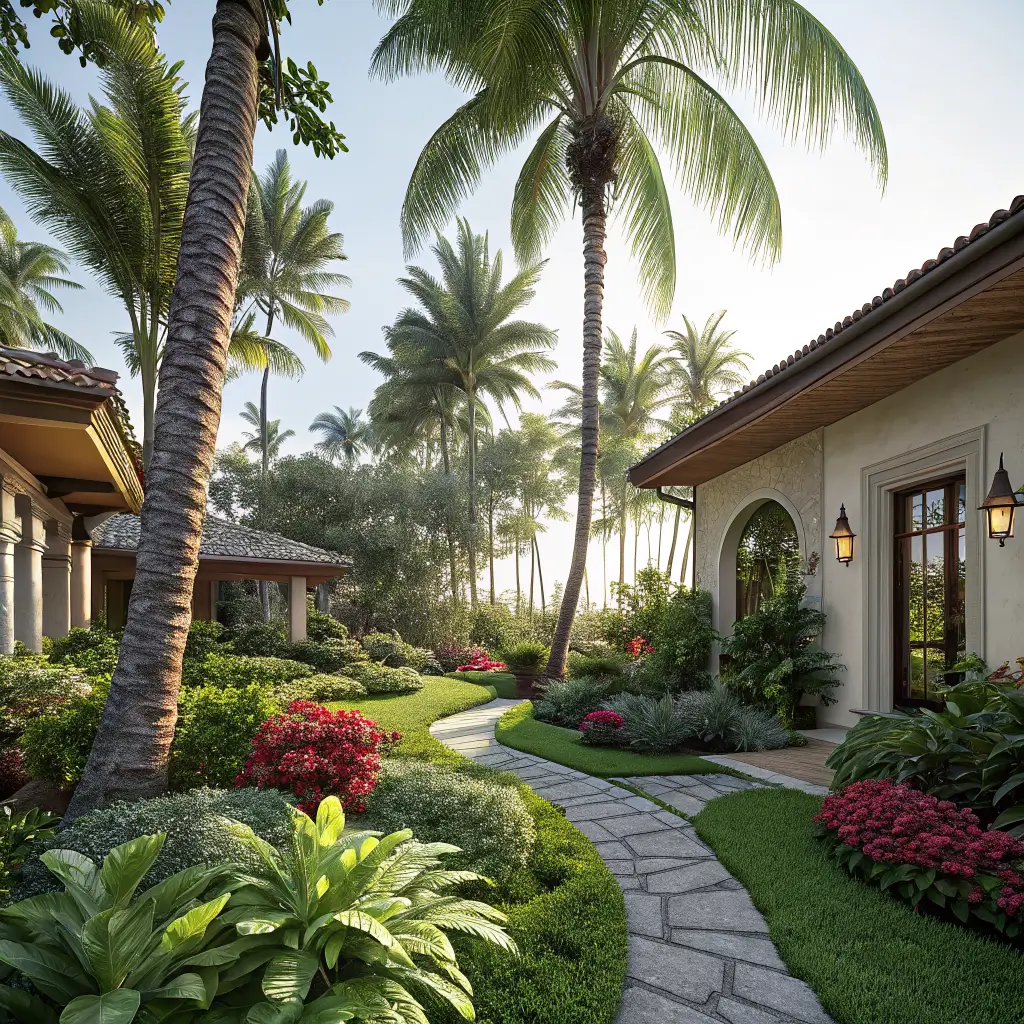
Who says you need to live in Hawaii to enjoy a tropical paradise? Tropical-style gardening can work in surprising climates – you just need to get creative with plant choices and seasonal strategies.
Foliage over flowers drives tropical design success. While flowers are beautiful, it’s the dramatic leaves – huge hostas, architectural cannas, bold caladiums – that create that lush, jungle-like atmosphere. Green comes in so many shades and textures that you’ll never miss the constant bloom pressure of traditional flower gardens.
Layered planting mimics natural tropical environments where plants grow at different levels. Use trees or large shrubs as your canopy layer, mid-size perennials as understory, and groundcovers to fill in at floor level. This creates the dense, lush feeling that says “tropical paradise” instead of “suburban lawn.”
Container strategies let you enjoy true tropical plants even in cold climates. Plant tender tropicals like hibiscus, bougainvillea, or even small palms in large containers that can winter indoors. It’s a bit of work moving them seasonally, but the summer impact is worth it. Plus, containers let you rearrange your tropical vignette whenever you need a change.
Water features amplify tropical vibes like nothing else. Even a simple fountain or small pond creates that resort-like atmosphere. The sound of moving water adds another sensory layer that makes your front yard feel like an escape destination.
Bold color combinations work in tropical designs where they might seem overwhelming in other styles. Hot pinks with lime greens, deep purples with bright oranges – tropical style celebrates color intensity that would make minimalist designers break out in hives 🙂
Also Read: 10 Amazing Vegetable Garden Design Ideas for Modern Homes
10. Front Yard Garden Ideas with Raised Beds
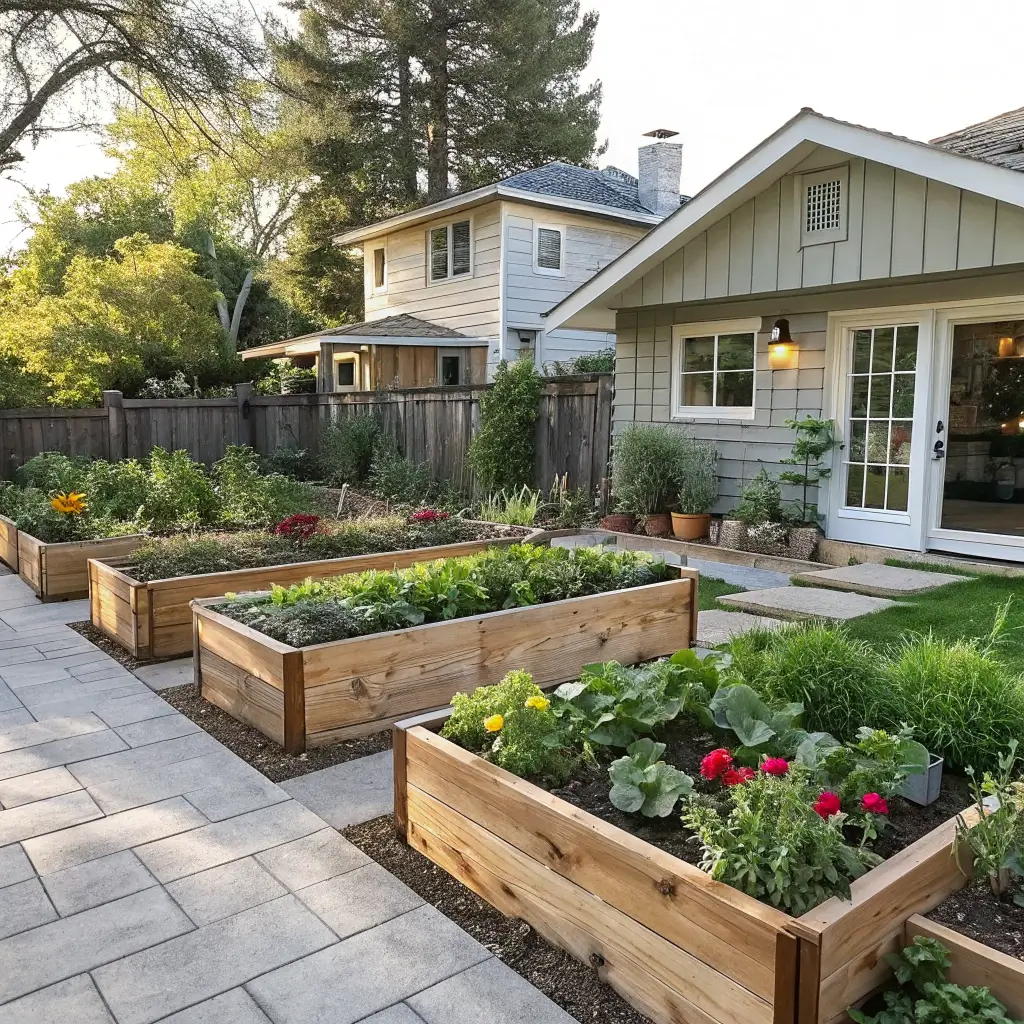
Raised beds aren’t just for vegetable gardens – they can completely transform your front yard while solving multiple design challenges at once. Better drainage, improved soil, easier maintenance, and instant structure? Yes, please!
Height creates drama even in flat landscapes. Raised beds add vertical interest and create natural boundaries between different garden areas. I love how they can turn a boring flat front yard into something with actual topography and visual flow.
Material choices should complement your home’s architecture. Natural stone feels timeless and works with almost any style, brick adds traditional warmth, cedar or other rot-resistant woods bring organic texture, and steel or concrete work beautifully with modern designs. The key is choosing materials that echo elements already present in your home or hardscaping.
Drainage benefits make raised beds perfect for areas with clay soil or poor drainage. You control the soil composition completely, which means you can grow plants that would struggle in your native soil conditions. This opens up your plant palette significantly!
Accessibility advantages make garden maintenance so much easier. Less bending, better soil that’s easier to work, and defined spaces that prevent accidental plant trampling. My back thanks me every time I work in raised beds instead of ground-level plantings.
Seasonal flexibility becomes possible when you control the growing environment completely. Want to try plants that aren’t quite hardy in your zone? Raised beds drain better and warm up faster, often creating a microclimate that’s a zone warmer than ground level.
Integration with existing landscape prevents raised beds from looking like afterthoughts. Connect them to pathways, repeat materials used elsewhere in your design, and plant around the bases to tie everything together visually.
Your Front Yard Transformation Starts Now
Look, I get it – staring at your current front yard situation can feel overwhelming. But here’s what I’ve learned after years of trial and error (emphasis on the error): you don’t have to transform everything overnight. Pick one idea that speaks to you, start small, and build from there.
Maybe this season you tackle that pathway you’ve been thinking about, or finally plant that drought-tolerant bed you’ve been researching. Next year, you can add the raised beds or work on that tropical container display. Gardens are living, evolving spaces – they’re supposed to change and grow over time.
The most important thing is to start somewhere. Your neighbors might not admit it, but they’re secretly watching to see what you do with that front yard of yours. Might as well give them something worth talking about, right?
FYI – if you start with just one of these ideas and love the results, you’ll probably get addicted to front yard improvement. Don’t say I didn’t warn you! But honestly, there are worse obsessions to have than creating a beautiful